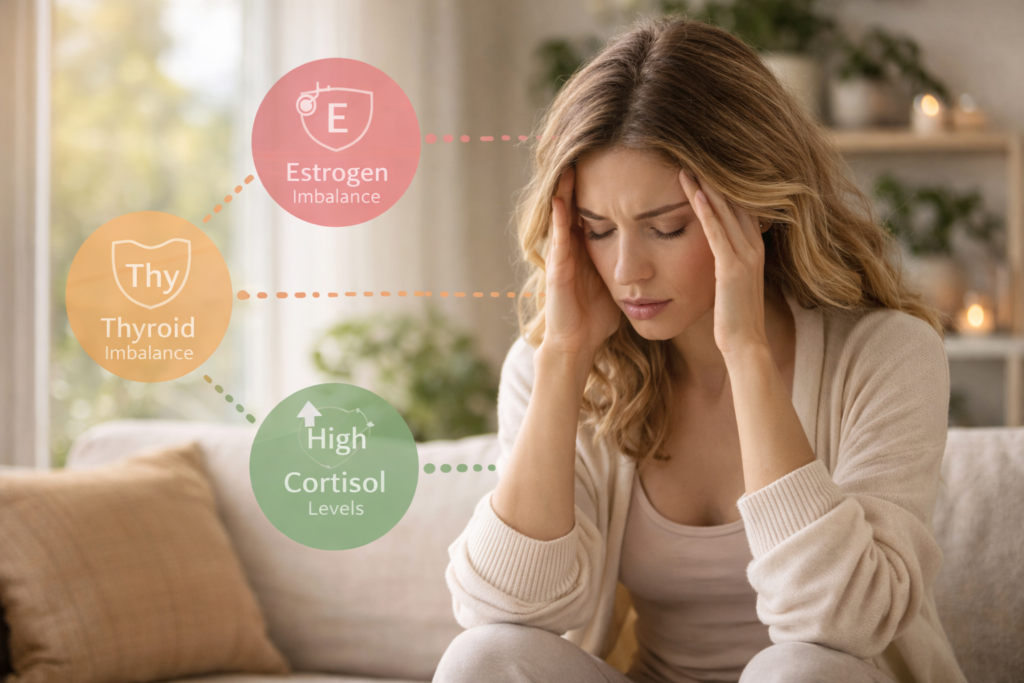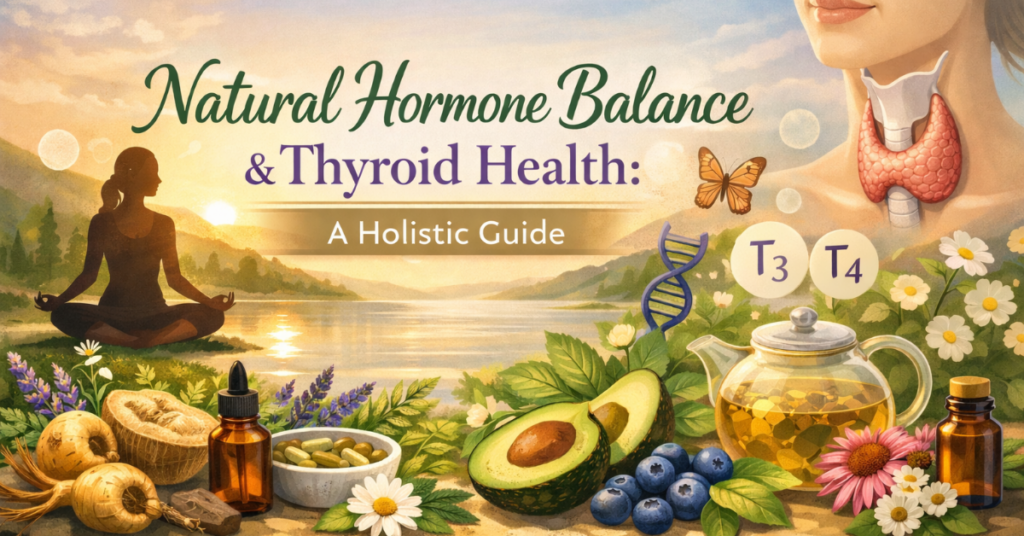
Natural hormone balance and thyroid health quietly influence nearly every system in the body — from energy levels and metabolism to mood, sleep, and temperature regulation. When hormones fall out of balance, the body often sends subtle signals long before a diagnosis ever appears.
The thyroid, often called the body’s metabolic engine, plays a particularly important role in overall hormonal harmony. When thyroid function becomes sluggish or stressed, it can ripple through the entire endocrine system.
This guide explores natural, holistic ways to gently support hormone and thyroid health through lifestyle practices, nourishment, stress care, and mindful daily habits — all with the goal of supporting the body’s innate ability to restore balance.
In This Article
Medical Disclaimer: This article is for informational purposes only and should not be considered medical advice. Always consult a licensed healthcare provider before trying new health practices or products.
Affiliate Disclosure: This article may contain affiliate links. As an Amazon Associate, I may earn earn from qualifying purchases at no additional cost to you.
Understanding Hormones and the Endocrine System
Hormones are chemical messengers that travel through the bloodstream to regulate nearly every major function in the body.
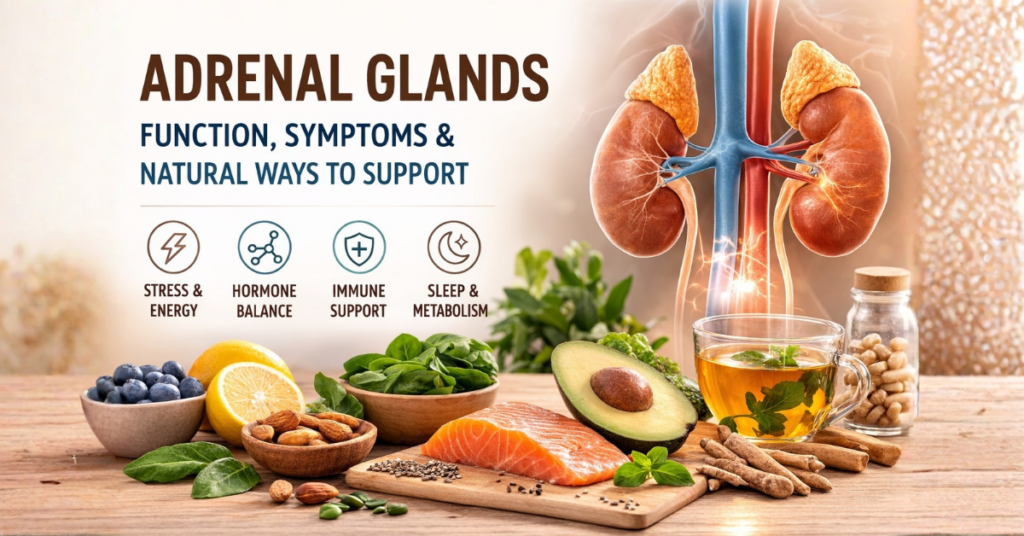
These powerful signals are produced by the endocrine system — a network of glands that includes the thyroid, adrenal glands, pancreas, ovaries or testes, and pituitary gland. When one gland becomes stressed, others often compensate — which is why hormone imbalance rarely occurs in isolation.
Each gland releases specific hormones that communicate with other organs and systems, helping the body maintain balance, also known as homeostasis. These messengers travel through the bloodstream, delivering instructions that help regulate:
- Metabolism
- Energy production
- Mood and emotional balance
- Sleep cycles
- Body temperature
- Reproductive health – PCOS and thyroid dysfunction are deeply interconnected — thyroid disorders are significantly more common in women with PCOS, and each condition worsens the other through shared inflammatory and metabolic pathways. Read our complete guide on PCOS natural treatment to understand how to address both conditions simultaneously.
- Stress response
Modern life places consistent pressure on this delicate system through chronic stress, environmental toxins, disrupted sleep, and nutritional imbalances.
Environmental toxins like fluoride and heavy metals can impact hormone balance—this fluoride detox guide explains how to reduce exposure naturally.
The Thyroid’s Role in Hormone Balance
The thyroid is a small, butterfly-shaped gland located in the neck, yet its influence is profound. It produces hormones that help regulate how efficiently the body converts food into energy.
Healthy thyroid function supports:
- Steady metabolism
- Stable body temperature
- Healthy weight maintenance
- Mental clarity
- Heart rate regulation
- Hair and skin vitality
When thyroid hormones become low or poorly converted, people may notice symptoms such as fatigue, cold sensitivity, weight changes, or brain fog.
You can explore this topic more here:
- Low Thyroid Hormones: Understanding and Supporting Thyroid Health
- How Core Temperature Affects Weight
Common Signs of Hormone Imbalance
Hormone imbalances can show up in many different ways because hormones influence nearly every system in the body. When levels are too high, too low, or out of sync, the body often sends signals that something isn’t right.
These symptoms may develop gradually and are sometimes mistaken for normal aging or everyday stress. Recognizing the common signs of hormone imbalance is an important first step toward supporting natural hormone balance and improving overall well-being. Some of the most common signs include:
- Persistent fatigue
- Difficulty losing or maintaining weight
- Sensitivity to cold
- Mood swings or anxiety
- Brain fog or memory challenges
- Hair thinning
- Sleep disturbances
- Irregular cycles
These symptoms are the body’s way of asking for deeper support — not punishment or restriction.
Root Causes of Hormone and Thyroid Imbalance
Rather than focusing only on symptoms, holistic wellness looks at underlying contributors.
Chronic Stress and Cortisol
Long-term stress triggers ongoing cortisol release, which can interfere with thyroid hormone conversion and disrupt hormonal communication.
See also, High Cortisol Levels Explained: Symptoms & Stress Management
Environmental Toxins
Everyday exposure to chemicals found in personal care products, cookware, and household items may place added stress on the endocrine system.
More about related environmental toxins in:
Poor Sleep and Circadian Disruption
Poor sleep and circadian disruption can have a major impact on hormone balance. Irregular sleep patterns interfere with the body’s natural rhythms, confusing hormone signaling and weakening communication between the adrenal glands and thyroid.
This can lead to imbalances in cortisol, thyroid hormones, and other key regulators, affecting energy, metabolism, mood, and stress resilience.
Prioritizing consistent sleep schedules, exposure to natural light during the day, and a calm bedtime routine supports healthy adrenal-thyroid function and helps maintain overall hormonal harmony.
The pineal gland is a critical but frequently overlooked member of the endocrine system — its melatonin output directly influences reproductive hormones, thyroid function, and adrenal health. Read our detailed guide on pineal gland function and natural support strategies to understand this important connection.
Nutrient Depletion
Nutrient deficiencies can significantly disrupt hormone balance. Minerals such as selenium, zinc, iodine, and magnesium are essential for the production, activation, and regulation of key hormones, including thyroid hormones and cortisol.
Without adequate levels, hormone synthesis and signaling can be impaired, leading to symptoms like:
- fatigue
- low energy
- mood changes
- metabolic slowdowns
Among the most critical minerals for thyroid and hormone health is magnesium — yet it remains one of the most widespread and underrecognized deficiencies in women with chronic conditions. Modern intensive farming practices have progressively stripped magnesium from soil, meaning even a nutrient-rich diet may fall short of what the thyroid actually needs to function optimally.
For women with thyroid dysfunction, magnesium deficiency creates a particularly damaging cycle. Without adequate magnesium, the pituitary gland cannot release TSH properly, T4-to-T3 hormone conversion becomes impaired, and the inflammatory environment that drives autoimmune thyroid disease intensifies.
Research published in Frontiers in Endocrinology confirms that magnesium deficiency is directly associated with elevated proinflammatory cytokines — the same inflammatory messengers that accelerate thyroid tissue damage in Hashimoto’s thyroiditis.
Magnesium glycinate — the chelated form bound to the amino acid glycine — is considered the gold standard supplemental form for women with thyroid and autoimmune conditions because of its superior absorption, gut gentleness, and additional calming benefits for sleep and anxiety. For a complete breakdown of how magnesium deficiency specifically affects thyroid function and which form to choose, read our full guide on magnesium glycinate for thyroid health.
Supporting hormone health with a nutrient-rich diet or targeted supplementation helps ensure that the body has the building blocks it needs to maintain natural hormone balance and overall endocrine function.
Estrogen Dominance
The most common hormonal imbalance in women over 35 — directly interferes with thyroid hormone receptor sensitivity, making it impossible to achieve true hormonal balance without addressing both simultaneously. Read our in-depth guide on estrogen dominance causes and natural treatment to understand this critical connection.”
If you’re unsure whether your symptoms point to hormone imbalance, thyroid dysfunction, or adrenal fatigue, our free Natural Symptom Checker can help you identify possible root causes and natural remedies in minutes.
Natural Ways to Support Hormone Balance
Holistic hormone support focuses on creating an internal environment where balance can gently return.
Nourishing Nutrition for Hormone Health
Nourishing nutrition plays a central role in supporting hormone health naturally. Eating a balanced diet rich in high-quality proteins, healthy fats, fiber, and nutrient-dense vegetables and fruits provides the building blocks your body needs to produce and regulate hormones effectively.
Proper nutrition helps stabilize blood sugar, reduce inflammation, and support adrenal and thyroid function, all of which are critical for maintaining natural hormone balance.
By focusing on whole, unprocessed foods and incorporating key minerals and vitamins, you can give your endocrine system the tools it needs to thrive.
A hormone-supportive diet emphasizes:
- Balanced protein intake
- Healthy fats for hormone production
- Stable blood sugar
- Mineral-rich whole foods
Rather than restriction, nourishment becomes the foundation.
Herbal Support for Thyroid and Hormones
Adaptogenic herbs, such as ashwagandha, rhodiola, and holy basil, help the body respond to stress and regulate cortisol levels, which in turn supports thyroid function and overall hormone balance
One commonly discussed herb is ashwagandha, known for its calming influence on the stress response.
Read How Ashwagandha Benefits Hypothyroidism (Supportive Wellness Guide)
Herbs are best viewed as gentle supporters — not replacements for medical care — and should always be used mindfully.
Herbal supplements designed for thyroid support often combine several traditional herbs used to promote metabolic balance and overall wellness. If you’re considering adding one to your routine, you can learn more about the thyroid support herbal supplement we recommend here.
Natural Supplements for Thyroid and Hormone Health
Beyond adaptogenic herbs, emerging research is identifying specific natural supplements for thyroid and hormone health that target the root causes of dysfunction rather than simply managing symptoms. For women navigating Hashimoto’s thyroiditis, hypothyroidism, or chronic hormone imbalance, three research-backed supplements have shown particular promise.
Acemannan — the primary bioactive polysaccharide found in aloe vera gel — has gained significant attention following a clinical study in which 30 women with Hashimoto’s thyroiditis consumed 50ml of aloe vera juice daily for nine months. The results showed TSH dropping by 61% and thyroid peroxidase antibodies falling by 56% — all without medication changes or adverse effects. Acemannan works by modulating immune activity, reducing oxidative stress, and repairing gut barrier integrity — three of the most critical factors in autoimmune thyroid disease management. For the full clinical breakdown read our complete guide on acemannan thyroid healing.
Berberine — a natural alkaloid extracted from plants including barberry and goldenseal — has earned the nickname “nature’s Ozempic” for its powerful effects on blood sugar regulation and insulin sensitivity. For women with Hashimoto’s, correcting blood sugar dysregulation is one of the most impactful interventions available, as insulin resistance drives chronic inflammation that perpetuates the autoimmune attack on the thyroid. Berberine activates AMPK — the body’s metabolic master switch — improving glucose utilization, supporting gut microbiome health, and reducing the systemic inflammation that compounds thyroid dysfunction.
Together with magnesium glycinate, these three natural supplements address Hashimoto’s and thyroid hormone imbalance from three distinct angles simultaneously — immune modulation, mineral restoration, and metabolic correction. For a complete protocol covering all three supplements together, read our full guide on natural supplements for Hashimoto’s.
Essential Oils for Hormone Support
Essential oils are often used in holistic wellness to support emotional balance, relaxation, and nervous system regulation.
They may be helpful for:
- Stress reduction
- Restful sleep support
- Emotional grounding
Further reading:
- Essential Oils Support Thyroid
- Why You Should Ditch Your Perfume: Healthier Alternatives with Essential Oils
Always dilute properly and use essential oils safely.
Stress Management and Cortisol Regulation
Chronic stress plays a major role in hormone imbalance, particularly through elevated cortisol levels. When cortisol remains high, it can interfere with thyroid hormones, disrupt menstrual cycles, and make it harder for the body to maintain balance.
To understand how stress hormones affect the body and learn proven ways to regulate them, read our complete guide on how to lower high cortisol naturally using lifestyle, nutrition, and nervous system support strategies.
Stress management is essential for maintaining healthy hormone balance, as chronic stress can lead to elevated cortisol levels that disrupt thyroid and other hormonal functions.
Prolonged high cortisol can interfere with sleep, metabolism, mood, and energy, creating a cycle of hormonal imbalance.
Helpful practices for stress management include:
- Deep breathing
- Gentle movement
- Time outdoors
- Nervous system calming rituals
These practices support adrenal health, and restore proper communication between the adrenal glands and thyroid. Consistently managing stress is a powerful way to protect and optimize natural hormone balance.
Hormonal imbalances can contribute to inflammation and discomfort, making natural remedies for pain an important part of a well-rounded wellness routine.
See Also:
Light, Temperature, and Metabolism
Light exposure and body temperature play an often-overlooked role in maintaining healthy hormonal rhythms. Natural sunlight in the morning helps regulate the circadian clock, signaling the body when to produce cortisol, melatonin, and other key hormones.
Core body temperature fluctuations throughout the day also influence metabolism, thyroid function, and energy balance.
Disruptions in light exposure or temperature patterns—such as excessive nighttime screen time or inconsistent daily routines—can confuse hormone signaling and impair overall endocrine function.
Supporting natural light cycles and maintaining healthy daily rhythms helps keep hormone levels balanced and the body in sync.
Extended reading:
Small daily shifts can create meaningful long-term support.
For those exploring complementary approaches, red light therapy for hypothyroidism has gained attention as a non-invasive option designed to support thyroid wellness and circulation.
Lifestyle Habits That Encourage Hormone Balance
Hormone health is rarely built through one solution — it grows through consistency.
Supportive habits include:
- Prioritizing quality sleep
- Reducing toxin exposure
- Eating regularly to stabilize blood sugar
- Gentle movement instead of overtraining
- Creating calm daily rhythms
Many people also explore holistic healing therapies for natural wellness as part of a broader approach to supporting thyroid health.
Healing is not about doing more — it’s often about doing less with more intention.
Hashimoto’s Thyroiditis and Natural Healing
Hashimoto’s thyroiditis is the most common cause of hypothyroidism in women and the most prevalent autoimmune disease in the United States — yet it remains one of the most underaddressed conditions in conventional medicine. It is eight times more common in women than men, most frequently affecting women between the ages of 30 and 60 — the core of the healing-ailments.com community.
Unlike simple hypothyroidism, Hashimoto’s is an autoimmune disease. The immune system produces antibodies that attack the thyroid gland directly, gradually impairing its ability to produce adequate thyroid hormones.
Conventional treatment addresses the resulting hormone deficiency with replacement medication — but does not address the autoimmune attack itself, which is why many women on thyroid medication continue to experience debilitating symptoms despite normal-range lab values.
Natural healing for Hashimoto’s therefore requires a fundamentally different approach — one that addresses the immune dysregulation, gut permeability, nutrient deficiencies, and metabolic dysfunction that drive the autoimmune process. This is where holistic hormone and thyroid support becomes most powerful.
Several of the strategies discussed throughout this guide are directly relevant to Hashimoto’s management. Stress reduction lowers cortisol, which impairs T4-to-T3 conversion when chronically elevated. Nutrient repletion — particularly magnesium, selenium, zinc, and iodine — restores the mineral cofactors that thyroid hormone production depends on.
Gut healing reduces the intestinal permeability that exposes the immune system to the inflammatory triggers that perpetuate autoimmune activity.
Emerging clinical research is also pointing toward specific natural compounds that may help reduce thyroid antibodies and support immune regulation in Hashimoto’s patients — offering women a meaningful complement to conventional thyroid care.
For women ready to explore a comprehensive natural protocol specifically designed for Hashimoto’s thyroiditis, our three-part supplement guide covers the most promising research-backed interventions available today.
When to Seek Medical Support
Holistic care works best alongside informed medical guidance. If symptoms persist or worsen, lab testing and professional evaluation can provide clarity.
An integrative approach honors both modern medicine and natural wellness.
FAQ’s
Can hormones be balanced naturally?
Yes. Hormones can often be balanced naturally by supporting the endocrine system with a nutrient-rich diet, stress management, regular sleep, and holistic practices like adaptogenic herbs, essential oils, and gentle movement. Focusing on lifestyle and nutrition creates a foundation for long-term natural hormone balance.
What are early signs of thyroid imbalance?
Early signs of thyroid imbalance may include fatigue, unexplained weight changes, cold sensitivity, hair thinning, dry skin, and mood changes. Recognizing these hormone imbalance symptoms early can help you implement natural thyroid support and other holistic strategies before symptoms worsen.
Does stress affect thyroid function?
Yes, chronic stress can affect thyroid function by raising cortisol levels, which interferes with hormone signaling and the conversion of T4 to active T3. Managing stress with meditation, gentle movement, and adaptogenic herbs can help support healthy thyroid function naturally.
Can essential oils support hormone balance & thyroid health?
Certain essential oils, like lavender, clary sage, and frankincense, may help calm the nervous system, improve stress resilience, and support hormonal balance. They work best as a complementary approach alongside nutrition, sleep, and lifestyle habits for holistic hormone health.
Is ashwagandha safe for hypothyroidism?
Ashwagandha is an adaptogenic herb shown to support natural thyroid function and reduce stress-related cortisol imbalance. While generally safe for many adults, it should be used carefully if you have thyroid conditions or are on thyroid medication, ideally under guidance from a healthcare professional.
How long does it take to support hormone balance naturally?
Hormonal restoration varies per individual. Some people notice improvements in energy, mood, and metabolism within weeks, while others may take several months. Consistency with nutrition, sleep, stress reduction, and holistic practices is key to achieving long-term natural hormone balance.
How does stress affect hormone function?
Chronic stress elevates cortisol levels, which can disrupt communication between the adrenal glands and thyroid, affect metabolism, and interfere with reproductive hormones. Stress management techniques such as meditation, deep breathing, and adaptogenic herbs help regulate cortisol and support overall hormone balance.
How does cortisol imbalance affect overall hormone health?
Cortisol, the primary stress hormone, influences metabolism, thyroid function, reproductive hormones, and even blood sugar levels. Chronically high or low cortisol disrupts the body’s hormonal harmony, causing fatigue, weight changes, anxiety, and sleep issues. Managing stress, supporting adrenal health with nutrition, and practicing relaxation techniques are key ways to restore balance naturally.
Can lifestyle changes support hormone detox naturally?
Absolutely. Consistent sleep, daily movement, minimizing processed foods, reducing chemical exposures, and managing stress all enhance the body’s natural detoxification processes. These habits support hormone detox, stabilize cortisol levels, and promote natural thyroid support, creating a foundation for long-term holistic hormone health.
Conclusion: A Gentle Path Toward Hormone Balance
Balancing hormones naturally is about supporting your body through mindful lifestyle choices, nutrient-rich nutrition, stress management, and holistic practices.
By understanding how the endocrine system works and addressing factors like sleep, nutrient deficiencies, and adrenal-thyroid communication, you can improve energy, mood, metabolism, and overall well-being.
Integrating natural thyroid support, adaptogenic herbs, essential oils, and daily routines that honor your body’s rhythms empowers you to maintain long-term hormonal health.
Taking small, consistent steps toward holistic hormone health can help restore balance, prevent future imbalances, and support a vibrant, healthy life.
Explore related health products and articles throughout Healing Ailments to continue building a supportive, informed approach to whole-body wellness.
Resources
Pubmed: Obesity, Dietary Patterns, and Hormonal Balance Modulation: Gender-Specific Impacts
PubMed: Efficacy of Herbal Remedies in Menopause: Bridging Traditional Medicine and Modern Therapeutics