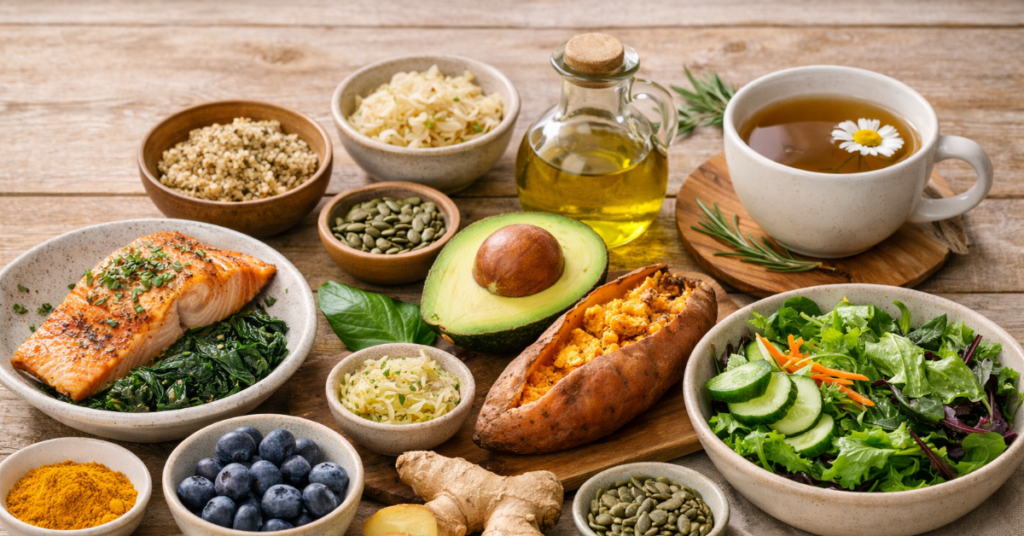
Support Gut Health with Anti-inflammatory Foods
Gut health plays a critical role in overall wellness, influencing digestion, immunity, hormone balance, and even mental clarity. When chronic inflammation develops in the digestive system, it can contribute to bloating, leaky gut syndrome, food sensitivities, autoimmune flare-ups, and ongoing digestive discomfort.
One of the most powerful natural ways to calm inflammation and restore balance is through anti-inflammatory foods. These foods nourish beneficial gut bacteria, strengthen the intestinal lining, and help reduce inflammation throughout the body.
In this guide, you’ll learn exactly which anti-inflammatory foods support gut health, how they work, and how to incorporate them into your daily routine.
In This Article
Medical Disclaimer: This article is for informational purposes only and should not be considered medical advice. Always consult a licensed healthcare provider before trying new health practices or products.
Affiliate Disclosure: This article may contain affiliate links. As an Amazon Associate, I may earn earn from qualifying purchases at no additional cost to you.
Why Inflammation Harms Gut Health
Inflammation is the body’s natural defense response. However, when inflammation becomes chronic — often due to processed foods, chronic stress, toxins, medications, or poor diet — it can damage the gut lining.
Chronic stress and high cortisol levels can increase inflammation and negatively affect gut health by weakening the gut barrier. Managing stress hormones is an important part of reducing inflammation naturally. To learn how cortisol impacts digestion and discover strategies to support balance, visit our guide on lowering high cortisol naturally through diet, stress management, and daily habits.
Chronic gut inflammation may lead to:
- Digestive bloating and gas
- Irritable bowel symptoms
- Nutrient malabsorption
- Weakened immune system
- Increased food sensitivities
Eating the right anti-inflammatory foods helps reduce this internal stress and supports long-term digestive healing.
How Anti-Inflammatory Foods Support Gut Health
Anti-inflammatory foods work by:
- Feeding beneficial gut bacteria (prebiotics)
- Reducing inflammatory markers in the intestines
- Improving digestion and bowel regularity
- Supporting the gut lining and mucus barrier
- Enhancing nutrient absorption
When consumed consistently, these foods create an internal environment where healing can occur naturally.
Top Anti-Inflammatory Foods for Gut Health
1. Fatty Fish (Salmon, Sardines, Mackerel)
Fatty fish are rich in omega-3 fatty acids, one of the most studied natural anti-inflammatory nutrients.
- Reduces gut inflammation
- Supports beneficial bacteria
- Strengthens intestinal lining
Aim for wild-caught fish 2–3 times per week.
Benefits:
- Rich in Omega-3 Fatty Acids: Supports gut health, reduces inflammation, and promotes heart and brain function.
- High-Quality Protein: Helps repair and maintain gut lining and overall body tissues.
- Nutrient Dense: Provides essential vitamins and minerals like vitamin D, selenium, and iodine that support digestion and overall wellness.
2. Leafy Greens
Leafy greens are fantastic for gut health because they’re high in fiber and rich in prebiotics, which feed the beneficial bacteria in your digestive system. Packed with vitamins, minerals, and antioxidants, leafy greens not only nourish your body but also create an environment where gut-friendly bacteria can thrive.
Spinach, kale, Swiss chard, and arugula are packed with antioxidants and fiber that support gut health.
Benefits:
Why they help gut health:
- Neutralize inflammatory compounds
- Feed healthy gut bacteria
- Support digestion and detoxification
3. Fermented Foods
Fermented foods are excellent for gut health because they naturally contain beneficial probiotics that help balance the gut microbiome. These healthy bacteria support digestion, improve nutrient absorption, and strengthen the immune system.
Fermented foods can help reduce inflammation, ease bloating, and promote overall digestive wellness—making them a simple yet powerful addition to a gut-healing diet.
Examples include sauerkraut, kimchi, kefir, yogurt, and kombucha.
Gut health benefits:
- Introduce beneficial probiotics
- Improve microbiome diversity
- Reduce digestive inflammation
Start slowly if your gut is sensitive.
If you’re looking for a simple way to start adding more natural, gut-supportive foods into your routine, using a fermentation kit can make the process incredibly easy.
A quality fermentation kit helps you safely create probiotic-rich foods like sauerkraut, kimchi, and fermented vegetables right at home without complicated equipment. You can explore our recommended Fermentation Kit here and start making your own nutrient-dense, naturally preserved foods that support digestion and overall wellness.
4. Berries
Berries are powerful allies for gut health because they’re rich in fiber, antioxidants, and polyphenols that nourish beneficial gut bacteria. These compounds help reduce inflammation, support digestion, and protect the gut lining.
These berries include:
Blueberries, strawberries, raspberries, and blackberries.
How berries help the gut:
- Lower oxidative stress
- Reduce intestinal inflammation
- Support gut bacteria balance
Berries are gentle, healing anti-inflammatory foods suitable for most diets.
5. Turmeric
Turmeric contains curcumin, a powerful natural anti-inflammatory compound.
Supports gut health by:
- Reducing intestinal inflammation
- Supporting gut lining repair
- Calming digestive irritation
Pair turmeric with black pepper for better absorption.
6. Ginger
Ginger has long been used for digestive healing.
Benefits include:
- Reduces gut inflammation
- Supports digestion
- Eases bloating and nausea
Fresh ginger tea is an excellent daily gut-soothing remedy.
7. Olive Oil (Extra Virgin)
Extra virgin olive oil contains oleocanthal, known for anti-inflammatory properties similar to ibuprofen.
Why it’s powerful:
- Protects gut lining
- Reduces inflammatory responses
- Supports healthy digestion
Use as a primary cooking and salad oil.
8. Bone Broth
Bone broth provides collagen, gelatin, and amino acids.
Gut healing benefits:
- Supports intestinal lining repair
- Reduces gut permeability
- Aids digestion
It’s one of the most recommended anti-inflammatory foods for gut repair.
9. Sweet Potatoes
Sweet potatoes are excellent for gut health because they’re rich in fiber and resistant starch, which help feed beneficial gut bacteria. They support smooth digestion, promote regular bowel movements, and help reduce inflammation in the digestive tract.
They are rich in fiber, antioxidants and packed with vitamins A and C.
They help by:
- Feeding beneficial bacteria
- Reducing inflammation
- Supporting bowel regularity
They’re ideal for sensitive digestive systems.
10. Green Tea
Green tea contains catechins with strong anti-inflammatory properties.
Benefits include:
- Reduces oxidative stress
- Supports gut microbiome balance
- Promotes digestive calm
Drink 1–2 cups daily for best results.
Foods to Limit That Increase Gut Inflammation
To fully benefit from anti-inflammatory foods, it’s important to reduce inflammatory triggers such as:
- Processed foods
- Refined sugars
- Artificial sweeteners
- Excess alcohol
- Hydrogenated oils
Removing these foods allows the gut to heal more effectively.
How to Build an Anti-Inflammatory Gut-Healing Diet
An anti-inflammatory gut-healing diet focuses on nourishing the digestive system, reducing inflammation, and supporting a healthy gut microbiome. When the gut becomes inflamed, it can contribute to bloating, discomfort, fatigue, and weakened immunity.
A simple daily approach:
- Start mornings with warm lemon water or ginger tea
- Include leafy greens at least once daily
- Add fermented foods several times per week
- Choose healthy fats like olive oil and omega-3s
- Prioritize whole, unprocessed foods
Consistency matters more than perfection.
Example 1-Day Anti-Inflammatory Gut-Healing Diet
This example 1-day meal plan is an excellent starting point for anyone looking to heal the gut naturally and reduce inflammation.
This 1-day example of an anti-inflammatory gut-healing diet uses whole, nutrient-dense foods that naturally support digestion and help restore balance in the gut.
Morning: Upon Waking
Warm Lemon Water
- Warm filtered water
- Fresh lemon juice
Benefits for gut health:
- Stimulates digestion
- Supports liver detox pathways
- Hydrates the intestinal lining
Optional: add raw honey or a pinch of turmeric for additional anti-inflammatory support.
Breakfast: Gut-Healing Morning Meal
Anti-Inflammatory Breakfast Bowl
- Pasture-raised eggs or chia pudding
- Sautéed spinach or kale
- Avocado slices
- Cooked in olive oil or coconut oil
Herbal Tea Options:
- Ginger tea
- Peppermint tea
Why this supports gut healing:
This anti-inflammatory breakfast provides healthy fats and amino acids that help repair the gut lining while reducing inflammation.
Mid-Morning Snack
Choose one:
- Blueberries or raspberries
- Apple slices with almond butter
Gut-healing benefit:
Berries are rich in polyphenols that help protect the intestinal lining and reduce oxidative stress.
Lunch: Anti-Inflammatory Gut-Healing Salad
- Wild-caught salmon or sardines
- Mixed leafy greens
- Cucumber
- Shredded carrots
- Olive oil and lemon dressing
Optional:
- 2–3 tablespoons fermented vegetables (sauerkraut or kimchi)
Why it works:
Omega-3 fatty acids are essential in an anti-inflammatory gut-healing diet and help calm intestinal inflammation.
Afternoon Gut Support
Herbal Tea Options
- Chamomile
- Fennel
- Licorice root (if appropriate)
Optional Snack:
- Walnuts or pumpkin seeds
These foods help soothe digestion and support beneficial gut bacteria.
Dinner: Healing Anti-Inflammatory Plate
- Baked organic chicken or wild fish
- Roasted sweet potatoes
- Steamed broccoli or zucchini
- Drizzled with olive oil
- Seasoned with turmeric, rosemary, or ginger
Gut benefit:
Sweet potatoes provide gentle fiber that supports digestion without irritating the gut.
Evening: Before Bed
Gut-Healing Drink
- Warm bone broth
or - Golden milk (almond milk, turmeric, ginger, cinnamon)
Bone broth contains collagen and glutamine—nutrients known to support gut lining repair.
Following an anti-inflammatory gut-healing diet—even for one day—can help reduce digestive stress and support long-term gut health. Consistently choosing whole, anti-inflammatory foods allows the gut time to heal naturally and function optimally.
To make these anti-inflammatory foods part of your everyday routine, this beginner-friendly Anti-Inflammatory Meal Plan provides a clear starting point.
If you’re looking for natural ways to boost gut health in 2026, start with the foundational steps in our How to Heal Your Gut Naturally (Step-by-Step Guide) to support digestion and rebalance your gut microbiome.
One of the easiest ways to support gut health naturally is by making your own probiotic-rich foods at home using a fermentation kit to make probiotics
Frequently Asked Questions About Anti-Inflammatory Foods
What are anti-inflammatory foods?
Anti-inflammatory foods are whole foods that help reduce inflammation in the body, especially in the digestive tract. They include fruits, vegetables, healthy fats, fermented foods, herbs, and omega-3-rich foods.
Can anti-inflammatory foods heal gut inflammation?
Yes, consistently eating anti-inflammatory foods can support gut lining repair, reduce irritation, and improve microbiome balance over time.
How long does it take for anti-inflammatory foods to improve gut health?
Many people notice improvements in digestion within 1–3 weeks, while deeper gut healing may take several months of consistent dietary changes.
Are anti-inflammatory foods good for leaky gut?
Yes. Many anti-inflammatory foods such as bone broth, turmeric, ginger, and fermented foods are commonly used to support leaky gut healing.
Can anti-inflammatory foods reduce bloating?
Absolutely. These foods reduce gut irritation, improve digestion, and support beneficial bacteria — all of which can help relieve bloating.
Should anti-inflammatory foods be eaten daily?
Yes. For best results, anti-inflammatory foods should be included daily to maintain gut balance and reduce ongoing inflammation.
Conclusion
Healing the gut begins with nourishing it properly. By focusing on whole, nutrient-dense anti-inflammatory foods, you can reduce digestive inflammation, support beneficial bacteria, and create the foundation for long-term wellness.
Small daily changes — choosing real foods, healthy fats, and gut-supportive nutrients — can lead to powerful improvements in digestion, energy, and overall health.
These anti-inflammatory foods are most effective when combined with a full healing approach outlined in our step-by-step guide on how to heal your gut naturally.
Your gut has an incredible ability to heal when given the right support.