The Uses and Benefits of Beef Tallow for Skincare
Beef tallow may sound old-fashioned, but it’s making a big comeback in natural skincare. This nutrient-rich, rendered fat has been used for centuries to moisturize, protect, and nourish the skin.
From soothing dry patches to serving as a base for homemade balms and creams, beef tallow offers a simple, natural alternative to modern chemical-heavy products. In this guide, we’ll explore the many uses and benefits of beef tallow for your daily skincare routine.
Table of Contents
Medical Disclaimer: This article is for informational purposes only and should not be considered medical advice. Always consult a licensed healthcare provider before trying new health practices or products.
Affiliate Disclosure: This article may contain affiliate links. As an Amazon Associate, I may earn earn from qualifying purchases at no additional cost to you.
What Is Beef Tallow?
In the ever-evolving world of skincare, where synthetic formulations often dominate the market, many are turning back to nature for effective and time-tested remedies.
One such natural powerhouse is beef tallow for skincare. While it may not be as mainstream as shea butter or coconut oil, beef tallow for skincare has been used for centuries to nourish and protect the skin. Rich in essential nutrients, deeply moisturizing, and incredibly compatible with human skin, beef tallow is making a well-deserved comeback in natural skincare.
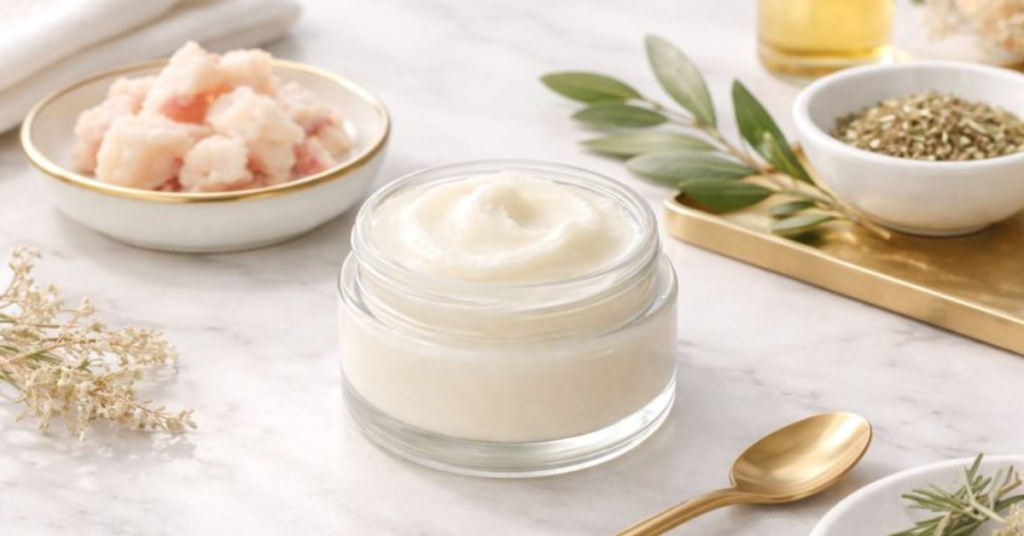
Beef tallow is rendered fat from cattle, primarily sourced from suet, which is the fat surrounding the kidneys and loins. Once purified and processed, tallow becomes a smooth, creamy substance that is highly stable and packed with beneficial compounds for the skin.
Unlike synthetic moisturizers filled with artificial ingredients, beef tallow is completely natural and bioavailable, meaning the skin can absorb and utilize its nutrients efficiently.
Furthermore, beef tallow skincare is becoming one of the most searched topics in natural beauty care.
Why Use Beef Tallow for Skincare?
Many conventional skincare products rely on petroleum-derived ingredients, synthetic fragrances, and preservatives that may not suit everyone’s skin. Because of this, some people prefer simpler, traditional ingredients made from natural sources.
Beef Tallow For Skincare is often chosen because its fatty acid profile is similar to the skin’s natural oils. This similarity may allow it to moisturize the skin effectively without feeling heavy or overly greasy when applied in small amounts.
Those who favor traditional or ancestral skincare approaches often describe Beef Tallow For Skincare as deeply nourishing and supportive of the skin’s moisture barrier. While individual results vary, it is commonly used as a minimalist alternative to highly processed moisturizers.
Nutrients Found in Beef Tallow
Beef Tallow For Skincare naturally contains fat-soluble vitamins and fatty acids that are commonly found in animal-based fats. These nutrients are valued in skincare because they help support the skin’s natural moisture and protective barrier.
Beef tallow contains:
- Vitamin A – Commonly associated with supporting normal skin renewal and a healthy-looking complexion.
- Vitamin D – Plays a role in maintaining the skin barrier and overall skin balance.
- Vitamin E – An antioxidant that helps protect the skin from environmental stressors.
- Vitamin K – Often included in skincare for its role in maintaining skin elasticity and appearance.
- Conjugated Linoleic Acid (CLA) – A naturally occurring fatty acid studied for its skin-soothing properties.
- Stearic Acid & Oleic Acid – Fatty acids that help soften the skin and improve moisture retention.
The nutrient profile of Beef Tallow For Skincare may vary depending on whether the tallow comes from grass-fed or conventionally raised cattle.
The Benefits of Beef Tallow for Skincare
1. Deep Hydration Without Clogging Pores
One of the biggest advantages of beef tallow is its ability to moisturize deeply without leaving a greasy residue. Because it shares a similar lipid profile to human skin, it absorbs quickly and effectively, delivering hydration where it’s needed most. This makes it ideal for people with dry, sensitive, or mature skin.
Unlike some plant-based oils that can feel heavy or comedogenic, beef tallow is non-greasy and won’t clog pores, making it suitable for all skin types.
2. Supports the Skin Barrier
Healthy skin depends on a strong moisture barrier. When the barrier becomes compromised, skin may feel dry, tight, or uncomfortable. Beef Tallow For Skincare is often used to help support the skin’s natural barrier due to its fatty acid composition.
Some people with very dry or sensitive skin report that Beef Tallow For Skincare helps reduce the feeling of dryness by sealing in moisture and protecting the skin from environmental stressors. This section is based on traditional use and personal skincare experiences rather than medical treatment.
Anyone managing ongoing skin conditions should consult a qualified healthcare professional before changing their skincare routine.
3. Natural Anti-Aging Properties
Thanks to its high concentration of antioxidants and vitamins, beef tallow helps fight the signs of aging. Vitamin A stimulates cell turnover and encourages collagen production, which helps reduce the appearance of wrinkles and fine lines.
Additionally, Vitamin E and CLA work together to protect against environmental damage, such as UV exposure and pollution, which contribute to premature aging.
When added to skincare products, frankincense essential oil blends naturally with creams, balms, or oils to enhance their overall skin-nourishing properties.
Many people incorporate it into their routines because it pairs well with moisturizing ingredients, helping to support smoother, more supple-looking skin over time.
Using frankincense in combination with other natural ingredients can make your skincare formulations feel more luxurious and targeted for maintaining healthy, youthful-looking skin.
4. Acne-Prone and Oily Skin Considerations
There is a common belief that all oils contribute to breakouts, but this is not always the case. Beef Tallow For Skincare is sometimes chosen by individuals looking for a moisturizer that closely resembles the skin’s natural sebum.
Because it mimics natural skin oils, some users feel that Beef Tallow For Skincare helps maintain balance rather than stripping or over-drying the skin. Individual responses vary, especially for acne-prone skin.
Those with persistent acne or skin concerns should seek advice from a dermatologist or licensed skincare professional.
5. Skin Repair and Appearance Support
Historically, animal fats such as tallow were used in traditional skincare for protecting the skin and maintaining softness. Beef Tallow For Skincare is sometimes applied to areas of dry or uneven skin texture to support a smoother appearance over time.
Some people report that regular use helps keep skin feeling comfortable and supple. However, Beef Tallow For Skincare is not intended to treat medical wounds, scars, or skin conditions.
For injuries, surgical scars, or medical skin concerns, professional medical advice is always recommended.
6. Free from Harmful Chemicals and Additives
Many commercial moisturizers contain synthetic preservatives, artificial fragrances, and chemical emulsifiers that may irritate the skin. Pure beef tallow is 100% natural, making it an excellent choice for those looking to avoid toxic ingredients in their skincare routine.
Read more in our article “Why Makeup Can Make You Sick“.
When sourcing beef tallow for skincare, it’s best to opt for grass-fed, organic tallow, as it contains higher levels of beneficial nutrients and is free from harmful pesticides and hormones.
To store your beef tallow balm and keep it fresh, using high-quality cosmetic jars makes a big difference. Glass jars with airtight lids are perfect for maintaining the balm’s creamy texture and ensuring it lasts longer.
How to Use Beef Tallow for Skincare
Beef tallow for skincare is highly versatile and can be incorporated into your daily skincare routine in several ways:
1. As a Face Moisturizer
Apply a small amount of beef tallow to clean, damp skin and massage gently. It melts upon contact and spreads easily.
2. As a Body Butter
For dry, rough areas like elbows, knees, and hands, beef tallow provides long-lasting moisture and protection.
3. As a Lip Balm
Tallow makes an excellent natural lip balm, soothes chapped lips and keeping them soft.
4. As a Healing Balm
Use beef tallow to soothe burns, cuts, and skin irritations for faster healing.
5. As a Makeup Remover
Beef tallow’s oil-based properties make it an effective makeup remover, dissolving dirt and makeup while moisturizing at the same time.
6. Baby Skincare Considerations
Because of its simple ingredient profile, some parents explore Beef Tallow For Skincare for gentle moisturizing. However, babies have very delicate skin, and reactions can vary.
Before using Beef Tallow For Skincare on infants—for concerns such as dryness or diaper area care—it is important to consult a pediatrician or licensed healthcare provider. Patch testing is also recommended.
This content is provided for informational purposes only and is not a substitute for medical advice.
Where to Buy Beef Tallow
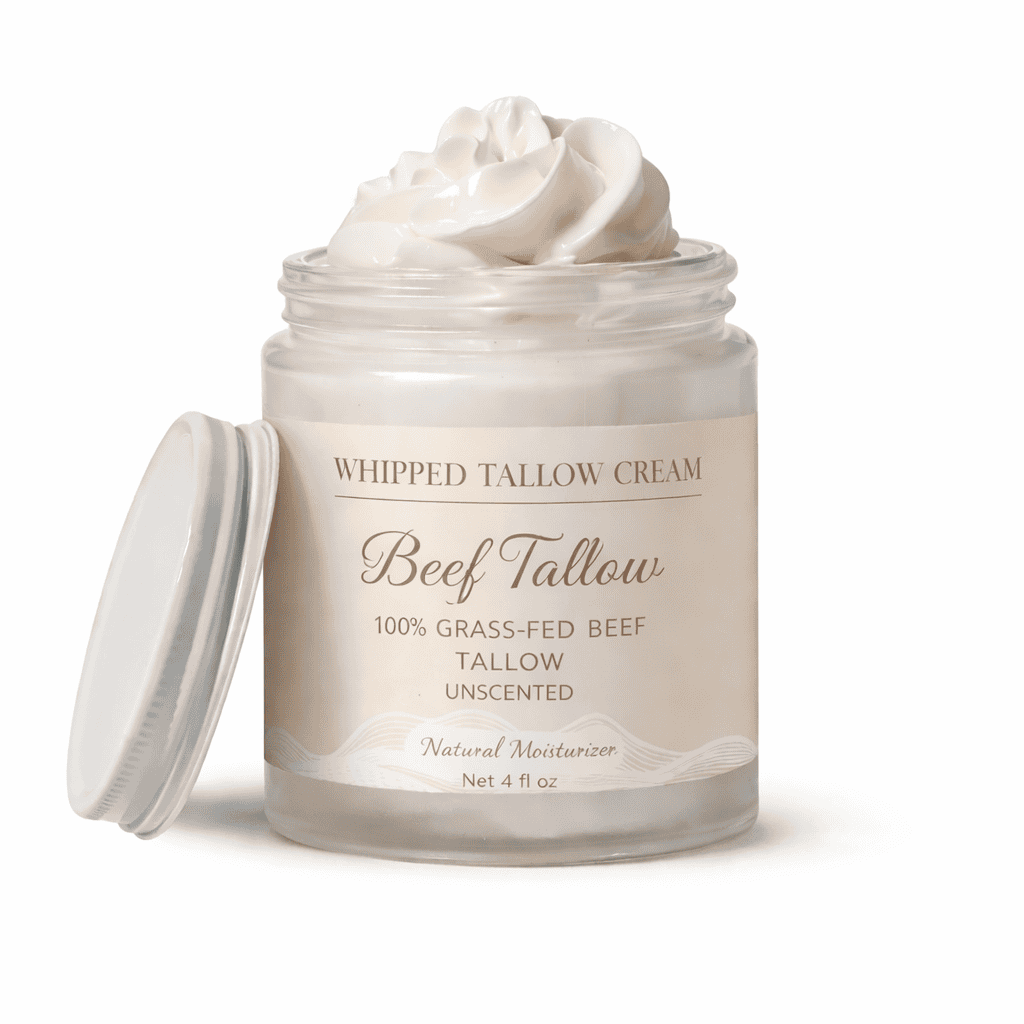
If you’re not up for rendering tallow yourself, you can find pre-made, high-quality tallow balms and creams from brands that focus on natural skincare. Look for products made from 100% grass-fed and organic beef tallow like this one on Amazon.
You may purchase beef tallow at your local market in the meat section. Make sure it is from high quality meat that is grass fed.
Alternatively, if you prefer DIY skincare, you can create your own tallow balm by mixing rendered beef tallow with essential oils and other skin-loving ingredients like beeswax or shea butter.
Beef Tallow For Skincare contains naturally occurring vitamins and antioxidants that are commonly associated with supporting the skin’s appearance. Many users include it in their routines to help maintain softness, elasticity, and hydration as skin matures.
While Beef Tallow For Skincare may help support a healthy-looking complexion, it should not be considered a treatment for aging or skin conditions. Results vary depending on skin type, lifestyle, and overall skincare routine.
How to Make Beef Tallow for Skincare
Rendering beef tallow for skincare is a simple process that allows you to create a natural, nourishing ingredient for your skincare routine. Here’s a step-by-step guide to render beef tallow:
What You’ll Need:
- Beef fat (preferably from grass-fed cows)
- A sharp knife (optional)
- A slow cooker or large pot
- A strainer or cheesecloth
- A glass jar or container for storage
Steps:
1. Prepare the Beef Fat
- Start with raw beef fat, often sold as suet. Cut the fat into small, uniform pieces using a sharp knife. Smaller pieces will render faster and more evenly.
2. Melt the Fat
- Place the cut-up fat into a slow cooker or large pot over low heat. If you’re using a pot, make sure the heat is very low to avoid burning.
- As the fat heats, it will start to melt. Stir occasionally to ensure even melting. The fat will begin to liquefy and separate from any connective tissue or impurities.
3. Simmer and Render
- Continue to cook the fat on low for 2-3 hours, stirring every 20-30 minutes. The fat will eventually turn into a golden liquid, while the remaining solid bits will float to the top.
4. Strain the Tallow
- Once the fat has fully rendered and you have a clear, golden liquid, use a strainer or cheesecloth to separate the solid bits (known as cracklings) from the pure tallow. Pour the liquid through the strainer into a clean container.
5. Cool and Store
- Allow the rendered tallow to cool. It will solidify at room temperature, turning into a firm, waxy consistency.
- Transfer the cooled tallow into glass jars or containers for storage. Store it in a cool, dark place, or in the fridge if you prefer.
Tips:
- If you want a smoother texture for skincare use, you can melt and re-strain the tallow one more time.
- Add a few drops of your favorite essential oils, such as this high quality frankincense oil.
- Beef tallow is naturally rich in vitamins A, D, and K, making it a wonderful moisturizer for dry or aging skin.
Now you’re ready to use your homemade beef tallow for skincare in products like balms, lotions, or as a nourishing treatment for your skin!
If making your own isn’t the right fit, you can explore our Beef Tallow for Skin, available in our natural beauty care section.
After nourishing your skin with natural ingredients like tallow, you can extend your clean beauty routine with our 5 DIY Natural Makeup Recipes for a Holistic Beauty Routine
Would you try beef tallow for skincare in your beauty routine? Let us know your thoughts in the comments!
FAQ’s About Beef Tallow for Skincare
What is beef tallow and how is it used for skincare?
Beef tallow is rendered fat from cows that has been used for centuries as a natural moisturizer. It can be applied directly to the skin or used as an ingredient in balms, creams, and soaps to help nourish and soften skin.
Can beef tallow help with dry or cracked skin?
Yes, beef tallow is deeply moisturizing and helps create a protective barrier on the skin, making it useful for dry patches, rough elbows, and hands that need extra hydration.
How do I apply beef tallow to my skin?
Simply warm a small amount in your hands and massage it gently into the skin. It can be used on the face, body, or as a base for homemade skincare products like lotions and balms.
How should I store beef tallow for skincare?
Store beef tallow in a cool, dry place in a sealed container. If kept away from heat and light, it can last several months without losing its quality or effectiveness.
What are the benefits of using beef tallow for skin?
Beef tallow is rich in natural fats that help moisturize and soften the skin. Many people find it useful for keeping skin smooth, nourished, and protected from dryness, making it a versatile addition to a natural skincare routine.
Conclusion
Beef Tallow For Skincare reflects a return to simple, traditional skincare ingredients that focus on nourishment and compatibility with the skin’s natural oils. Valued for its moisturizing properties and minimal processing, it continues to gain attention among those seeking alternative skincare options.
As with any skincare product, individual results vary. Beef Tallow For Skincare may be worth exploring for those interested in natural, ingredient-focused routines, while always keeping personal skin needs and professional guidance in mind.
This article is for informational purposes only and does not constitute medical advice. Always consult a healthcare professional before trying new skincare products.
For additional tools and digital guides that support natural wellness practices, visit my Wellness Resources page.
Further Reading Resource
Tallow, Rendered Animal Fat, and Its Biocompatibility With Skin: A Scoping Review