Toxic-free Deodorant Overview
As awareness grows around ingredient transparency and personal care choices, more individuals are exploring simple, homemade alternatives that allow greater control over what they apply to their skin.
Written by Betty Liberatore, a natural lifestyle and personal care writer focusing on safe, evidence-informed DIY recipes.
In This Article
Medical Disclaimer: This article is for informational purposes only and should not be considered medical advice. Always consult a licensed healthcare provider before trying new health practices or products.
Affiliate Disclosure: This article may contain affiliate links. As an Amazon Associate, I may earn earn from qualifying purchases at no additional cost to you.
DIY toxic-free deodorant Vs. Conventional
You may be wondering why so many people are choosing to make a DIY toxic-free deodorant instead of buying conventional products.
The skin acts as a protective barrier, but it can absorb certain substances applied to it. Because underarm skin is thinner and contains sweat glands and hair follicles, many people prefer to be mindful of the ingredients used in deodorants and antiperspirants.
Some studies have explored potential concerns around long-term exposure to certain cosmetic ingredients, which has encouraged ongoing research and public discussion.
While regulatory agencies continue to assess ingredient safety, many consumers choose to reduce exposure to specific compounds as a precautionary lifestyle choice.
Common Ingredients Found in Conventional Deodorants
- Aluminum compounds, like aluminum sesquichlorohydrate, are widely used in antiperspirants and are approved for cosmetic use. Some consumers choose aluminum-free alternatives as a precaution or personal preference. Current research indicates that aluminum exposure from topical use is generally low, but individuals with sensitivities may prefer DIY or aluminum-free options.
(Source: U.S. Food & Drug Administration — Antiperspirants and Deodorants)
- Cyclopentasiloxane is a silicone-based ingredient used for smooth application in many personal care products. While considered safe by regulatory agencies, some consumers prefer products with simpler or natural formulations for personal or environmental reasons.
(Source: Cosmetic Ingredient Review / CIR)
- Calcium chloride is used in cosmetics to help thicken products and create a tightening effect on the skin. Although it is derived from natural sources, it can also be synthetically produced, prompting some people to look for simpler formulations.
- Talc is often included in personal care products to absorb moisture. Concerns around contamination and skin sensitivity have encouraged consumers to read labels carefully and explore talc-free options.
- Fragrance is frequently added to deodorants to mask odor, but it often consists of undisclosed synthetic compounds. Because fragrances can sometimes cause irritation or sensitivity, many people opt for fragrance-free or naturally scented alternatives.
People are becoming more aware of the health consequences of using products with known carcinogens in them. Therefore, this Once you experience how simple and customizable this DIY toxic-free deodorant recipe is, you may find it a refreshing alternative to store-bought options. Making your own allows you to tailor ingredients to your preferences while supporting a more intentional personal care routine. toxic-free deodorant recipe will be a great alternative.
What are the benefits of toxic-free deodorants?
Creating a DIY toxic-free deodorant offers several practical and lifestyle benefits for those looking to simplify their personal care routine.
You can make this DIY toxic-free deodorant recipe from ingredients you already have in your cupboard.
It is inexpensive to make and cheaper than store-bought. Moreover, you’ll be saving money.
The deodorant is all natural. Therefore, you can avoid ingredients you personally prefer not to use.
You can customize it according to your needs. For instance, you can add your favorite organic essential oils for a personalized scent.
Certain essential oils, such as tea tree or thyme, have been studied for antimicrobial properties. When used in small amounts in DIY deodorants, they may help support freshness, though they are not a substitute for medical treatment. Individuals with sensitive skin should patch-test first.
(Source: National Center for Complementary and Integrative Health — Essential Oils)
The natural ingredients are gentler on your skin.
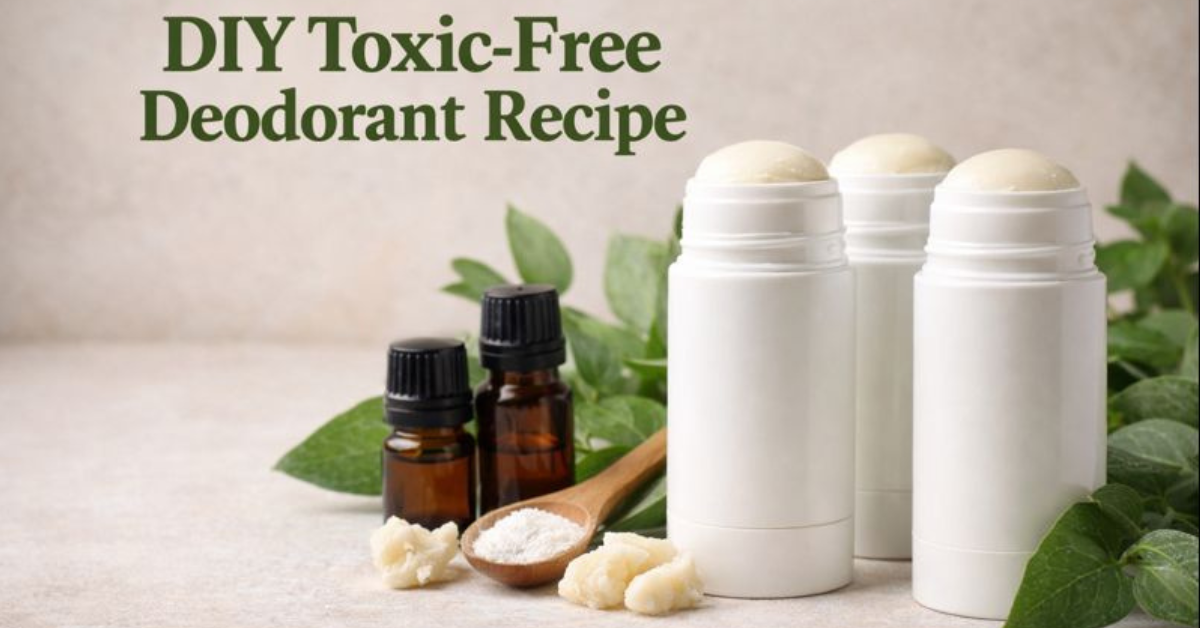
DIY Toxic-Free Deodorant Ingredients:
Disclosure: This section may contain affiliate links. As an Amazon Associate, I earn from qualifying purchases at no additional cost to you.
You can purchase a reusable rollup deodorant container from Amazon to fill your DIY deodorant.
This DIY deodorant recipe is customizable, allowing you to choose ingredients that fit your personal preferences. Making it at home provides a hands-on approach to personal care while allowing you to select natural and aluminum-free ingredients if desired.
Making your own allows you to tailor ingredients to your preferences while supporting a more intentional personal care routine. toxic-free deodorant recipe:
Ingredients & Amounts
- Shea butter: ¼ cup
- Organic cold-pressed coconut oil: ¼ cup
- Beeswax (pastilles or grated): 2 tablespoons
- Arrowroot powder: 3 tablespoons
- Aluminum-free baking soda: 2 tablespoons
- Essential oils (optional):
- 5 drops tea tree oil
- 5 drops lavender oil
Total yield: approximately 5–6 ounces (fills two standard deodorant tubes).
Note:
- If you have sensitive skin, reduce baking soda to 1 tablespoon and increase arrowroot powder to 4 tablespoons.
- For a softer texture, reduce beeswax to 1½ tablespoons.
- For a firmer texture (warmer climates), increase beeswax to 2½ tablespoons
Storage: Store your DIY toxic-free deodorant in a cool, dry place away from direct light.
Instructions
- Combine coconut oil, beeswax, and shea butter in a glass bowl.
- Over low heat, slowly melt the mixture in the double boiler (or in a glass bowl over a pan with 1″ of water). Stir gently with a wooden spoon until all the ingredients have melted.
- Remove from heat once all ingredients have melted completely.
- Add the arrowroot powder and baking soda to the mixture and stir until thoroughly combined. You can use an electric mixer on low speed. Stir occasionally until the mixture is just lukewarm
- Add 5 drops each of tea tree oil and lavender oil. (Optional)
Pour your new DIY toxic-free deodorant recipe into a deodorant container. Let cool and set/harden for about 1 hour.
Once you experience how simple and customizable this DIY toxic-free deodorant recipe is, you may find it a refreshing alternative to store-bought options.
Making your own DIY toxic-free deodorant allows you to tailor ingredients to your preferences while supporting a more intentional personal care routine.
Small swaps like using a toxic-free deodorant reduce chemical absorption through the skin, contributing to a clean living lifestyle focused on lowering everyday toxic load.
If you’re transitioning to a cleaner personal care routine, you might also enjoy our 5 DIY Natural Makeup Recipes for a Holistic Beauty Routine to reduce toxins in your cosmetics as well.