Essential oils have become a staple in clean living, natural personal care, and home fragrance routines. As interest in DIY and low-toxin lifestyles continues to grow, many people want to learn how to make essential oils at home rather than rely on commercially produced products that may contain synthetic additives or undisclosed ingredients.
Before diving into the homemade essential oils process, it’s important to understand what essential oils are, how they’re traditionally made, and the difference between true essential oils and infused plant oils. This guide explains the benefits, safety considerations, and step-by-step methods on how to make essential oils at home with a still and without a still, including an often-overlooked but critical factor: water quality used in essential oil infusions.
Table of Contents
Medical Disclaimer: This article is for informational purposes only and should not be considered medical advice. Always consult a licensed healthcare provider before trying new health practices or products.
Affiliate Disclosure: This article may contain affiliate links. As an Amazon Associate, I may earn earn from qualifying purchases at no additional cost to you.
What Are Essential Oils?
Essential oils are highly concentrated aromatic compounds extracted from plants. These volatile compounds give plants their characteristic scent and are found in leaves, flowers, bark, roots, seeds, and peels.
True essential oils are typically produced through:
- Steam distillation
- Cold pressing (mainly for citrus)
Because essential oils are concentrated, only a small amount of oil is produced from a large quantity of plant material.
Benefits of Homemade Essential Oils (When Used Properly)
When used responsibly and diluted correctly, essential oils are commonly used for:
- Natural fragrance and aromatherapy
- Personal care products such as deodorants, soaps, and lotions
- Household cleaning blends
- Mindful practices like relaxation or meditation
Essential oils are not medicines and should not be used to diagnose, treat, or prevent disease. Their primary role is supportive and aromatic, not medical.
Important Safety and Medical Considerations
Essential oils are powerful substances and should always be handled with care.
General safety guidelines:
- Never ingest homemade essential oils
- Always dilute before applying to skin
- Perform a patch test before topical use
- Avoid use around infants, pets, or during pregnancy without professional guidance
- Improper distillation can produce unsafe oils
How Essential Oils Are Made: Traditional Distillation Explained
Why Distillation Is Used
Steam distillation is the traditional and scientifically recognized method for extracting true essential oils. Steam gently releases volatile aromatic compounds from plant material, which are then condensed and separated.
Benefits of steam distillation:
- Produces authentic essential oils
- Allows separation of essential oil and hydrosol
- Results in longer shelf life
- Preserves delicate aromatic compounds
How to Make Essential Oils at Home With a Still
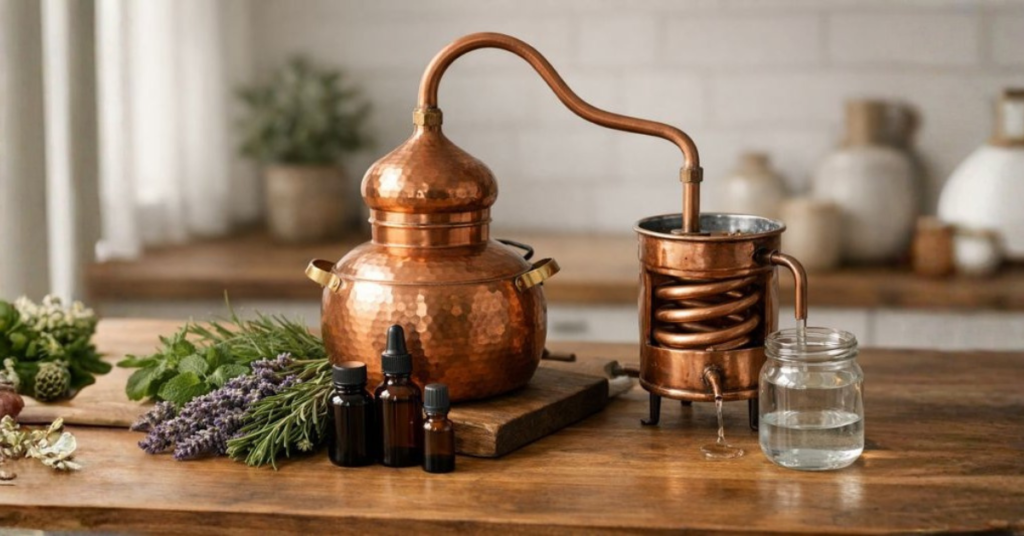
Making essential oils at home requires a distillation still, which can be purchased in small countertop versions for personal use.
What You’ll Need
- Fresh or dried plant material
- Essential oil distillation kit -our recommendation
- Water (type matters — see section below)
- Heat source
- Glass collection containers
How to Make Essential Oils at Home: Essential Oil Distillation
Step 1: Prepare the Plant Material
Lightly chop or bruise the plant material to expose aromatic surfaces. Do not pulverize.
Step 2: Add Water
Place plant material into the still and add the appropriate amount of water according to the still manufacturer’s instructions.
Step 3: Apply Heat
Heat the still slowly. As water heats, steam passes through the plant material, releasing volatile compounds.
Step 4: Condensation
The steam travels through a cooling coil, where it condenses into liquid.
Step 5: Separation
The condensed liquid separates into:
- Essential oil (top layer)
- Hydrosol (aromatic water)
Step 6: Collection and Storage
Carefully separate the essential oil and store it in dark glass bottles away from heat and light.
Water Quality Matters: What Type of Water to Use for Essential Oils
Water is a critical but often overlooked component of essential oil distillation. Because distillation concentrates volatile compounds, anything present in the water can affect the final oil and hydrosol.
Distilled Water: Best Choice
Distilled water is the preferred option for making essential oils at home.
Why distilled water is recommended:
- Free from minerals, chlorine, and contaminants
- Produces cleaner essential oils and hydrosols
- Prevents unwanted chemical reactions during heating
- Reduces residue buildup in distillation equipment
Distilled water provides consistency and purity, making it the best option for clean living and DIY essential oil production.
Filtered Water: Acceptable Alternative
High-quality filtered water may be used if distilled water is unavailable.
Important considerations:
- Must remove chlorine and heavy metals
- Should not contain added minerals
- Results may vary depending on filtration quality
Filtered water is acceptable for short distillation sessions but is less consistent than distilled water.
Tap, Mineral, or Spring Water: Not Recommended
Tap water often contains chlorine, fluoride, and trace metals, which can interfere with aroma and purity. Mineral and spring water contain naturally occurring minerals that can:
- Alter scent and clarity
- Reduce shelf life
- Cause scale buildup in stills
For best results, avoid these water types.
Can You Make Essential Oils Without a Still?
True essential oils cannot be made without distillation equipment. However, you can make herbal infused oils, which are often confused with essential oils.
Infused oils extract fat-soluble plant compounds into a carrier oil. While they are not essential oils, they are widely used in clean living and natural personal care.
How to Make Herbal Infused Oils (No Still Required)
Why This Method Works
Infused oils capture aromatic and beneficial plant compounds without concentration. They are gentler, safer, and more practical for everyday use.
Benefits of herbal infused oils:
- No special equipment required
- Lower risk of skin irritation
- Ideal for skincare, massage, and DIY products
- Affordable and beginner-friendly
How to Make Herbal Infused Oils: Step-byStep
What You’ll Need
- Fully dried herbs or flowers
- Carrier oil (olive, jojoba, sweet almond, sunflower)
- Glass jar
- Strainer or cheesecloth
Steps
- Fill a clean jar halfway with dried plant material
- Cover completely with carrier oil
- Seal and store in a warm, dark place for 4–6 weeks
- Shake gently every few days
- Strain and store in dark glass bottles
Note: No water should be used in infused oils. Moisture increases mold risk.
Comparing Methods: With a Still vs Without a Still
| Feature | With a Still | Without a Still |
|---|---|---|
| Produces true essential oil | Yes | No |
| Equipment required | Moderate | Minimal |
| Concentration | Very high | Mild |
| Safety for beginners | Moderate | High |
| Best for | Aromatherapy | Skincare & DIY |
Which Method Is Best for Clean Living?
For most households, herbal infused oils are safer, easier, and better suited to daily use. Distillation is best reserved for those who understand equipment safety and want authentic essential oils for aromatic purposes.
FAQ: Make Essential Oils at Home
What equipment do I need to make essential oils at home?
To make essential oils at home, you typically need a small distillation still (copper or stainless steel), a boiler pot, a condenser coil, jars for collection, and fresh herbs or botanicals. Optional items include a thermometer and hydrosol bottles.
Can I use any herbs or plants to make essential oils at home?
Most aromatic herbs and flowers work, such as lavender, rosemary, mint, eucalyptus, and rose petals. Avoid using toxic plants and make sure your ingredients are pesticide-free.
What is the difference between essential oils and hydrosols?
Essential oils are highly concentrated plant extracts, while hydrosols are the aromatic water left over from distillation. Hydrosols are gentler and can be used for skincare, sprays, and culinary purposes.
Is it safe to make essential oils at home?
Yes, if you follow safety guidelines. Use proper equipment, handle hot steam carefully, and work in a well-ventilated area. Keep children and pets away from the distillation setup.
How long does it take to extract essential oils at home?
Extraction time depends on the plant material and method used. Steam distillation can take 1–3 hours for small batches, while cold-press or infusion methods may vary.
How should I store homemade essential oils?
Store essential oils in dark glass bottles away from heat, light, and moisture. Proper storage can extend shelf life to 1–2 years depending on the oil.
Can beginners make essential oils at home?
Absolutely! Start with simple herbs like lavender or rosemary and a small stainless steel still. Following step-by-step instructions ensures safe and effective results.
What type of water should be used to make essential oils?
Distilled water is the best option. It contains no minerals, chlorine, or contaminants that could affect oil purity or aroma.
Can I use filtered water instead of distilled water?
Yes, high-quality filtered water can be used if distilled water is unavailable. However, results may be less consistent depending on filtration quality.
Is tap water safe for essential oil distillation?
Tap water is not recommended. It often contains chlorine, fluoride, and trace metals that can interfere with aroma, purity, and shelf life.
Can I use spring or mineral water?
No. Mineral and spring water contain dissolved minerals that can alter scent, reduce oil quality, and damage distillation equipment.
Do infused oils require water?
No. Infused oils should never include water. Plant material must be fully dried to prevent mold and spoilage.
Final Thoughts
Learning how to make essential oils at home starts with understanding what is realistically achievable and safe. While true essential oils require distillation, infused oils offer a practical, effective alternative that aligns beautifully with clean living and toxin-free personal care.
When proper methods and water quality are used, DIY plant oils can be a rewarding way to reduce synthetic fragrance exposure and reconnect with traditional practices.
Resources
NAHA Essential oil safety guidelines – https://www.naha.org/safety/guidelines/
Introduction to aromatherapy and essential oils – https://www.nccih.nih.gov/health/aromatherapy
Educational resources for DIY aromatherapy – https://theherbalacademy.com/
Ready to start making your own essential oils at home? Check out this home distillation kit.