Natural antibiotic recipe ideas are gaining attention as people rediscover traditional foods and herbs known for their antimicrobial benefits. With rising concerns about antibiotic resistance, digestive side effects, and overall gut health, many are exploring natural ways to support immunity.
But how do natural antibiotics really compare to conventional antibiotics? When should each be used? And how can you safely incorporate natural options into your wellness routine?
This article explores the differences between natural and conventional antibiotics, the benefits of common natural antibiotic ingredients, what they can be used for, how long to take them, how to store them, and includes a simple homemade recipe you can make at home.
In This Article
Medical Disclaimer: This article is for informational purposes only and should not be considered medical advice. Always consult a licensed healthcare provider before trying new health practices or products.
Affiliate Disclosure: This article may contain affiliate links. As an Amazon Associate, I may earn earn from qualifying purchases at no additional cost to you.
What Are Conventional Antibiotics?
Conventional antibiotics are pharmaceutical drugs designed to kill bacteria or stop their growth. They are prescribed to treat bacterial infections such as pneumonia, strep throat, urinary tract infections, and skin infections.
Benefits of Conventional Antibiotics
- Fast and targeted action for serious bacterial infections
- Clinically tested and regulated
- Life-saving when infections are severe or systemic
- Precise dosing and predictable outcomes
Limitations
- Ineffective against viruses (colds, flu, COVID-19)
- Can disrupt gut microbiome
- Possible side effects (nausea, diarrhea, yeast infections)
- Overuse contributes to antibiotic resistance
Conventional antibiotics are essential in modern medicine and should never be replaced when they are medically necessary.
What Are Natural Antibiotics?
Natural antibiotics include foods, herbs, and plant compounds with antimicrobial, antiviral, antifungal, or immune-supporting properties. Rather than targeting a single pathogen, many work by supporting the immune system and creating an environment that discourages harmful microbes.
Natural antibiotics are best used for:
- Mild or early-stage infections
- Immune support and prevention
- Complementary care (not replacement for prescriptions)
Common Natural Antibiotic Ingredients and Their Benefits
1. Garlic
Garlic contains allicin, a sulfur compound with strong antibacterial, antiviral, and antifungal properties. Allicin is most potent when garlic is raw and freshly crushed.
Benefits:
- Helps inhibit harmful bacteria
- Supports immune response
- May help with respiratory and digestive infections
Best for:
Colds, sore throat, mild sinus issues, gut imbalance
2. Raw Honey
Raw honey has natural antibacterial properties due to enzymes that produce hydrogen peroxide and its low moisture content. Raw honey should never be given to infants under 1 year due to the risk of botulism.
Benefits:
- Soothes throat irritation
- Supports wound healing
- Helps fight certain bacteria
- Prebiotic for gut health
Best for:
Sore throat, cough, immune support, topical use for minor cuts
3. Ginger
Ginger contains bioactive compounds like gingerol, known for antimicrobial and anti-inflammatory effects.
Benefits:
- Supports digestion
- Reduces inflammation
- Helps fight bacteria linked to respiratory and gut issues
Best for:
Nausea, colds, digestive discomfort
4. Turmeric
Turmeric’s active compound, curcumin, has antimicrobial and anti-inflammatory properties. Curcumin is poorly absorbed on its own, which is why black pepper (piperine) significantly increases its effectiveness.
Benefits:
- Reduces inflammation
- Supports immune health
- May inhibit certain bacteria and fungi
Best for:
Inflammation, immune support, joint discomfort
5. Lemon
Lemon provides vitamin C and creates an acidic environment that discourages bacterial growth.
Benefits:
- Supports immune function
- Aids digestion
- Enhances absorption of other nutrients
6. Black Pepper
Black pepper contains piperine, which enhances the absorption of curcumin from turmeric.
Benefits:
- Improves bioavailability of nutrients
- Supports digestion
7. Oil of Oregano
Oil of oregano contains carvacrol and thymol, two powerful compounds known for strong antibacterial, antiviral, and antifungal effects. These compounds help inhibit the growth of many harmful microbes.
Benefits:
• Helps fight harmful bacteria and fungi
• Supports immune system function
• May help with respiratory and digestive infections
Best for:
Colds, sinus congestion, sore throat, fungal infections, gut imbalance
For a convenient option, try Micro Ingredients Oil of Oregano, a high-potency oregano oil supplement with 4X strength Carvacrol designed to support immune health and overall wellness.
Natural Antibiotics vs. Conventional Antibiotics
| Aspect | Natural Antibiotics | Conventional Antibiotics |
|---|---|---|
| Strength | Mild to moderate | Strong, targeted |
| Speed | Gradual | Fast |
| Best For | Prevention, mild issues | Serious infections |
| Side Effects | Usually minimal | Can be significant |
| Resistance Risk | Low | High if misused |
The key takeaway: they serve different purposes. Natural antibiotics support health and immunity, while conventional antibiotics treat acute, serious infections.
What Natural Antibiotics Can Be Used For
Natural antibiotics may be helpful for:
- Early cold or flu symptoms
- Sore throat
- Mild sinus congestion
- Digestive imbalance
- Immune system support
- Recovery support after illness
They should not be used for:
- High fever
- Severe pain
- Worsening or persistent infections
- Conditions requiring medical diagnosis
When to Seek Medical Care Immediately
- Fever over 102°F (39°C)
- Shortness of breath or chest pain
- Severe ear, sinus, or tooth pain
- Symptoms lasting longer than 5–7 days without improvement
- Infections in young children, elderly adults, or people with chronic illness
- Wounds that are red, swollen, spreading, or producing pus
How Long Should You Take Natural Antibiotics?
- For prevention: 1–2 weeks at a time
- At first signs of illness: 5–10 days
- Daily immune support: Can be used intermittently, not continuously for months
Listen to your body. If symptoms worsen or last more than a few days, consult a healthcare professional.
How Long Do Natural Antibiotics Last in the Refrigerator?
Most honey-based natural antibiotic blends:
- Last 2–3 months refrigerated
- Should be stored in a clean glass jar
- Always use a clean spoon to avoid contamination
If you notice mold, bubbling, or an off smell, discard immediately. Slight bubbling can occur due to natural fermentation, but discard if there is a strong sour smell, mold, or visible spoilage.
Homemade Natural Antibiotic Recipe
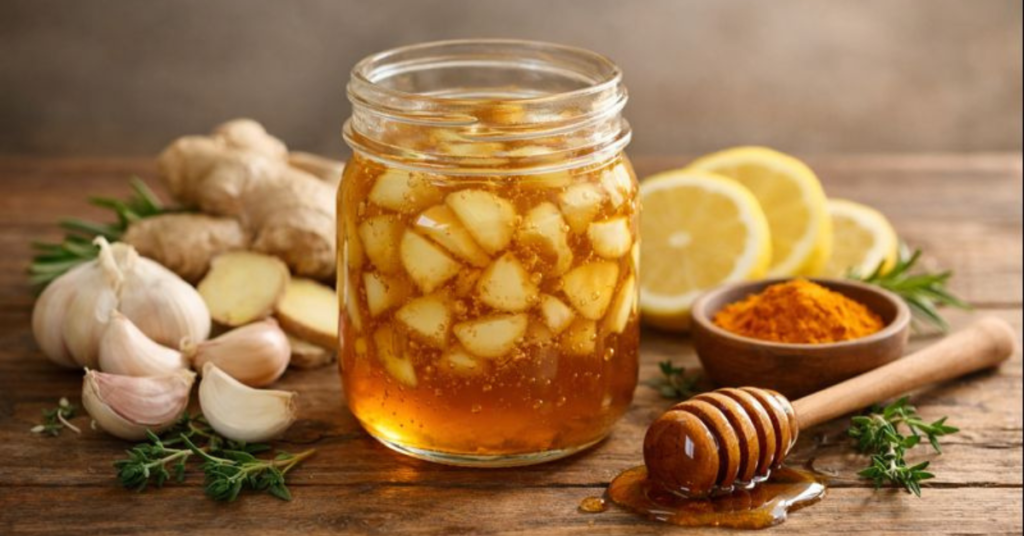
Garlic Honey Immune Blend
Ingredients:
- 1 cup raw honey
- 8–10 cloves fresh garlic, crushed
- 1 teaspoon grated ginger
- ½ teaspoon turmeric
- Pinch of black pepper
- Optional: 1 tablespoon lemon juice
Instructions:
- Crush garlic and let sit for 10 minutes to activate allicin.
- Add garlic and remaining ingredients to a clean glass jar.
- Pour raw honey over the mixture until fully covered.
- Stir well, seal loosely, and let sit at room temperature for 24 hours.
- Refrigerate after 24 hours.
How to Use:
- Daily wellness: 1 teaspoon per day
- During illness: 1 teaspoon 2–3 times per day
- Can be eaten directly or mixed into warm (not hot) tea or water
FAQ’s About Natural Antibiotics
Are natural antibiotics as strong as prescription antibiotics?
No. Natural antibiotics are generally milder and work by supporting the immune system and creating an environment that is less friendly to harmful microbes. Prescription antibiotics are stronger, targeted medications used to treat diagnosed bacterial infections and can be life-saving when needed.
Can natural antibiotics replace prescription antibiotics?
Natural remedies should not replace prescription antibiotics for serious or confirmed bacterial infections. They are best used for immune support, prevention, and mild early symptoms while monitoring your condition carefully.
Do natural antibiotics kill good bacteria too?
Most natural remedies are less disruptive to the gut microbiome than pharmaceutical antibiotics. Some ingredients like raw honey and garlic may even support beneficial gut bacteria when used in moderation.
How quickly do natural antibiotics work?
Natural remedies tend to work gradually. Some people notice symptom relief within a day or two, but they are not designed for rapid infection control like prescription antibiotics.
Can you take natural antibiotics every day?
Some ingredients like garlic, ginger, turmeric, and lemon can be used regularly in food. However, concentrated blends or remedies are best used in cycles rather than continuously for months at a time.
Are natural antibiotics safe for children
Many natural remedies can be used in small, food-based amounts, but dosages should be adjusted carefully. Raw honey should never be given to children under 1 year old. Always consult a pediatric healthcare professional before using herbal remedies for children.
Can natural antibiotics help with viral infections?
They don’t kill viruses directly the way antivirals do, but many natural remedies support immune function and may help the body respond more effectively during colds and flu.
Do natural antibiotics expire?
Yes. Fresh preparations like garlic honey blends can spoil over time. Most honey-based mixtures last about 2–3 months in the refrigerator when stored properly in a clean glass container.
Final Thoughts
Natural antibiotics and conventional antibiotics are not enemies—they are tools for different situations. Natural options shine in prevention, immune support, and mild conditions, while conventional antibiotics remain essential for treating serious bacterial infections.
By understanding both, you can make informed, balanced choices that support your health naturally while respecting the power of modern medicine.
Sources:
Research into plant compounds with antimicrobial properties is ongoing, and some natural ingredients have shown promising effects in lab settings.
Source: Medical News Today – 6 Natural Antibiotics: Evidence, Effectiveness, and More
Some natural substances have shown antibacterial activity in lab studies, but they are not substitutes for medical treatment. As explained in Healthline’s article on natural antibiotics, certain plant compounds may support the body’s defenses while conventional antibiotics remain necessary for serious infections.