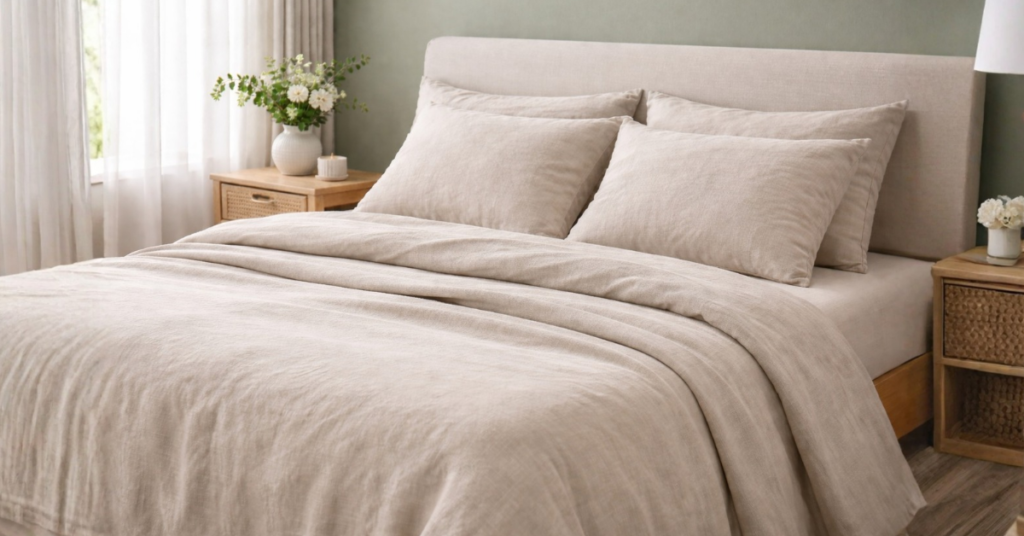
When it comes to improving sleep, skin comfort, and overall wellness, what touches your body for 7–8 hours every night matters. Linen sheets are becoming a top choice for health-conscious households — and for good reason. Made from the flax plant, linen is one of the most breathable, durable, and skin-friendly fabrics available.
In this guide, we’ll cover:
- What makes linen unique
- Health and comfort benefits
- How synthetic bedding is made
- Why synthetic blends may contribute to health concerns
- Why switching to natural fabrics is a smart long-term choice
Table of Contents
Affiliate Disclosure: This article may contain affiliate links. As an Amazon Associate, I may earn earn from qualifying purchases at no additional cost to you.
Linen Sheets: Benefits, Comfort, and Why Natural Fabrics Beat Synthetics
What Are Linen Sheets?
Linen sheets are made from fibers of the flax plant (Linum usitatissimum). Organic linen is grown without synthetic pesticides and processed using fewer harsh chemicals than many modern textiles.
Linen fibers are hollow and naturally textured, which gives the fabric its signature breathability and moisture control — two key factors in healthy sleep.
Organic Linen Sheets Benefits
1. Exceptional Breathability
Linen allows air to circulate freely, preventing heat from getting trapped under the covers. This helps:
- Reduce night sweats
- Lower the chance of overheating
- Support more restful sleep cycles
People who “sleep hot” often notice an immediate difference after switching to linen.
2. Moisture-Wicking for Skin Health
Linen can absorb up to 20% of its weight in moisture before feeling damp. Instead of sweat sitting against your skin, it evaporates more easily, which may help:
- Reduce body acne
- Lower risk of fungal skin irritation
- Prevent clogged pores during sleep
3. Naturally Hypoallergenic
High-quality linen contain fewer chemical residues than many synthetic blends. This makes them a good option for people with:
- Sensitive skin
- Eczema-prone skin
- Allergies or skin reactivity
Linen clothing provides similar skin-friendly benefits during the day.
4. Thermoregulating Year-Round
Linen adapts to temperature. It keeps you cool in summer and provides insulation in cooler months, meaning one bedding set can work all year.
5. Antibacterial & Odor-Resistant Properties
Flax fibers naturally resist bacterial growth better than many synthetic materials, which helps:
- Keep sheets fresher longer
- Reduce odor buildup
- Support a cleaner sleep environment
How Synthetic Bedding Is Made
Many modern sheet sets are labeled as:
- Polyester
- Microfiber
- Nylon blends
- Performance fabrics
These materials are derived from petroleum (plastic). The manufacturing process involves:
- Extracting crude oil
- Refining it into chemical compounds
- Melting and extruding plastic polymers into fibers
- Treating fabrics with finishes like wrinkle resistance, stain resistance, or flame retardants
These chemical processes create durable fabrics — but not necessarily skin-friendly ones.
Potential Health Concerns with Synthetic Sheets
1. Chemical Residues
Synthetic sheets may contain or be treated with:
- Formaldehyde-based resins
- Stain-resistant coatings
- Flame retardants
- Dyes containing chemical stabilizers
Some people report skin irritation, contact dermatitis, or respiratory sensitivity from these residues.
2. Trapped Heat and Moisture
Synthetic fibers are less breathable. This can:
- Increase sweating
- Create a warm, damp environment
- Encourage bacteria or fungal growth on skin
This is one reason natural fibers like organic linen are often recommended for sensitive sleepers.
3. Microplastic Exposure
Synthetic fabrics shed microscopic plastic fibers when washed. These microplastics enter water systems and are now found in air, food, and water. While long-term health effects are still being studied, reducing exposure is a growing wellness priority.
Why Natural Fabrics Like Organic Linen Are the Better Choice
Switching to organic linen sheets (and linen clothing) supports:
- Better Skin Comfort
Natural airflow, fewer chemical treatments, and improved moisture control.
- Improved Sleep Quality
Temperature regulation reduces sleep disruptions from overheating.
- Lower Environmental Impact
Flax requires less water and fewer inputs than many conventional crops, and linen is biodegradable.
- Long-Term Durability
Linen fibers are extremely strong. Quality linen sheets often last for years and get softer over time.
A good night’s sleep is an essential part of supporting overall health, and pairing natural sleep solutions like linen sheets with holistic wellness practices can amplify their benefits.
Just as breathable, chemical-free bedding promotes restorative rest, exploring alternative medicine for common health conditions—such as herbal remedies and lifestyle therapies—can help maintain balance and support your body naturally. Learn more about gentle, natural approaches to everyday health in our guide: Alternative Medicine for Common Health Conditions.
Different Types of Linen: What You Should Know
Not all linen is created equal. The type, weave, and finish of linen can affect how your sheets feel, how long they last, and how breathable and comfortable they are. Understanding the differences helps you choose the best linen sheets or linen clothing for your home and wardrobe.
1. Flax Origin & Quality
All linen comes from the flax plant, but the quality varies depending on where it’s grown:
- European Linen – Typically considered the highest quality, grown in France, Belgium, or Ireland. Smooth, long fibers make it extra durable.
- Chinese or Indian Linen – More affordable, sometimes with shorter fibers. Still breathable, but may be less durable over time.
2. Weave Types
The weave determines texture, softness, and strength:
- Plain Weave – A tight, simple weave; crisp, strong, and often used for bedding or shirts.
- Herringbone – A decorative zig-zag pattern; slightly heavier and visually appealing, common in luxury sheets and jackets.
- Damask / Jacquard – Intricate woven patterns; smooth on one side and textured on the other, typically premium bedding.
- Linen Blends – Mixed with cotton, silk, or synthetic fibers. Softer and more affordable, but may reduce some of linen’s natural benefits.
3. Finish / Treatment
- Washed / Stonewashed Linen – Softens naturally and has a relaxed, casual look. Very popular for linen sheets.
- Bleached or Dyed Linen – Brighter or colored fabrics; still breathable but can be less eco-friendly depending on dyes used.
- Unprocessed / Raw Linen – Slightly stiff at first but extremely natural and chemical-free. Becomes softer with each wash.
4. Organic vs Conventional Linen
- Organic Linen – Grown without pesticides or chemical fertilizers. Perfect for sensitive skin and eco-conscious households.
- Conventional Linen – Grown using standard farming practices and may involve chemical treatments.
Tip: For sheets and clothing that touch your skin every day, choosing high-quality or organic linen ensures you get maximum comfort, durability, and health benefits.
Linen Sheets vs. Synthetic Sheets at a Glance
| Feature | Linen Sheets | Synthetic Sheets |
|---|---|---|
| Breathability | Excellent | Low–Moderate |
| Moisture Control | High | Low |
| Skin Friendliness | High | Can irritate sensitive skin |
| Heat Retention | Low | High |
| Environmental Impact | Biodegradable | Plastic-based |
| Longevity | Very durable | Can pill or degrade |
Final Thoughts
Your bedding directly affects your skin, temperature, and sleep quality every night. Organic Linen sheets offer a rare combination of comfort, durability, and natural performance that synthetic fabrics struggle to replicate.
If you’re upgrading your sleep environment, start with your sheets. Adding linen clothing during the day extends those same breathable, skin-friendly benefits into the rest of your routine.
FAQ’s about Organic Linen Sheets
Are linen sheets good for hot sleepers?
Yes. Linen sheets are one of the best bedding choices for hot sleepers because they allow heat and moisture to escape.
Does linen get softer over time?
Absolutely. Linen fibers soften with washing while maintaining strength.
Is linen fabric better for sensitive skin?
Many people with sensitive skin prefer linen facric because it contains fewer synthetic chemicals and allows better airflow.
Does linen wrinkle easily?
Yes, but this is part of linen’s natural look. The relaxed texture is considered a feature, not a flaw.
Are organic linen sheets worth the price?
Because of their durability, breathability, and long lifespan, many people find organic linen sheets more cost-effective over time.
How long do linen sheets last?
High-quality linen sheets are extremely durable and can last 10–20 years with proper care. They often get softer with every wash while maintaining strength, making them a long-term investment for your bedroom.
Can linen sheets help with night sweats?
Yes! Linen is highly breathable and moisture-wicking, which helps regulate body temperature at night. Many hot sleepers find that switching to linen sheets reduces sweating and improves overall sleep quality.
Does linen require special care?
Linen sheets are surprisingly low-maintenance. Wash in cool or warm water, tumble dry on low, and avoid harsh bleach. Over time, linen softens naturally, giving you a luxurious, cozy feel without extra effort.
Conclusion:
Choosing the right bedding isn’t just about comfort — it’s about health, well-being, and creating a sleep-friendly environment. Linen sheets offer unmatched breathability, moisture-wicking ability, and hypoallergenic qualities, making them an ideal choice for sensitive skin and hot sleepers alike. Over time, linen becomes softer and more luxurious, providing lasting comfort and durability.
Pairing your bedding with linen clothing can extend these benefits into your daily routine, keeping your skin happy, your body cool, and your lifestyle aligned with natural, sustainable living. By switching from synthetic fabrics to high-quality linen, you invest in better sleep, better skin, and a cleaner, healthier home.
Ready to Transform Your Sleep?
Upgrade your bedroom with luxurious linen and feel the difference for yourself. Breathable, hypoallergenic, and naturally soft, linen sheets make every night a restful escape.
Shop organic linen sheets on Amazon, or View our recommended Organic Linen Products. Your body, skin, and sleep will thank you!