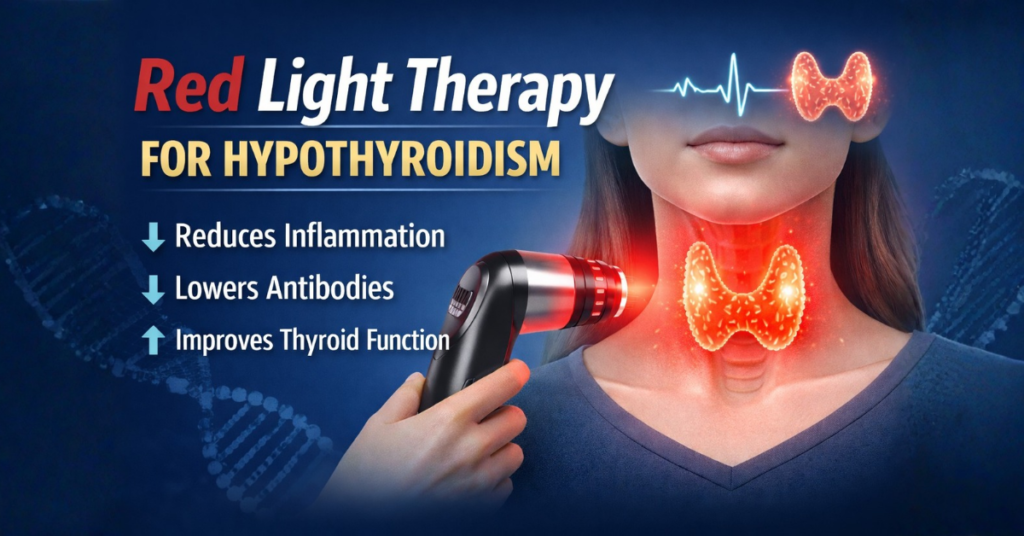
Red light therapy for hypothyroidism is gaining popularity as a natural thyroid support and a non-invasive way to support thyroid function. Unlike conventional treatments that only replace hormones, red light therapy — also called low-level laser therapy (LLLT) or photobiomodulation — works at the cellular level to improve thyroid health, reduce inflammation, and potentially enhance hormone production.
For those seeking alternative or complementary approaches, understanding red light therapy for thyroid can help you make informed choices about integrating it into your wellness routine.
In This Article
Medical Disclaimer: This article is for informational purposes only and should not be considered medical advice. Always consult a licensed healthcare provider before trying new health practices or products.
Affiliate Disclosure: This article may contain affiliate links. As an Amazon Associate, I may earn earn from qualifying purchases at no additional cost to you.
How Red Light Therapy Interacts With the Thyroid
The thyroid is a small but metabolically active gland with high mitochondrial density, meaning it requires a lot of cellular energy to function. This also makes it sensitive to oxidative stress and immune-mediated damage. Red light therapy uses near-infrared light, typically around 830 nm, to stimulate mitochondria — the energy centers of cells.
When thyroid cells absorb this light:
- ATP Production Increases: Cells generate more energy to repair and maintain function.
- DNA & RNA Synthesis Is Boosted: Supports tissue regeneration and protein synthesis.
- Oxidative Stress Is Reduced: Reactive oxygen species naturally produced in the thyroid are neutralized, protecting cells from damage.
- Immune Modulation Occurs: Overactive immune responses are calmed, which may reduce thyroid antibody activity and inflammation.
This combination of effects supports thyroid function at the root level, rather than just alleviating symptoms.
Why the Thyroid Responds So Well to Red Light
Several features make the thyroid especially receptive to red light therapy:
- High Blood Flow: The gland’s vascular nature allows light energy to penetrate and stimulate tissue effectively.
- Mitochondria-Rich Cells: More mitochondria mean more opportunity for light to enhance cellular energy.
- Sensitivity to Oxidative Stress: Thyroid cells naturally produce reactive oxygen species (ROS), so reducing oxidative stress can significantly improve function.
- Regenerative Potential: Red light promotes collagen and protein synthesis, supporting tissue repair.
Together, these factors allow red light therapy to improve microcirculation, cellular metabolism, and antioxidant balance, creating an environment for the thyroid to function more efficiently.
Practical Effects of Red Light Therapy on Thyroid Health
While every individual responds differently, users and early research suggest red light therapy can:
- Improve Hormone Levels: Supports the production of T3 and T4 hormones.
- Reduce Antibody Activity: Can lower thyroid peroxidase (TPO) antibodies in autoimmune conditions.
- Enhance Tissue Regeneration: Promotes healing of thyroid follicles and surrounding connective tissue.
- Decrease Medication Dependency: Some individuals report a reduced need for levothyroxine under physician supervision.
- Increase Energy and Metabolism: Improved thyroid function can support overall energy levels and metabolic health.
These outcomes reflect the therapy’s dual role: supporting the thyroid’s cellular health and modulating the immune system to reduce ongoing inflammation.
How Red Light Therapy for Thyroid Works at the Cellular Level
Red light therapy penetrates skin and thyroid tissue without heat or vibration. At the cellular level, it triggers:
1. Increased Energy Production
Mitochondria absorb light and produce more ATP, providing the energy needed for thyroid cells to repair, synthesize hormones, and maintain healthy function.
2. Enhanced Cellular Repair
DNA and RNA synthesis is boosted, encouraging cell regeneration. Follicular cells that produce thyroid hormones can recover more effectively.
3. Reduced Inflammation
Inflammatory cytokines, such as TNF-α and IFN-γ, are lowered. Chronic inflammation in the thyroid is a major factor in autoimmune thyroid dysfunction, so reducing it helps maintain normal thyroid activity.
4. Oxidative Stress Management
By neutralizing reactive oxygen species, red light protects thyroid cells from damage caused by oxidative stress.
5. Immune System Modulation
Red light can calm overactive T cells and B cells, decreasing autoimmune attacks and lowering TPO antibodies, supporting a more balanced immune environment in the thyroid.
How to Use Red Light Therapy for Thyroid Support
If you’re considering at-home red light therapy for thyroid support, here are some practical tips:
- Wavelength Matters: Look for devices in the near-infrared range (around 830 nm).
- Session Frequency: 2–3 sessions per week are typical in research protocols.
- Duration: Sessions usually last 10–15 minutes per thyroid area.
- Distance: Keep the device 6–12 inches from the skin, depending on the manufacturer’s guidelines.
- Consistency: Regular, repeated sessions are important for cumulative benefits.
Always consult your healthcare provider before making changes to medication or initiating therapy, especially if you have autoimmune thyroid conditions.
Considering Red Light Therapy for Hypothyroidism?
If you’re exploring red light therapy for hypothyroidism as a natural thyroid support option, choosing the right wavelength and power output matters.
Clinical studies on autoimmune thyroiditis most commonly used:
- 830 nm near-infrared light
- Low power output (around 50 mW)
- Targeted application to the thyroid gland
At-home red light devices with near-infrared settings may provide similar photobiomodulation benefits when used appropriately.
Many people with autoimmune thyroid conditions are incorporating near-infrared red light devices into their wellness routines to support circulation, reduce inflammation, and promote cellular energy production.
What to Look For in a Red Light Therapy Device:
- 660 nm + 830 nm combination
- Near-infrared capability
- Medical-grade LEDs
- Adjustable power settings
- FDA-cleared manufacturer
To see which devices meet the wavelength standards used in clinical research:
See the exact red light therapy neck device designed for targeted thyroid support.
Key specs
- Wavelengths: 630 nm, 660 nm, 830 nm, 850 nm
- Target area: front of neck / thyroid gland
- Hands-free wrap design
- Designed by a physician focused on thyroid disorders
This device is built specifically to deliver red and near-infrared light to the thyroid area and uses wavelengths often studied in photobiomodulation research.
Typical recommended use: 10–20 minutes per session several times per week.
Benefits People Report from Red Light Therapy for Hypothyroidism
Many users of red light therapy for hypothyroidism notice:
- Improved Energy and Mood: Reflecting better thyroid hormone function.
- Reduced Inflammation: Less neck discomfort or gland swelling.
- Better Hormonal Balance: Some see improved lab results for T3, T4, and TSH.
- Overall Wellbeing: Enhanced metabolism and a sense of vitality.
Because the therapy targets cellular health directly, benefits may continue to accumulate over time with consistent use.
Best Red Light Therapy Device for Thyroid Support
If you’re considering red light therapy for thyroid support, choosing the right device matters. Not all light therapy products are designed specifically for the neck and thyroid area.
Here’s what to look for in an effective thyroid light therapy device:
1. Proper Wavelengths (630–660nm + 830–850nm)
The most researched red light therapy for thyroid support uses red light in the 630–660nm range and near infrared (NIR) light in the 830–850nm range.
- Red light (630–660nm) supports surface-level tissue and circulation.
- Near infrared (830–850nm) penetrates deeper into tissue, reaching the thyroid gland area.
A device that combines both wavelengths provides more comprehensive coverage.
2. Designed for the Neck Area
Because the thyroid gland sits at the front of the neck, the device should:
- Contour comfortably around the neck
- Provide even LED coverage
- Allow hands-free use
Wrap-style or curved panels designed specifically for neck placement tend to provide more consistent exposure.
3. Adequate Power Output
Effective red light therapy for thyroid wellness requires sufficient irradiance (power density). Devices that are too weak may not deliver consistent therapeutic exposure.
Look for devices that clearly list their wavelengths and power specifications rather than vague “red light” claims.
4. Built-In Timer and Safety Features
For at-home use, important features include:
- Adjustable session timing
- Automatic shut-off
- Comfortable materials
- Easy controls
These features make it easier to stay consistent, which is key for seeing potential results.
A Practical Option for At-Home Thyroid Support
If you’re looking for a device that combines red (630–660nm) and near infrared (830–850nm) light in a neck-contoured design, a dedicated thyroid light therapy wrap can provide targeted support without adding another supplement to your routine.
When used consistently, red light therapy for thyroid support may help promote circulation, cellular energy production, and overall neck wellness as part of a balanced health approach.
Comparing Red Light Therapy Options for Thyroid Support
When researching red light therapy for thyroid support, you’ll likely come across several types of devices. Here’s how they compare:
| Feature | Neck Wrap Device | Handheld Red Light Device | Large Panel Light |
|---|---|---|---|
| Designed for Thyroid Area | ✅ Yes | ⚠️ Requires positioning | ❌ Not targeted |
| Hands-Free Use | ✅ Yes | ❌ No | ⚠️ Limited |
| Red + Near Infrared (630–850nm) | ✅ Often Combined | ⚠️ Varies | ✅ Usually |
| Consistent Coverage | ✅ Even LED Placement | ❌ Spot Treatment | ⚠️ Indirect |
| Easy Daily Use | ✅ Simple | ⚠️ Manual | ❌ Bulky Setup |
| Best For | Targeted Thyroid Support | Small Areas | Full-Body Therapy |
Why a Neck-Contoured Device Makes Sense
Because the thyroid gland sits at the front of the neck, targeted exposure matters. A neck wrap style red light therapy device for thyroid support allows for:
- Consistent positioning
- Even light distribution
- Comfortable, hands-free sessions
- Better routine compliance
While handheld devices and large panels have their place, a thyroid-focused wrap simplifies the process — especially for daily at-home use.
If You’re Specifically Looking for Thyroid Support
For readers exploring red light therapy for hypothyroidism or general thyroid wellness, a dedicated neck device that combines red (630–660nm) and near infrared (830–850nm) light provides more targeted support than generalized panels.
You can view the specific device I recommend below.
👉 See my recommended neck-contoured red light therapy device here.
Safety Considerations
Red light therapy for natural thyroid support is generally safe when used as directed:
- Non-invasive and painless
- No ionizing radiation
- Minimal risk of adverse effects
- Safe for long-term use in many studies
However, parameters like wavelength, power, exposure time, and frequency are important. Overstimulation can reduce effectiveness, so following manufacturer guidelines or professional advice is crucial.
Limitations and What Still Needs Research
While red light therapy shows promise, some areas still need exploration:
- Optimal dosing protocols are not fully standardized
- Individual responses vary
- More long-term studies are needed for conclusive evidence on reducing medication dependency
Even so, for those seeking natural thyroid support, red light therapy represents a low-risk, non-invasive complement to standard care.
FAQ’s on Red Light Therapy for Hypothyroidism
Can red light therapy for hypothyroidism cure this autoimmune condition?
No, but it may improve thyroid function and reduce antibodies.
Can red light therapy for hypothyroidism replace medication?
Not currently — some patients report lower doses with medical supervision, but it should be considered complementary.
Is red light therapy for thyroid support safe to use at home?
Yes, low-powered, FDA-cleared devices can be safe. Proper protocol and guidance are recommended.
How long until I see results?
Many notice benefits in 4–6 weeks, with improvements continuing over months with regular use.
What is the best red light therapy wavelength for thyroid support?
Near-infrared light around 830 nm is commonly used in studies.
Final Thoughts on Red Light Therapy for Thyroid Support
Red light therapy for thyroid wellness continues to gain attention for its potential to support circulation, cellular energy production, and overall neck health. While it isn’t a replacement for medical care or prescribed thyroid medication, many people are exploring it as a complementary, non-invasive addition to their routine.
What makes red light therapy especially appealing is its simplicity. There are no pills to remember, no new supplements to research, and no complicated protocols. Just consistent, targeted light exposure designed to support the body’s natural processes.
If you’re considering red light therapy for thyroid support, choosing a device designed specifically for the neck area — with proper red and near infrared wavelengths — can make a meaningful difference in both comfort and consistency.
For those who want a convenient, at-home option that delivers 630–660nm red light and 830–850nm near infrared light in a neck-contoured design, you can explore the device I recommend below.
View the recommended red light therapy device for thyroid support.
As always, consult your healthcare provider before beginning any new wellness modality, especially if you are currently managing hypothyroidism or another thyroid condition.