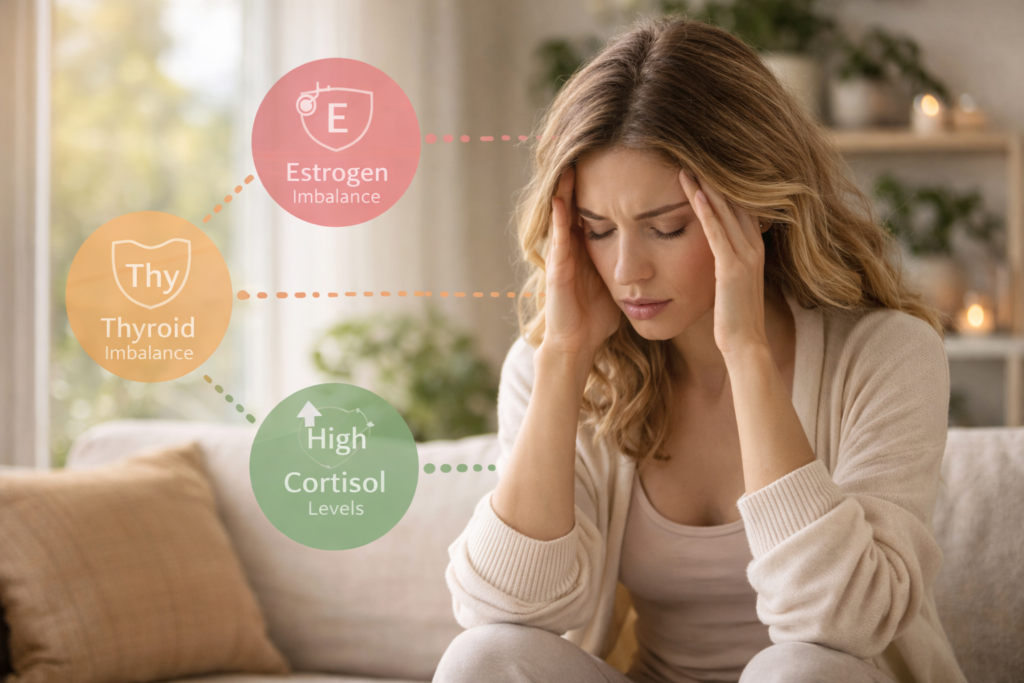

Hormone imbalance in women can cause fatigue, mood swings, irregular periods, and unexplained weight changes.
Do you feel exhausted, moody, or unable to lose weight despite eating healthy?
Struggling with irregular periods, sleep disruption, or persistent brain fog?
These could be symptoms of hormone imbalance in women, and you are not alone. Modern life places enormous stress on your endocrine system, from work and family pressures to sleep deprivation and chronic stress. Understanding what is happening in your body is the first step to reclaiming your energy, mood, and overall wellness.
In this guide, we’ll cover:
- Common symptoms of hormone imbalance
- Causes and risk factors of hormone imbalance in women
- How stress, including cortisol, impacts hormones
- Natural support strategies
- When to get tested
Plus, we’ll show how this connects to your weight, mood, and overall health.
In This Article
Medical Disclaimer: This article is for informational purposes only and should not be considered medical advice. Always consult a licensed healthcare provider before trying new health practices or products.
Affiliate Disclosure: This article may contain affiliate links. As an Amazon Associate, I may earn earn from qualifying purchases at no additional cost to you.
What Is Hormone Imbalance in Women?
Hormones are chemical messengers that regulate nearly every function in the body:
- Metabolism and weight
- Mood and sleep
- Reproductive cycles
- Stress response
When these hormones are out of balance, your body’s systems start sending warning signals. Chronic stress, poor nutrition, thyroid issues, and aging can all contribute.
For example, high cortisol can disrupt progesterone production, sometimes leading to estrogen dominance — which may cause symptoms like bloating, fatigue, and weight gain. To learn more about how stress hormones affect the body, check out Cortisol and Weight Gain in Women and 15 Warning Symptoms of High Cortisol in Women (You Shouldn’t Ignore).
According to the Mayo Clinic, hormone imbalance can impact metabolism, mood, reproductive cycles, and overall well-being.
Common Symptoms of Hormone Imbalance in Women
Symptoms vary, but the most common include:
Physical Symptoms
- Unexplained weight gain, especially around the midsection
- Bloating or fluid retention
- Fatigue and low energy
- Hair thinning or hair loss
- Irregular menstrual cycles
Emotional & Cognitive Symptoms
- Anxiety or mood swings
- Irritability and emotional sensitivity
- Brain fog or difficulty concentrating
- Sleep disruption or insomnia
Hormonal & Metabolic Symptoms
- Low libido
- Hot flashes or night sweats
- Sugar cravings or blood sugar imbalances
- Thyroid-related symptoms (cold intolerance, dry skin)
- Hormone Imbalances
One of the most common and underdiagnosed forms of hormone imbalance affecting women today is estrogen dominance — where estrogen becomes excessive relative to progesterone, driving a wide range of symptoms from heavy periods and weight gain to brain fog and anxiety. Discover the 12 most common estrogen dominance symptoms and natural solutions in our complete guide.
Whether your symptoms point to hormone imbalance, thyroid dysfunction, or adrenal fatigue, our free Natural Symptom Checker can help you identify possible root causes and natural remedies in minutes.
Main Causes of Hormone Imbalance in Women
1. Chronic Stress and High Cortisol
Prolonged stress elevates cortisol, which can suppress progesterone and disrupt other hormones.
Learn more in How to Lower High Cortisol Naturally: Causes, Symptoms & Proven Stress Support Strategies.
2. Thyroid Dysfunction
Both hyperthyroidism and hypothyroidism affect metabolism, weight, and energy.
3. Poor Nutrition
Low protein, high sugar, or nutrient deficiencies can impact estrogen, progesterone, and thyroid function.
4. Life Stages
- Perimenopause and menopause
- Postpartum recovery
- Puberty
5. Medical Conditions
- PCOS (Polycystic Ovary Syndrome)
- Endometriosis
- Cushing’s syndrome (rare)
Connection Between Hormones and Gut Health
Your gut health plays a critical role in hormone balance. The gut microbiome helps metabolize estrogen, influences thyroid function, and supports nutrient absorption.
Poor digestion, inflammation, or dysbiosis can worsen hormone imbalance in women, contributing to fatigue, bloating, and mood swings.
Supporting gut health with probiotics, fiber-rich foods, and anti-inflammatory nutrition can indirectly improve hormone levels and overall wellness.
How Stress Affects Female Hormones
Chronic stress shifts your body into survival mode:
- Cortisol rises → suppresses progesterone
- Insulin spikes → impacts weight
- Thyroid function may slow → fatigue and cold intoleranceIf you are noticing multiple symptoms, your cortisol levels may be part of the problem. Check out Cortisol and Weight Gain in Women to see how stress impacts your body.
Natural Support for Hormone Imbalance in Women
While medical guidance is essential, natural strategies can support hormone balance:
1. Prioritize Sleep
- 7–9 hours nightly
- Keep consistent sleep/wake times
One of the most overlooked drivers of hormonal imbalance in women is disrupted melatonin production — controlled by the pineal gland, a tiny but powerful endocrine gland that is compromised in the majority of adults. Discover how pineal gland calcification affects hormone health and what you can do naturally.
2. Reduce Chronic Stress
- Meditation, stretching, or breathwork
- Journaling or mindfulness
3. Balanced Nutrition
- Adequate protein
- Healthy fats for hormone production
- Limit refined sugar
4. Gentle Movement
- Walking, strength training, or gentle exercises
- Avoid excessive cardio that increases stress
5. Adaptogens & Supplements (Optional)
- Ashwagandha for stress
- Magnesium for relaxation
- Omega-3s for inflammation
One of the most overlooked nutrients in women’s hormonal health is magnesium — a mineral involved in over 300 enzymatic reactions that directly affect oestrogen, progesterone, thyroid function, and adrenal health. Read our complete guide on magnesium benefits for hormone balance, sleep, and anxiety to understand why it may be the missing piece in your hormone health protocol.”
Lifestyle Mistakes That Worsen Hormone Imbalance
Certain daily habits can exacerbate hormone imbalance. Skipping meals, excessive caffeine or alcohol, chronic sleep deprivation, and sedentary behavior can all worsen hormonal disruption.
Being aware of these lifestyle factors and making small, consistent changes can significantly improve hormone function over time.
When to Get Tested for Hormone Imbalance
Hormone testing can clarify underlying imbalances:
- Blood tests (estrogen, progesterone, thyroid)
- Saliva tests (cortisol, DHEA)
- Urine hormone panels
Consult a qualified healthcare provider if symptoms are severe, persistent, or worsening.
How Hormone Imbalance Affects Long-Term Health
If left unaddressed, hormone imbalance in women can affect long-term health. Chronic irregular hormones may contribute to metabolic issues, cardiovascular strain, bone density loss, and decreased fertility.
Early recognition, combined with stress management, nutrition support, and medical guidance, is key to preventing more serious complications later in life.
Frequently Asked Questions
What are the symptoms of hormone imbalance in women?
Unexplained fatigue, irregular cycles, mood swings, weight gain, and poor sleep are common early signs.
Can stress alone cause hormone imbalance?
Yes. Chronic stress increases cortisol, which can suppress progesterone and disrupt other hormones.
Can hormone imbalance in women affect weight?
Absolutely. Imbalances in estrogen, progesterone, thyroid, and cortisol can contribute to weight gain, especially around the belly.
How long does it take to restore hormone balance naturally?
It varies by individual. Consistent lifestyle changes, stress reduction, and nutrition support often show results in weeks to months.
Should I see a doctor for hormone testing?
Yes. Testing provides clarity and helps guide safe, effective treatment.
What hormones are most commonly imbalanced in women?
The most commonly affected hormones include estrogen, progesterone, cortisol, insulin, and thyroid hormones. When one hormone becomes dysregulated, it can create a ripple effect that impacts the entire endocrine system.
Can hormone imbalance in women cause anxiety?
Yes. Hormone imbalance in women can affect neurotransmitters in the brain. Low progesterone, high cortisol, or thyroid dysfunction may contribute to anxiety, irritability, and mood instability.
Can hormone imbalance in women cause hair loss?
Hormonal changes related to thyroid dysfunction, high cortisol, or estrogen imbalance may lead to hair thinning or shedding. Chronic stress can also disrupt the hair growth cycle.
How do I know if my symptoms are hormonal or stress-related?
Stress and hormones are closely connected. Chronic stress increases cortisol, which can suppress progesterone and impact thyroid function. If symptoms include sleep disruption, belly weight gain, and anxiety, stress may be contributing.
Can hormone imbalance in women improve without medication?
In many cases, lifestyle changes such as stress reduction, improved sleep, balanced nutrition, and moderate exercise can support natural hormone balance. However, medical guidance is important if symptoms are severe or persistent.
Conclusion
Hormone imbalance in women is common but not inevitable. Recognizing symptoms early, supporting your body with lifestyle changes, and understanding the role of stress and cortisol can help you reclaim energy, mood, and overall health.
Your body isn’t failing — it’s sending signals that it needs support.
For targeted guidance on cortisol, weight, and stress management, don’t miss our posts Cortisol and Weight Gain in Women and 15 Warning Symptoms of High Cortisol in Women (You Shouldn’t Ignore). These form a complete guide that supports your journey toward hormone balance naturally.