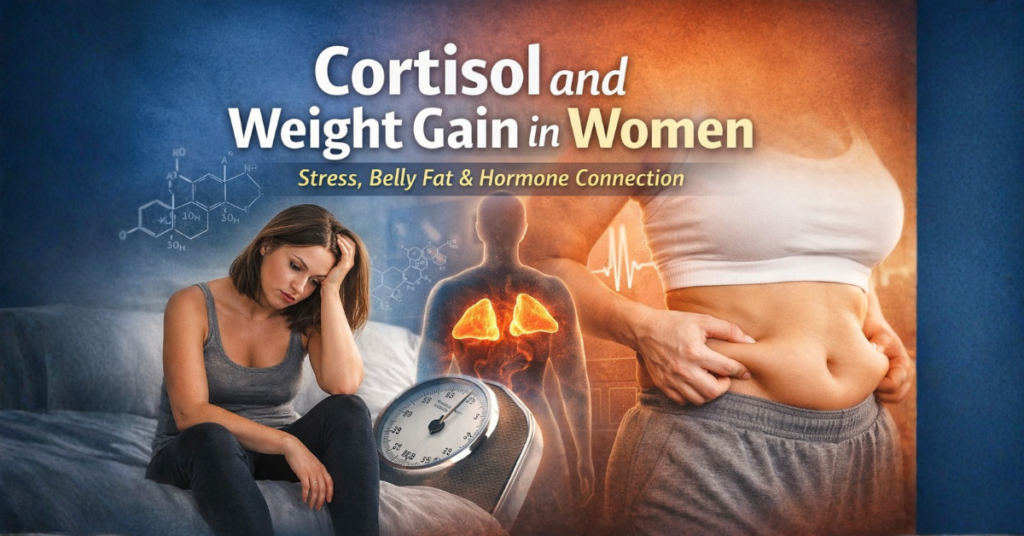

Cortisol and weight gain in women are closely connected — especially when stress becomes chronic. If you’ve noticed stubborn belly fat, unexplained weight gain, or difficulty losing weight despite healthy habits, your stress hormones may be playing a significant role.
Many women blame themselves when the scale won’t move. But sometimes, the issue isn’t willpower — it’s biology.
Let’s break down how cortisol affects fat storage, metabolism, and hormone balance.
In This Article
Medical Disclaimer: This article is for informational purposes only and should not be considered medical advice. Always consult a licensed healthcare provider before trying new health practices or products.
Affiliate Disclosure: This article may contain affiliate links. As an Amazon Associate, I may earn earn from qualifying purchases at no additional cost to you.
What Is Cortisol and Why Does It Affect Weight?
Understanding the link between cortisol and weight gain in women can help explain why traditional dieting often fails during chronic stress.
Cortisol is your body’s primary stress hormone. It’s released by the adrenal glands during times of physical or emotional stress.
Because cortisol is produced by the adrenal glands, chronic stress can place significant strain on these small but important hormone-producing glands. Over time, this imbalance can affect metabolism, energy levels, and fat storage. Discover more about the role of the adrenal glands in hormone balance and stress regulation.
In short bursts, cortisol is helpful. It:
- Regulates blood sugar
- Controls inflammation
- Supports metabolism
- Helps your body respond to stress
But when cortisol levels stay elevated for long periods, the body shifts into survival mode — and survival mode encourages fat storage.
If you’re unfamiliar with how chronic stress impacts the body, read How to Lower High Cortisol Naturally: Causes, Symptoms & Proven Stress Support Strategies for a full breakdown.
How Cortisol and Weight Gain in Women Are Connected
1. Cortisol Increases Blood Sugar
Cortisol raises blood glucose to give you quick energy during stress. When this happens repeatedly, insulin levels rise — and excess glucose gets stored as fat.
Over time, this can contribute to high cortisol weight gain.
2. Stress Promotes Belly Fat Storage
One of the most frustrating effects of cortisol is abdominal fat accumulation.
Cortisol receptors are highly concentrated in the abdominal area. This means stress belly fat is not random — it’s hormonally driven.
This is often referred to as “cortisol belly.”
3. Cortisol Triggers Cravings
Chronic stress increases cravings for:
- Sugar
- Refined carbohydrates
- Salty comfort foods
These foods temporarily lower stress signals in the brain — but they worsen blood sugar instability and fat storage.
4. Cortisol Slows Metabolism Over Time
When the body perceives ongoing stress, it conserves energy. This may reduce metabolic efficiency and make weight loss more difficult.
High cortisol levels in women can also interfere with thyroid function, further impacting metabolism.
Why Women Are More Vulnerable to Cortisol Weight Gain
Hormonal fluctuations make women especially sensitive to stress.
Cortisol interacts with:
- Estrogen
- Progesterone
- Insulin
- Thyroid hormones
During perimenopause, postpartum recovery, or periods of intense life stress, the risk of cortisol imbalance increases.
If you’re noticing additional stress symptoms, you may want to review 15 Warning Symptoms of High Cortisol in Women (You Shouldn’t Ignore) to see if cortisol could be affecting more than just your weight.
Signs Your Weight Gain May Be Cortisol-Related
- Weight concentrated in the midsection
- Feeling wired but exhausted
- Poor sleep
- Increased anxiety
- Sugar cravings
- Difficulty losing weight despite diet changes
If several of these apply, cortisol may be contributing.
If you’re experiencing more than weight changes, review the full list of Symptoms of High Cortisol in Women.
Does Cortisol Cause Weight Gain Permanently?
The good news: No.
Cortisol-related weight gain is often reversible when stress patterns improve and hormone balance is restored.
The body is adaptive. When it feels safe and supported, it shifts out of survival mode.
How to Support Healthy Cortisol Levels Naturally
1. Improve Sleep Quality
Cortisol follows a daily rhythm. Poor sleep disrupts that rhythm and increases stress signaling.
2. Stabilize Blood Sugar
Balanced meals with protein, healthy fats, and fiber help prevent cortisol spikes.
3. Reduce Chronic Stress Load
Gentle strategies like:
- Walking outdoors
- Breathwork
- Mindfulness
- Reducing overcommitment
can significantly lower stress signaling.
Chronic stress doesn’t just elevate cortisol — over time, it can also disrupt metabolic efficiency, making fat storage more likely and fat burning more difficult.
When the body remains in a prolonged stress response, energy balance shifts and weight loss can become frustratingly slow.
While stress reduction, sleep, and nutrition should always come first, some people also explore metabolism-support supplements as part of a broader plan.
For example, products like CitrusBurn are formulated to support metabolic function and energy production alongside healthy lifestyle habits. If you’re curious how it works and whether it may be a fit, you can read our full CitrusBurn review.
For a complete natural plan, read How to Lower High Cortisol Naturally: Causes, Symptoms & Proven Stress Support Strategies.
When to Consider Testing
If weight gain is rapid, severe, or accompanied by other unusual symptoms, consider speaking with a healthcare provider.
Testing may include:
- Blood cortisol testing
- Saliva testing
- 24-hour urine analysis
Testing helps rule out rare conditions while identifying stress-related imbalance.
Frequently Asked Questions
Does cortisol cause belly fat in women?
Yes. Elevated cortisol promotes fat storage in the abdominal region, often referred to as stress belly fat.
Can stress alone cause weight gain?
Chronic stress can increase cortisol levels, which influence blood sugar, appetite, and fat storage.
How long does it take to lose cortisol weight?
Improvements often begin within weeks of consistent stress reduction and sleep support, though results vary.
Is cortisol and weight gain in women different from normal weight gain?
Yes. Cortisol-related weight gain is often concentrated in the midsection and associated with fatigue, poor sleep, and anxiety.
Can lowering cortisol help with weight loss?
Supporting healthy cortisol levels may improve metabolic balance and make weight management easier.
Final Thoughts
If you’ve been battling unexplained weight gain and blaming yourself, pause.
Cortisol and weight gain in women are deeply connected — especially in today’s high-pressure world.
Your body is not broken.
It’s responding to stress.
By supporting your nervous system, improving sleep, and reducing chronic stress triggers, you can shift out of survival mode and restore balance.
And that’s where real, sustainable change begins.
If you’d like next, we can:
- Create a cortisol internal linking strategy map
- Build a downloadable lead magnet from your cortisol cluster
- Or move into your next hormone topic (thyroid or estrogen dominance would pair very well)
Resource
According to the Mayo Clinic, prolonged exposure to elevated cortisol can contribute to weight gain, high blood pressure, and metabolic changes.