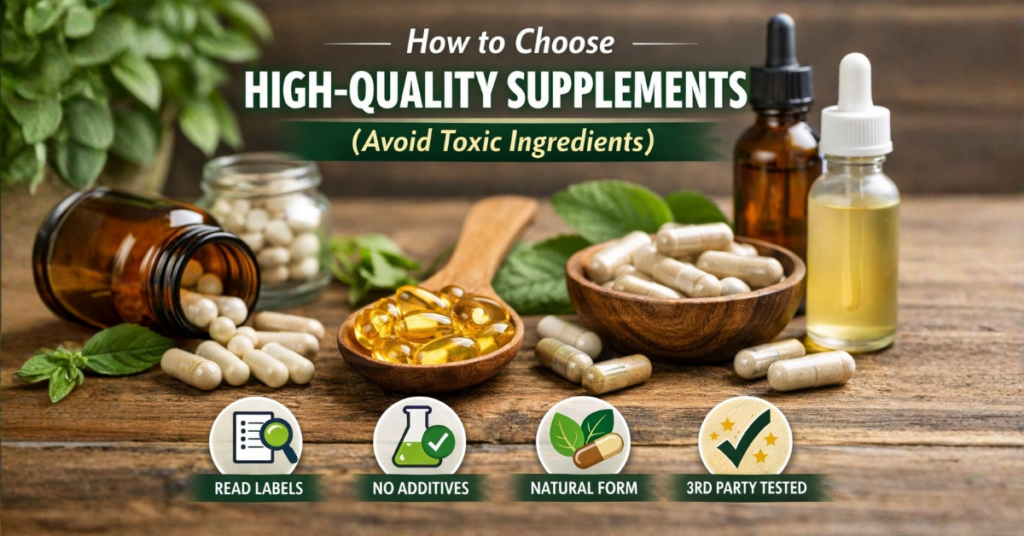
Know How To Choose High Quality Supplements
In today’s health-conscious world, supplements are everywhere—but not all are created with your health in mind. Knowing how to choose high quality supplements is essential if you want to avoid harmful additives, improve nutrient absorption, and support your body effectively.
Many supplements contain hidden ingredients, synthetic compounds, and fillers that may do more harm than good. Understanding what to look for can help you make smarter, safer choices.
If you’ve already explored the differences in Synthetic Vitamins vs Natural Vitamins, this guide will help you take the next step: choosing supplements your body can actually use.
Medical Disclaimer: This article is for informational purposes only and should not be considered medical advice. Always consult a licensed healthcare provider before trying new health practices or products.
Affiliate Disclosure: This article may contain affiliate links. As an Amazon Associate, I may earn earn from qualifying purchases at no additional cost to you.
Why Do High Quality Supplements Matter
Not all supplements deliver what they promise. Low-quality products may:
- Contain poorly absorbed nutrient forms
- Include unnecessary fillers and additives
- Use synthetic ingredients your body struggles to recognize
- Provide inaccurate dosages
Over time, this can impact everything from digestion to hormone balance—especially if you’re already working on improving health through a Clean Living Lifestyle.
Choosing clean, bioavailable supplements helps reduce toxic load and supports long-term wellness.
Learn How to Read Supplement Labels
Understanding labels is one of the most important steps in choosing high quality supplements.
Look for:
- Active forms of nutrients (not cheap synthetic versions)
- Short ingredient lists
- Clearly listed dosages
Be cautious of:
- Proprietary blends (often hide low-quality ingredients)
- Unfamiliar chemical names
- Extremely high doses
If you’re new to ingredient awareness, this ties closely with reducing exposure to hidden toxins discussed in your Health Risks of Aluminum post.
Avoid Harmful Additives and Fillers
Many supplements include ingredients that serve manufacturing—not your health.
Common additives to watch for:
- Magnesium stearate
- Silicon dioxide
- Titanium dioxide
- Artificial colors
- Hydrogenated oils
- Soy-based fillers
These substances may contribute to digestive discomfort, sensitivities, or increased toxin exposure—especially when taken daily.
Reducing these exposures aligns with a broader strategy of minimizing environmental toxins, as discussed in Clean Living Lifestyle.
Choose Bioavailable Nutrient Forms
Not all vitamins are equal—even if they share the same name.
Examples:
- Vitamin B12 → Methylcobalamin (better) vs Cyanocobalamin
- Folate → Methylfolate vs Folic acid
- Magnesium → Glycinate or citrate vs Oxide
Bioavailable forms are easier for your body to absorb and use, which can help prevent issues like fatigue, poor digestion, and nutrient imbalances.
Look for Third-Party Testing on Supplements
High quality supplement brands often use independent third-party testing on supplements to verify:
- Purity
- Potency
- Safety
Certifications to look for:
- NSF Certified
- USP Verified
- Non-GMO Project Verified
This ensures you’re getting what’s actually listed on the label—without harmful contaminants.
Prioritize Whole-Food-Based Supplements
Whenever possible, choose supplements derived from real food sources.
Whole-food supplements:
- Contain natural cofactors
- Support better absorption
- Work synergistically with your body
This approach aligns with the principles discussed in Anti-Inflammatory Foods and whole-body wellness.
Watch for Over-Supplementation
More is not always better.
Taking high doses of synthetic or isolated nutrients can:
- Disrupt nutrient balance
- Stress the liver
- Cause unwanted side effects
If you’re already supporting your body through diet, lifestyle, and strategies like those in Healthy Lifestyle Tips, you may need less supplementation than you think.
Match Supplements to Your Needs
The best supplement is one that fits your individual health goals.
Supplements may be helpful for:
- Nutrient deficiencies
- Hormonal support
- Gut health issues
- High stress levels
For example:
- Gut support → See How to Heal Your Gut Naturally
- Hormone balance → See Hormone Imbalance in Women
Targeted supplementation is far more effective than taking random products.
Red Flags to Avoid
Be cautious of supplements that:
- Promise “quick fixes” or miracle results
- Contain long, complex ingredient lists
- Lack transparency about sourcing
- Use artificial or synthetic fillers
If something seems too good to be true—it usually is.
These principles align with everything discussed above about avoiding toxic ingredients and choosing supplements your body can actually use.
Recommended High Quality Supplements (Clean & Trusted Options)
Choosing the right supplements can feel overwhelming, especially with so many low-quality products on the market. Below are carefully selected supplement types and what to look for so you can support your health with clean, bioavailable options.
What to Look for in High Quality Supplements
When shopping for supplements, prioritize products that:
- Use bioavailable forms (like methylated B vitamins)
- Are third-party tested for purity and potency
- Contain minimal fillers or additives
- Are free from artificial colors, hydrogenated oils, and unnecessary binders
Essential Supplements to Consider
High-Quality Multivitamin
A clean multivitamin can help fill nutritional gaps without relying on synthetic-heavy formulas.
Look for:
- Methylated B vitamins
- Natural vitamin E (d-alpha tocopherol)
- No magnesium oxide or artificial fillers
This pairs well with what you learned in Synthetic Vitamins vs Natural Vitamins—quality and form matter.
Magnesium (Glycinate or Citrate)
Magnesium supports:
- Stress reduction
- Sleep quality
- Muscle and nerve function
Best forms:
- Magnesium glycinate (calming, highly absorbable)
- Magnesium citrate (digestive support)
Avoid magnesium oxide, which is poorly absorbed and often causes digestive discomfort.
Omega-3 Fatty Acids (Fish Oil or Algae-Based)
Omega-3s support:
- Heart health
- Brain function
- Inflammation balance
Look for:
- Wild-caught or sustainably sourced
- Third-party tested for heavy metals
- High EPA/DHA content
Probiotics (Gut Health Support)
A quality probiotic can support digestion and microbiome balance.
Look for:
- Multiple strains (Lactobacillus & Bifidobacterium)
- At least 10–50 billion CFUs
- Delayed-release capsules for better survival
For deeper gut healing strategies, see How to Heal Your Gut Naturally.
Adaptogens (Stress & Hormone Support)
Adaptogens help your body respond to stress more effectively.
Popular options:
- Ashwagandha
- Rhodiola
- Functional mushrooms
These work well alongside strategies discussed in Hormone Imbalance in Women.
Ingredients to Avoid in Supplements
Even some popular brands contain questionable ingredients.
Watch out for:
- Artificial colors
- Titanium dioxide
- Hydrogenated oils
- Soy-based fillers
- “Proprietary blends” (lack transparency)
Reducing these aligns with a Clean Living Lifestyle approach.
Pro Tip: Food First, Supplements Second
Supplements should support—not replace—a healthy diet.
Focus on:
- Whole, nutrient-dense foods
- Anti-inflammatory eating patterns
- Lifestyle habits that support absorption
Explore more in Anti-Inflammatory Foods.
Best Supplements-Recommendations
This post may contain affiliate links
Micro Ingredients Methylated Multivitamin
Why this is a strong choice:
- Contains methylated B vitamins (better absorption)
- Includes natural forms like d-alpha vitamin E
- No unnecessary fillers or artificial additives
- Comprehensive “all-in-one” formula
Best Magnesium for Stress & Sleep (Highly Absorbable)
Highly absorbable magnesium glycinate that supports relaxation, sleep, and muscle health.
Why it stands out:
- Uses glycinate form (gentle + effective)
- Supports stress, sleep, and nervous system
- Better tolerated than magnesium oxide
Best Omega-3 for Inflammation & Heart Health
High-potency omega-3 formula with EPA and DHA for heart, brain, and inflammation support.
Why it’s recommended:
- High levels of EPA & DHA (key anti-inflammatory fats)
- Third-party tested for purity
- Supports brain, heart, and hormone health
Best Probiotic for Gut Health
Multi-strain probiotic with 20 billion cultures to support digestion and immune health.
Benefits:
- 10 different probiotic strains
- Supports digestion + immune system
- Easy once-daily formula
Best Adaptogen for Stress & Hormones
Clinically studied ashwagandha extract to support stress, cortisol, and hormone balance.
Why this is powerful:
- Uses KSM-66 (clinically studied form)
- Supports cortisol, stress, and hormone balance
- Combines whole root + extract for full-spectrum benefits
Tip
Don’t take everything—take what your body actually needs.
Start with:
- Multivitamin (foundation)
- Magnesium (stress)
- Then layer based on your goals
FAQ’s: How to Choose High Quality Supplements
How to tell high quality supplements from synthetic?
A high-quality supplement will use bioavailable nutrient forms, have minimal fillers, and be third-party tested for purity and potency. Look for certifications like NSF or USP and avoid products with long, unnecessary ingredient lists.
What ingredients should I avoid in supplements?
Common ingredients to avoid include magnesium stearate, titanium dioxide, artificial colors, hydrogenated oils, and soy-based fillers. These are often added for manufacturing purposes and may contribute to unwanted side effects or sensitivities.
Are natural supplements better than synthetic ones?
In many cases, natural or whole-food-based supplements are easier for the body to recognize and absorb. As explained in Synthetic Vitamins vs Natural Vitamins, synthetic forms may lack cofactors and bioavailability.
What does bioavailability mean in supplements?
Bioavailability refers to how well your body can absorb and use a nutrient. Supplements with higher bioavailability—such as methylated vitamins or chelated minerals—are generally more effective.
Is it safe to take supplements every day?
Daily supplementation can be safe when using high-quality products and appropriate dosages. However, taking excessive amounts or low-quality synthetic supplements may lead to imbalances or side effect
Do supplements really work?
Yes, supplements can be beneficial when used correctly—especially for deficiencies or specific health needs. However, they work best when combined with a nutrient-dense diet and healthy lifestyle.
Should I take supplements or get nutrients from food?
Whole foods should always be the foundation of your nutrition. Supplements are meant to fill gaps, not replace a healthy diet. Combining both is often the most effective approach.
Why do some supplements cause side effects?
Side effects may occur due to poor-quality ingredients, synthetic forms, high doses, or individual sensitivities. Choosing clean, well-formulated supplements can reduce this risk.
Final Thoughts: Choose High Quality Supplements
Learning how to choose high quality supplements can make a significant difference in your health journey.
Instead of relying on marketing claims, focus on:
- Clean ingredients
- Bioavailable forms
- Third-party testing
- Whole-food nutrition
When combined with a balanced diet and a natural lifestyle, high quality supplements can support your body—without adding unnecessary toxic burden.