How Parasites Are Wrecking Your Gut, Thyroid, and Health – Complete Guide to Parasite Cleanse Detox
Before we delve into the parasite cleanse, we must first understand the health consequences of these little health disrupting bugs. Parasites are one of the most overlooked threats to human health today.
These uninvited guests — ranging from microscopic protozoa to multi-meter-long worms — can silently inhabit your body for years, causing a wide array of mysterious symptoms that conventional medicine often misses.
From chronic fatigue and digestive chaos to autoimmune flares like Hashimoto’s thyroiditis, parasites in humans are more common than many realize.
According to the Centers for Disease Control and Prevention (CDC), millions of Americans are affected by parasitic infections, many of which can go undiagnosed for years.
If you’re dealing with unexplained bloating, brain fog, skin issues, or stubborn thyroid problems despite treatment, a parasite cleanse might be the missing piece.
This comprehensive guide covers types of parasites, their life cycles, common transmission routes (including pets and food), the serious health conditions they trigger — with special focus on thyroid dysfunction — and a detailed, evidence-informed herbal parasite cleanse detox protocol.
In This Article
Medical Disclaimer: This article is for informational purposes only and should not be considered medical advice. Always consult a licensed healthcare provider before trying new health practices or products.
Affiliate Disclosure: This article may contain affiliate links. As an Amazon Associate, I may earn from qualifying purchases at no additional cost to you.
Whether you’re searching for “parasite cleanse,” “types of parasites in humans,” or “how parasites affect thyroid function,” this article delivers the in-depth, keyword-rich information you need for better health.
Key Takeaways
- Parasites may contribute to digestive symptoms, fatigue, inflammation, and nutrient deficiencies
- Some research suggests links between parasites, gut permeability, and autoimmune thyroid conditions
- Common exposure sources include contaminated food, water, pets, and travel
- Herbal parasite cleanse protocols often use wormwood, black walnut, and clove
- Gut repair, probiotics, hydration, and detox support are important during recovery
- Testing may help identify hidden infections and guide treatment
What Are Parasites? Understanding the Basics
A parasite is an organism that lives on or in a host organism (you) and derives nutrients at the host’s expense. Parasites have evolved sophisticated survival strategies, often evading the immune system while causing chronic inflammation.
According to health authorities, millions of people worldwide harbor parasitic infections, with higher prevalence in areas with poor sanitation but surprisingly common even in developed countries through travel, pets, contaminated food, and water.
Parasites disrupt nutrient absorption, damage tissues, release toxins, and trigger immune dysregulation — setting the stage for autoimmune diseases and other chronic conditions.
Types of Parasites in Humans
There are three main types of parasites in humans that may affect overall health.
1. Protozoa (Single-Celled Parasites) These microscopic organisms multiply rapidly inside the host.
- Giardia lamblia: Causes giardiasis (beaver fever); common in contaminated water.
- Entamoeba histolytica: Leads to amoebiasis and dysentery.
- Cryptosporidium: Tough, waterborne parasite resistant to many disinfectants.
- Blastocystis hominis (often called Blasto): Strongly linked to IBS, hives, and Hashimoto’s. thyroidpharmacist.com
- Toxoplasma gondii: From cat feces or undercooked meat; can affect the brain and thyroid
2. Helminths (Parasitic Worms)Larger, often visible or detectable in stool.
- Nematodes (Roundworms): Ascaris lumbricoides, hookworms (Necator/Ancylostoma), pinworms (Enterobius), Strongyloides.
- Cestodes (Tapeworms): Taenia solium (pork), Taenia saginata (beef), Diphyllobothrium (fish).
- Trematodes (Flukes): Liver flukes, blood flukes (Schistosoma).
3. Ectoparasites Live on the skin or external surfaces.
- Lice, fleas, ticks, mites (scabies). These can transmit other pathogens but are less likely to cause systemic internal issues.
Common intestinal parasites in the U.S. include pinworms, Giardia, hookworms, and Blastocystis.
Parasite Life Cycle: How They Thrive and Multiply
Understanding the parasite life cycle is key to effective eradication. Most follow complex patterns involving stages that require specific environments or intermediate hosts.
Typical Stages:
- Egg/Cyst/Oocyst Stage: Shed in feces of infected hosts; highly resistant to environmental stresses. Contaminate soil, water, food.
- Larval/Immature Stage: Hatch in suitable conditions; migrate through tissues (e.g., hookworm larvae penetrate skin or are ingested).
- Adult Stage: Mature in the intestine, blood, liver, or other organs; produce thousands of eggs daily.
- Transmission/Encystment: Some form cysts to survive outside the host or in tissues.
Examples:
- Ascaris (Roundworm): Eggs ingested → larvae hatch in intestine → migrate through lungs → swallowed back → mature in gut (life cycle ~2 months).
- Tapeworm: Eggs or larvae in undercooked meat → attach to intestinal wall → grow segments that produce eggs.
- Giardia: Cysts ingested → trophozoites attach to intestinal lining → multiply and form new cysts shed in stool.
- Toxoplasma: Oocysts from cat feces or tissue cysts in meat; can form lifelong bradyzoites in muscles/brain.
Parasites often have “off-host” phases, making reinfection easy without breaking the cycle through hygiene, cooking food, and treating pets.
How People Get Parasites: Common Transmission Routes
Parasites don’t discriminate, but certain habits increase risk.
Pets: Cats and Dogs
- Toxoplasma gondii: Primarily from cat feces (cleaning litter boxes without gloves).
- Toxocara (Roundworms): From dog/cat feces in soil; children at higher risk via geophagia or contaminated hands.
- Giardia, Cryptosporidium, hookworms, roundworms: Shared through feces, grooming, or shared environments.
Regular deworming of pets and hand hygiene after handling animals or litter are essential.
Food and Water
- Undercooked meat/fish: Pork (pork tapeworm, Toxoplasma), beef, wild game, sushi (fish tapeworm, anisakids).
- Contaminated produce/soil: Eggs from human/animal feces.
- Water: Lakes, streams, untreated tap water (Giardia, Cryptosporidium).
- Poor hygiene: Fecal-oral route via unwashed hands after bathroom use or food prep.
Other Routes
- Travel to endemic areas.
- Insect bites (malaria, though less “intestinal”).
- Skin penetration (hookworms in barefoot walking on contaminated soil).
- Person-to-person (pinworms via bedding/clothes).
Many infections are asymptomatic or low-grade, allowing chronic carriage.
Health Conditions Caused by Parasite Infections
Parasites cause direct damage (nutrient theft, tissue invasion) and indirect harm via immune modulation and toxins.
Common Symptoms and Conditions:
- Digestive: Bloating, diarrhea/constipation, IBS-like symptoms, malabsorption, weight loss/gain.
- Systemic: Fatigue, anemia (hookworms), muscle/joint pain, skin rashes/hives, allergies.
- Neurological: Brain fog, anxiety, sleep disturbances (Toxoplasma linked to behavioral changes).
- Nutritional deficiencies: Iron, B12, fat-soluble vitamins.
Parasites and Thyroid Function: The Critical Link
Parasitic infections can significantly impact thyroid function, acting as potential triggers for autoimmune thyroid diseases like Hashimoto’s thyroiditis (hypothyroidism) and influencing thyroid nodules. These parasites trigger an immune response leading to chronic inflammation. In some cases, treating the infection can reverse thyroid dysfunction and reduce antibodies.
Mechanisms:
- Molecular Mimicry and Autoimmunity: Parasite antigens resemble thyroid tissue, prompting antibodies against TPO or thyroglobulin.
- Chronic Inflammation: Elevates cytokines (e.g., IL-17), promoting Hashimoto’s.
- Gut-Thyroid Axis: Leaky gut from parasites allows toxins/bacteria to trigger systemic autoimmunity.
- Blastocystis hominis strongly associated with Hashimoto’s; eradication has led to reduced TSH, antibodies, and symptom remission in cases.
- Helminths can cause thyroid nodules or hypothyroidism via immune/metabolic effects.
If you have Hashimoto’s with persistent symptoms or high antibodies despite thyroid medication, testing for parasites (comprehensive stool test) is wise. Addressing them may improve thyroid function naturally.
Other conditions: Nutrient malabsorption worsening hypothyroidism, liver burden from flukes affecting hormone conversion, adrenal stress.
Symptoms of Parasite Infection: When to Suspect
- Unexplained digestive issues
- Chronic fatigue despite sleep
- Skin problems (eczema, urticaria, acne)
- Food sensitivities/allergies
- Teeth grinding (pinworms)
- Mood swings/anxiety
- Thyroid antibodies not responding to treatment
- History of travel, raw foods, or pet exposure
Many symptoms overlap with other conditions, so professional testing is key.
Still unsure whether parasites may be contributing to your symptoms? Read Signs You Have Parasites – How to Cleanse Naturally for a deeper look at warning signs, digestive symptoms, skin issues, fatigue, and natural cleansing strategies.
Struggling with multiple symptoms at once? Our free Natural Symptom Checker & Natural Remedy Guide helps women identify possible root causes — from gut dysbiosis to hormone imbalance — and pairs each one with trusted natural remedies.
Signs You May Need Parasite Testing
You may want to consider professional parasite testing if you experience multiple symptoms that do not improve despite diet changes, supplements, or conventional treatment.
Potential warning signs include:
- Chronic bloating after meals
- IBS symptoms that never fully resolve
- Persistent fatigue or brain fog
- Unexplained skin rashes or hives
- Iron deficiency or low B12
- Teeth grinding during sleep
- Anal itching (especially at night)
- Food sensitivities that suddenly appear
- Hashimoto’s symptoms despite thyroid medication
- Frequent travel or history of food poisoning
- Exposure to untreated water, sushi, or raw meats
- Close contact with pets or farm animals
Because parasite symptoms overlap with many digestive and autoimmune conditions, comprehensive stool testing or functional medicine testing may help identify hidden infections.
Best Tests for Parasites
Parasites are often missed on routine stool testing because many organisms shed intermittently. A single negative test does not always rule out infection.
More advanced testing options may include:
- Comprehensive stool analysis with PCR/DNA testing
- Ova and parasite stool exams
- GI-MAP or similar microbiome testing
- Blood antibody testing for certain parasites
- Organic acid testing (OAT)
- Functional medicine evaluations
Testing may help identify:
- Protozoa
- Worms
- Yeast overgrowth
- Gut inflammation
- Microbiome imbalances
- Digestive insufficiency
If symptoms are severe, persistent, or involve significant weight loss, blood in stool, fever, or neurological symptoms, seek medical evaluation promptly.
Detailed Herbal Treatment: How to Do a Parasite Cleanse Detox
Important Disclaimer: This is for educational purposes. Consult a healthcare provider before starting, especially with thyroid issues or medications. Get tested if possible. Herbal approaches support the body but may not replace prescription antiparasitics for heavy infections.
A classic herbal parasite cleanse uses a triad targeting different stages: Core Herbs (The “Big Three”)
- Wormwood (Artemisia absinthium): Targets adult worms; bitter compounds disrupt parasite membranes. Use in tincture or capsules (avoid long-term or in pregnancy).
- Black Walnut Hull (Juglans nigra): Antifungal, antiparasitic; kills larvae and adults.
- Clove (Syzygium aromaticum): Kills eggs; powerful antimicrobial.
If you’re looking for a convenient all-in-one herbal approach, this wormwood, black walnut, and clove formula combines some of the most commonly used herbs in traditional parasite cleanse protocols.
Additional Supportive Herbs:
- Pumpkin Seeds: Paralysis of worms (especially tapeworms).
- Papaya Seeds: Enzymes break down parasite proteins.
- Garlic, Oregano Oil, Berberine (from goldenseal/barberry): Broad-spectrum.
- Neem, Grapefruit Seed Extract, Thyme.
- Binders: Activated charcoal, bentonite clay, chlorella to absorb toxins/die-off.
- Liver/Gut Support: Milk thistle, dandelion, slippery elm, probiotics.
Sample 30-60 Day Herbal Parasite Cleanse Protocol
Duration: Typically 2-4 weeks on, 1 week off, repeat 2-3 cycles (total 4-12 weeks) to catch hatching eggs. Some do longer gentle protocols. Listen to your body; full detox can take 1-3 months.
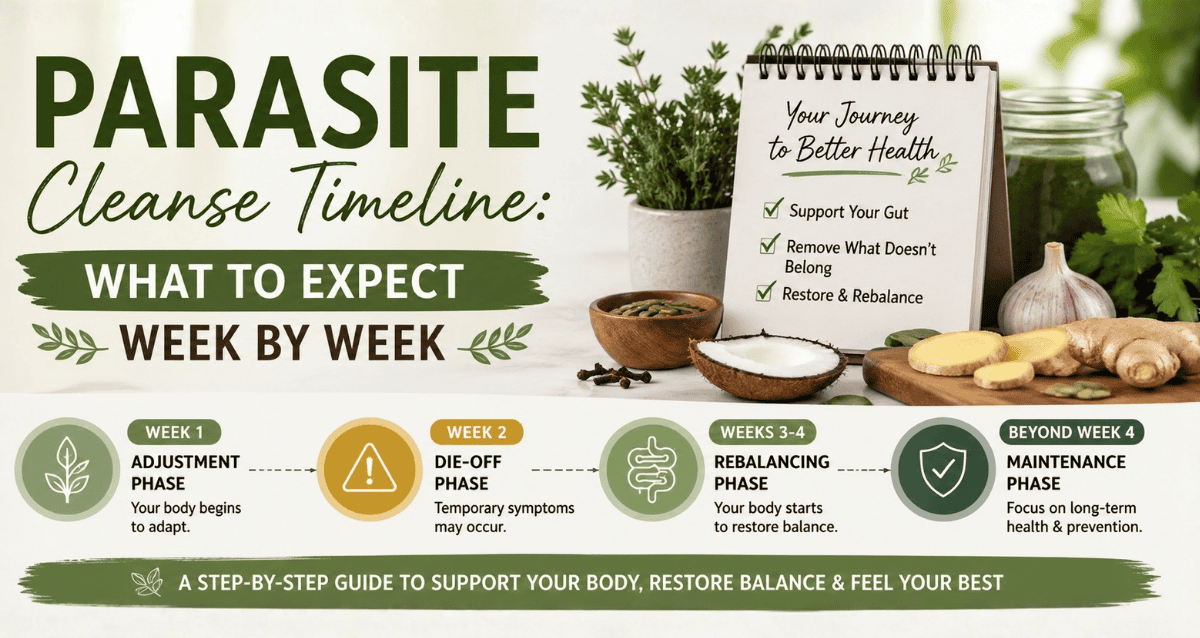
Wondering what happens during each stage of a cleanse? Our Parasite Cleanse Timeline: What to Expect Week by Week explains common symptoms, detox phases, energy changes, and what many people experience throughout the process.
Before you begin your protocol, it is helpful to review a parasite cleanse timeline so you know exactly what to expect week-by-week as your body begins to detox
Attack Phase:
- Morning: Wormwood + Black Walnut tincture (follow product dosing, e.g., 10-20 drops).
- With meals: Clove powder/capsules (500mg 3x/day).
- Pumpkin seeds (1/4-1/2 cup ground) daily.
- Diet: High-fiber, anti-inflammatory — vegetables, garlic, ginger, turmeric, coconut oil. Avoid sugar, dairy, gluten, alcohol, raw/undercooked meats.
- Binders: 1-2 hours away from herbs/food, take charcoal/clay.
Support Daily:
- Probiotics (soil-based or Saccharomyces boulardii).
- Digestive enzymes.
- Hydration: 3+ liters filtered water + lemon.
- Castor oil packs or coffee enemas (optional, for die-off).
Week 3: Rest/Reset — Lower dose or pause strong herbs; focus on gut repair. Repeat Cycle or taper.
Die-Off (Herxheimer) Symptoms: Temporary worsening (fatigue, headaches, bloating). Manage with binders, Epsom baths, rest. Start slow.
Experiencing worsening symptoms during a cleanse? Read Parasite Die-Off Symptoms | Herx Reaction Explained to understand why detox reactions happen and how to support your body safely during the process.
Monitoring: Retest stool after protocol. Track symptoms, energy, thyroid labs.
Who Should Avoid a Parasite Cleanse?
Herbal parasite cleanses are not appropriate for everyone.
Avoid or consult a healthcare provider before using antiparasitic herbs if you are:
- Pregnant or breastfeeding
- Taking thyroid medication or blood thinners
- Managing liver or kidney disease
- Immunocompromised
- Treating autoimmune conditions
- Giving herbs to children
- Taking multiple prescription medications
Certain herbs — including wormwood, black walnut, oregano oil, and clove — may interact with medications or cause side effects in sensitive individuals.
Starting slowly and working with a qualified healthcare practitioner is recommended.
Diet for Parasite Cleanse:
- Eat: Pumpkin seeds, papaya, pineapple (bromelain), coconut, garlic, onions, fermented foods (post-cleanse). If you want to focus more on food-based approaches, read our guide on 10 Foods That Kill Parasites Naturally to learn which foods may help support the body during a parasite cleanse.
- Avoid: Parasite favorites — sugar, refined carbs, processed foods.
Parasites can disrupt the gut microbiome, damage the intestinal lining, and contribute to chronic digestive symptoms. Supporting gut repair and microbiome balance is often an important step during recovery.
While a structured protocol is essential, incorporating specific foods that kill parasites naturally into your daily meals can provide an extra layer of defense against these uninvited guests.
Because parasite infections may trigger chronic inflammation and immune stress, anti-inflammatory foods may help support digestion, energy, and overall gut health during a cleanse.
After a parasite cleanse, restoring beneficial gut bacteria with probiotics and prebiotic-rich foods may help support digestion, nutrient absorption, and long-term microbiome balance.
Many report improved digestion, clearer skin, better energy, and lower thyroid antibodies after successful cleanse.
Common Parasite Cleanse Mistakes
Many people struggle with parasite cleanses because they focus only on killing parasites while ignoring detoxification, gut repair, and reinfection prevention.
Common mistakes include:
- Starting aggressive herbs too quickly
- Not supporting bowel movements and detox pathways
- Eating high-sugar processed foods during a cleanse
- Skipping probiotics and gut repair support
- Failing to clean bedding and hygiene items
- Not treating pets when appropriate
- Stopping the cleanse too early
- Ignoring parasite eggs and reinfection cycles
A balanced approach that supports digestion, liver health, hydration, and the microbiome may improve outcomes and reduce uncomfortable die-off symptoms.
FAQs About Parasites and Cleanse
How common are parasites in humans in developed countries?
More common than thought; millions affected, often undetected. Pinworms, Giardia, and Blastocystis are prevalent
Can parasites cause thyroid problems or Hashimoto’s?
Yes — parasites cause thyroid problems through immune triggering, inflammation, and gut disruption. Eradicating certain protozoa like Blastocystis has reversed symptoms and lowered antibodies in reported cases. PalomaHealth.com
How do I know if I have parasites?
Symptoms + comprehensive stool testing (PCR/DNA). Blood tests for some (e.g., Toxoplasma). Empirical cleanse under guidance if testing unavailable.
Are herbal parasite cleanses safe?
Generally for short periods in healthy adults, but can cause die-off or interact with meds. Not for pregnant/breastfeeding. Consult doctor.
How long does a parasite cleanse take to work?
4-8 weeks for noticeable effects; full cycles 1-3 months. Eggs require multiple rounds.
Do cats and dogs transmit parasites to humans?
Yes, via Toxoplasma, roundworms, Giardia. Deworm pets regularly and practice hygiene.
What foods kill parasites naturally?
Pumpkin seeds, papaya seeds, garlic, coconut oil, pineapple, oregano, ginger. Combine with herbal protocol.
What are types of parasites in humans
There are 3 types of parasites in humans. 1.Protozoa (Single-Celled, Parasites) 2. Helminths (Parasitic Worms), 3. Ectoparasites (Live on the skin)
Related Parasite Cleanse Articles
- 10 Foods That Kill Parasites Naturally
- Signs You Have Parasites | How to Cleanse Naturally
- Parasite Cleanse Timeline: What to Expect Week by Week
- Parasite Die-Off Symptoms | Herx Reaction Explained
Conclusion:
Reclaim Your Health with a Parasite Cleanse
Parasites are masters of disguise, but awareness and action empower you. From understanding types of parasites and their life cycles to preventing transmission from cats, dogs, food, and addressing health conditions like thyroid dysfunction and Hashimoto’s, this knowledge is powerful.
A thoughtful herbal parasite detox — combined with diet, hygiene, and possibly medical support — can be transformative. Many experience relief from stubborn symptoms and even thyroid improvement once the underlying infection is cleared.
Don’t ignore the signs. Test if possible, support your body’s natural defenses, and consider a parasite cleanse as part of your wellness journey. Consult qualified practitioners for personalized guidance.
Your gut, thyroid, and overall vitality will thank you. Start small today — better digestion, energy, and health await.
Research & References
CDC — Parasites Overview: The Centers for Disease Control and Prevention provides information on common human parasites, transmission routes, symptoms, and prevention strategies.
World Health Organization (WHO) — Foodborne and Waterborne Parasites: WHO research discusses the global impact of parasites transmitted through contaminated food and water.
Cleveland Clinic — Gut Health and Digestive Disorders: Educational resources on microbiome health, inflammation, digestive symptoms, and gastrointestinal conditions