When we talk about strengthening the body, most people think about abs, glutes, or arms.
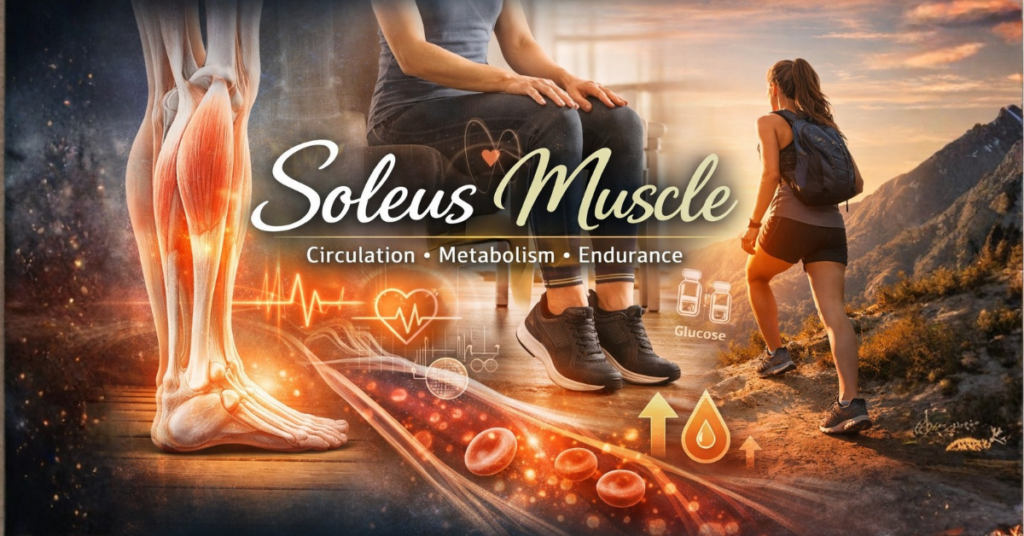
But one of the most powerful muscles for circulation, metabolic health, and endurance is quietly working behind the scenes — the soleus muscle.
This deep calf muscle plays a crucial role in posture, blood flow, stamina, and even blood sugar regulation. Yet in today’s sedentary world, it’s one of the most under-activated muscles in the body.
If you sit for long periods, struggle with low energy, experience calf tightness, or want to support better circulation naturally, understanding and strengthening the calf muscles can make a meaningful difference.
Let’s explore how.
In This Article
Medical Disclaimer: This article is for informational purposes only and should not be considered medical advice. Always consult a licensed healthcare provider before trying new health practices or products.
Affiliate Disclosure: This article may contain affiliate links. As an Amazon Associate, I may earn earn from qualifying purchases at no additional cost to you.
Where Is the Soleus Muscle Located?
This muscle is located in the lower leg, beneath the larger calf muscle (gastrocnemius). It runs from just below the knee down to the heel, where it connects to the Achilles tendon.
Unlike the gastrocnemius, the soleus does not cross the knee joint. This makes it uniquely specialized for endurance and postural stability rather than explosive movement.
You don’t see it — but you rely on it every time you:
- Stand upright
- Walk
- Maintain balance
- Shift your weight
It is a quiet stabilizer, constantly supporting you.
What Is the Function of the Soleus Muscle?
The primary function of this muscle is plantarflexion — pointing the toes downward. But its deeper purpose goes far beyond that simple movement.
1. Postural Support
The soleus is considered a postural muscle, meaning it works continuously to keep you upright. When you stand, it prevents you from tipping forward and stabilizes the ankle.
Without a strong calf muscle, standing for long periods becomes fatiguing.
2. Circulatory Support — The “Second Heart”
One of the most fascinating roles of the soleus is its impact on blood flow.
When it contracts, it helps pump blood from the lower legs back toward the heart. This is why it’s often referred to as the body’s “second heart.”
For anyone who sits for extended periods, this function becomes especially important.
Some individuals also explore mechanical vibration tools to support circulation and proprioceptive feedback. Learn more in our guide to 128 Hz tuning fork benefits for circulation and nervous system support
3. Endurance & Energy
This muscle is composed largely of slow-twitch muscle fibers, which are built for endurance.
This means it supports:
- Long walks
- Hiking
- Daily activity
- Sustained standing
It is designed for longevity, not bursts of power.
What Happens to The Calf Muscle in a Sedentary Lifestyle?
Modern living has dramatically reduced natural calf muscle activation.
Long hours at desks, driving, scrolling, and screen time mean this muscle remains underused for much of the day.
When the calf muscle becomes sedentary, several issues may develop:
• Sluggish Circulation
Without regular contraction, blood can pool in the lower legs, contributing to swelling or heaviness.
• Reduced Metabolic Activity
Emerging research suggests the soleus plays a role in glucose regulation during low-intensity movement. When inactive, metabolic efficiency may decline.
• Tightness & Achilles Strain
A shortened, underused calf muscle can increase strain on the Achilles tendon and contribute to heel discomfort.
• Decreased Stamina
Weakness in this endurance muscle can lead to faster fatigue when walking or standing.
If you’re concerned about how prolonged sitting impacts overall health, you may also want to explore our article on the Effects of a Sedentary Lifestyle for a broader view.
Soleus Muscle Research: A Breakthrough in Metabolic Health
Recent research from the National Institutes of Health reveals just how metabolically powerful the soleus muscle truly is.
Although skeletal muscle makes up a large portion of total body mass, most muscles contribute surprisingly little to glucose oxidation at rest. However, researchers discovered that the soleus muscle can dramatically increase its local oxidative metabolism for hours — even while sitting — without fatiguing or significantly depleting glycogen stores.
In controlled trials, activating this small muscle (only about 1% of total body mass) through seated, soleus-dominant contractions improved whole-body metabolic health markers.
Participants experienced significantly better blood sugar control, including a 52% reduction in post-meal glucose spikes and substantially lower insulin levels.
These findings suggest that intentionally activating the soleus muscle may be a powerful, accessible strategy for improving systemic metabolic regulation — especially for those living a sedentary lifestyle.
Activating the soleus muscle through simple seated or standing exercises not only improves circulation but also supports overall metabolic health — learn more ways to naturally boost your metabolism, energy, and physical wellness.
Benefits of Soleus Muscle Exercises
The beautiful part? The soleus muscle responds extremely well to gentle, consistent activation.
Strengthening this muscle can help support:
- Improved Circulation
Regular soleus activation enhances venous return and may reduce lower-leg stagnation.
- Better Blood Sugar Support
Low-intensity muscle engagement may help improve glucose utilization throughout the day.
- Greater Endurance
You may notice improved walking stamina and reduced calf fatigue.
- Reduced Heel & Achilles Tension
Targeted strengthening and stretching helps balance lower-leg mechanics.
- Support for Aging Well
Maintaining lower-leg strength is essential for balance, stability, and fall prevention as we age.
Who Benefits Most from Calf Muscle Training?
Soleus muscle exercises are especially supportive for:
- Office workers
- Remote workers
- Older adults
- Individuals with circulation concerns
- People managing metabolic health
- Runners and walkers
- Anyone sitting more than 6 hours daily
If you live a largely seated lifestyle, this is one of the simplest natural interventions you can begin today.
Healing Ailments Guide: Soleus Muscle Exercises
These exercises are gentle, accessible, and highly effective.
1. Seated Soleus Raises (Desk-Friendly)
This is one of the most effective ways to target the soleus muscle specifically.
How to perform:
- Sit upright with both feet flat on the floor.
- Keep your toes planted.
- Slowly lift your heels off the ground.
- Hold for 2–3 seconds.
- Lower slowly and repeat.
Repetitions: 15–20
Sets: 3–4
Frequency: Daily
For added resistance, place a book or light weight on your knees.
This is an ideal exercise during work hours.
2. Soleus Circulation Pumps
Perfect during long sitting periods.
- Sit tall in your chair.
- Lift and lower your heels rapidly in small pulses.
- Continue for 30–60 seconds.
This stimulates blood flow and gently activates the soleus muscle.
3. Bent-Knee Calf Raises
Bending the knee shifts the workload from the gastrocnemius to the soleus muscle.
How to perform:
- Stand with knees slightly bent.
- Keep knees bent throughout the movement.
- Rise onto the balls of your feet.
- Lower slowly with control.
Reps: 12–15
Sets: 3
Move slowly and intentionally.
4. Soleus Stretch for Flexibility
- Stand facing a wall.
- Step one foot back.
- Bend both knees.
- Keep your back heel flat.
- Lean forward until you feel a stretch low in the calf.
Hold for 20–30 seconds.
Stretching helps restore balance if the soleus muscle has become tight from inactivity.
Incorporating simple movements like calf raises, walking, or using a stationary bike can keep the soleus engaged, helping counteract the negative effects of prolonged inactivity on your body and overall health.
How Often Should You Train the Soleus Muscle?
Because the soleus is an endurance muscle, it thrives on:
- Higher repetitions
- Lower resistance
- Frequent daily activation
Gentle daily movement is not only safe — it’s beneficial.
FAQs About the Soleus Muscle
What is the soleus muscle?
The soleus muscle is a deep calf muscle located beneath the gastrocnemius. It supports posture, walking endurance, ankle stability, and circulation.
Why is the soleus muscle called the “second heart”?
Because its contractions help pump blood from the lower legs back toward the heart, supporting healthy circulation.
Can strengthening the soleus muscle help if I sit all day?
Yes. Regular soleus muscle exercises may improve circulation, support metabolic health, and reduce lower-leg tightness caused by prolonged sitting.
How do I isolate the soleus muscle?
Perform calf exercises with bent knees or do seated heel raises. Bending the knee minimizes gastrocnemius involvement and emphasizes the soleus muscle.
Is daily soleus exercise safe?
For most individuals, gentle daily activation is safe and beneficial. If you have vascular or orthopedic conditions, consult your healthcare provider.
Final Thoughts: Strengthening the Soleus Muscle for Natural Wellness
The soleus muscle may be hidden beneath the surface, but its impact on circulation, posture, stamina, and metabolic function is profound.
In a culture where sitting has become the norm, activating this powerful muscle is one of the simplest, most natural ways to support whole-body health. Small, consistent movement creates momentum.