Introduction: The Hormone Nobody Talks About — Until Everything Falls Apart
There is a hormone quietly working behind the scenes of your entire wellbeing — governing your mood, your sleep, your fertility, your metabolism, your thyroid function, and your ability to feel calm and grounded in your own body.
It’s not estrogen. It’s not cortisol. It’s progesterone — and for millions of women, it’s the missing piece that nobody has ever properly investigated.
Low progesterone is one of the most common yet most overlooked hormonal imbalances in women today. Unlike estrogen, which gets the lion’s share of attention in women’s health conversations, progesterone tends to fly under the radar — until its absence becomes impossible to ignore.
Are you waking at 3am with a racing mind, unable to fall back asleep? Experiencing anxiety that seems to come from nowhere, particularly in the second half of your cycle? Dealing with irregular periods, spotting before your period, or a history of miscarriage? Feeling like your mood is completely beyond your control in the week before menstruation?
If irregular cycles and anovulation are your primary concern, PCOS may also be worth investigating — our guide on PCOS natural treatment explores how low progesterone and PCOS interact as part of the same hormonal disruption.
These aren’t character flaws. They aren’t inevitable parts of being a woman. And they aren’t signs that you simply need to “manage stress better.”
They may be low progesterone symptoms — your body’s intelligent signal that one of its most fundamental hormones has fallen out of balance.
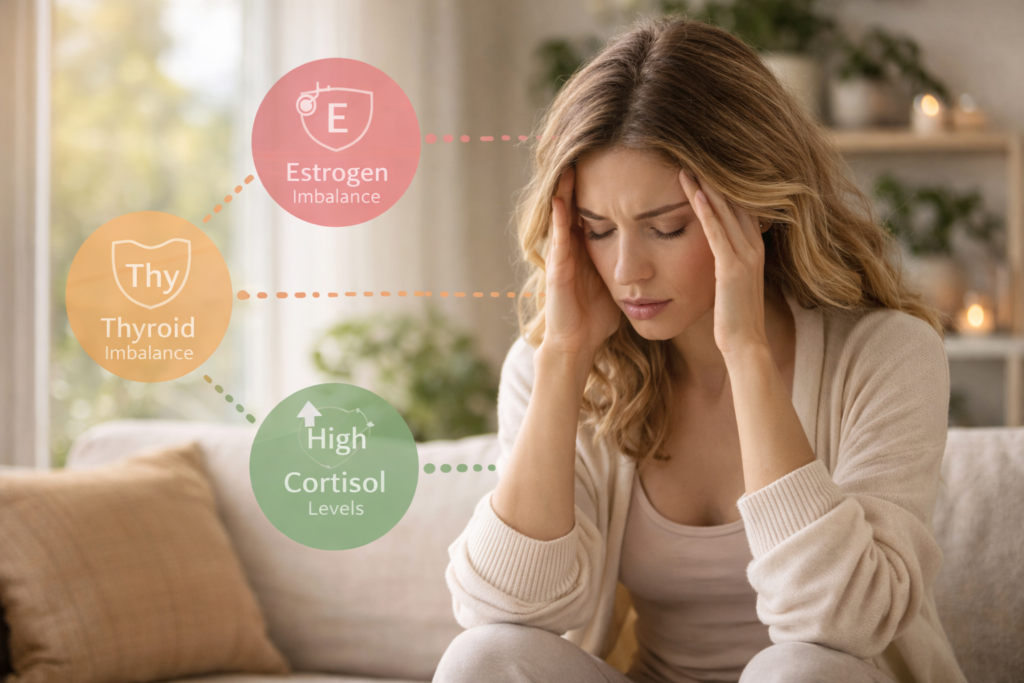
Low progesterone almost always creates a secondary condition called estrogen dominance — where estrogen becomes relatively excessive in the absence of progesterone’s balancing effect. Our guide on estrogen dominance symptoms and natural solutions explains this connection in depth.
The good news is profound: low progesterone responds exceptionally well to natural support. Diet, lifestyle, targeted nutrients, and herbal medicine can meaningfully support your body’s own progesterone production — without synthetic hormones, without birth control pills that suppress the very hormone you need, and without accepting hormonal chaos as your new normal.
In this guide we cover everything you need to know: what progesterone actually does, the 10 most telling low progesterone symptoms, why progesterone deficiency happens, and the most effective natural progesterone support strategies available.
In This Article
Medical Disclaimer: This article is for informational purposes only and should not be considered medical advice. Always consult a licensed healthcare provider before trying new health practices or products.
Affiliate Disclosure: This article may contain affiliate links. As an Amazon Associate, I may earn from qualifying purchases at no additional cost to you.
What Is Progesterone and Why Does It Matter So Much?
Progesterone is a steroid hormone produced primarily by the corpus luteum — the temporary endocrine structure that forms in the ovary after ovulation each month. Smaller amounts are also produced by the adrenal glands and, during pregnancy, by the placenta.
The name itself tells you something important: pro-gestation — meaning “in support of pregnancy.” But progesterone’s role extends far beyond reproduction. It is a master regulatory hormone that touches virtually every system in the body.
What Progesterone Does
Reproductive system:
- Prepares the uterine lining for implantation after ovulation
- Maintains early pregnancy — low progesterone is a leading cause of early miscarriage
- Regulates the length and quality of the menstrual cycle
- Counterbalances estrogen’s proliferative effects on uterine tissue
- Prevents estrogen dominance by maintaining the estrogen-progesterone ratio
Nervous system and brain:
- Converts to allopregnanolone — a neurosteroid that activates GABA receptors, producing calming, anti-anxiety effects
- Supports serotonin and dopamine receptor sensitivity
- Promotes restorative sleep — particularly deep, slow-wave sleep
- Protects myelin sheaths surrounding nerve cells
- Has neuroprotective properties studied in brain injury research
Metabolism and thyroid:
- Stimulates thyroid hormone receptors — making cells more responsive to thyroid hormone
- Supports healthy metabolism and body weight
- Improves insulin sensitivity
- Promotes the use of fat for energy rather than storage
Bone and cardiovascular health:
- Stimulates osteoblast activity — the bone-building cells
- Supports healthy blood pressure and vascular function
- Has anti-inflammatory effects on blood vessels
Immune system:
- Modulates immune response — particularly important during pregnancy
- Has anti-inflammatory properties
- Balances Th1/Th2 immune pathways
When you understand this full picture it becomes clear why low progesterone creates such wide-ranging, seemingly unrelated symptoms — because it affects so many different systems simultaneously.
To understand how progesterone connects to estrogen balance, read our comprehensive guide on Estrogen Dominance: Symptoms, Causes & Natural Solutions That Work.
The Progesterone-Estrogen Relationship: The Seesaw That Governs Your Hormonal Health
Progesterone and estrogen are designed to work as counterparts — rising and falling in precise coordination throughout your menstrual cycle. Estrogen dominates the first half of the cycle (the follicular phase), building the uterine lining and driving ovulation. After ovulation, progesterone takes over (the luteal phase) — maturing the uterine lining, calming the nervous system, and preparing the body for either implantation or menstruation.
When low progesterone disrupts this balance, estrogen becomes relatively dominant — even when estrogen levels themselves are completely normal. This is the mechanism behind what is known as estrogen dominance — and it explains why so many low progesterone symptoms look identical to estrogen dominance symptoms.
The ratio matters more than absolute levels.
For a complete understanding of this relationship read our guide on Estrogen Dominance: 12 Symptoms, Root Causes & Natural Solutions That Work.
10 Warning Signs of Low Progesterone
Low progesterone symptoms are diverse, cyclical, and frequently dismissed as stress or anxiety. Here are the 10 most telling signs to watch for:
1. Anxiety, Nervousness, and Irritability — Especially Premenstrually
This is one of the earliest and most consistent low progesterone symptoms. Progesterone converts to allopregnanolone — a powerful activator of GABA receptors in the brain. GABA is your brain’s primary inhibitory neurotransmitter — the “calm down” signal. Without adequate progesterone feeding this pathway, the nervous system becomes hyperreactive, producing anxiety, irritability, and emotional sensitivity — particularly in the 7-10 days before menstruation when progesterone should be at its highest.
2. Sleep Disruption — Particularly Waking Between 2-4am
Progesterone has direct sedative properties through its conversion to allopregnanolone and its support of GABA. Low progesterone means less of this natural sedation — resulting in difficulty falling asleep, frequent waking (particularly in the early hours), and non-restorative sleep. Many women with progesterone deficiency describe waking between 2-4am with a racing mind or anxiety — a classic presentation.
3. Short Luteal Phase or Spotting Before Your Period
The luteal phase — the time between ovulation and menstruation — should last approximately 12-14 days. A luteal phase shorter than 10 days is a strong indicator of low progesterone, since progesterone is responsible for maintaining the uterine lining during this phase. Spotting or light bleeding in the days before your period arrives is another classic sign — the lining is breaking down prematurely because progesterone has dropped too early.
A short luteal phase not only signals low progesterone but also creates a window of relative estrogen dominance that drives the PMS, bloating, and mood symptoms so many women experience in the premenstrual phase.
4. Heavy or Painful Periods
Without adequate progesterone to regulate the uterine lining built by estrogen, the lining becomes excessively thick and the resulting menstruation is heavier, more painful, and longer than normal.
5. Mood Changes, Depression, and Low Motivation
Progesterone supports serotonin and dopamine receptor sensitivity. When progesterone is low — particularly during the luteal phase — many women experience a dramatic drop in mood, motivation, and sense of wellbeing that resolves almost immediately when menstruation begins and the next cycle starts fresh. This pattern is a hallmark of progesterone deficiency and distinguishes it from clinical depression.
6. Difficulty Conceiving or History of Miscarriage
Progesterone is essential for preparing the uterine lining for implantation and maintaining early pregnancy. Low progesterone is one of the most common and most treatable causes of early pregnancy loss — specifically in the first trimester. Women with recurrent miscarriage are routinely assessed for progesterone insufficiency in integrative and reproductive medicine.
7. Bloating, Breast Tenderness, and Water Retention
When progesterone is insufficient to balance estrogen’s water-retaining effects, bloating and breast tenderness become pronounced — particularly in the week before menstruation. These symptoms are frequently dismissed as “normal PMS” when they are actually correctable low progesterone symptoms.
8. Brain Fog and Poor Memory
Progesterone is neuroprotective and supports cognitive function through multiple pathways. Low progesterone is associated with reduced clarity, poor memory consolidation, and difficulty concentrating — particularly in the premenstrual phase. Many women describe this as their brain “switching off” in the week before their period.
9. Thyroid Symptoms Despite Normal Labs
This connection is critical and frequently missed. Progesterone sensitizes cells to thyroid hormone — making receptors more responsive. When progesterone is low, cells become less responsive to thyroid hormone even when thyroid production is technically normal. This produces classic hypothyroid symptoms — fatigue, weight gain, hair loss, cold intolerance, constipation — in women whose thyroid labs show no abnormality.
Read our guide on Low Thyroid Hormones: Understanding and Supporting Thyroid Health to understand how hormonal balance and thyroid function are inseparable.
10. Irregular Cycles or Absent Periods
Progesterone is produced after ovulation — which means irregular cycles or absent periods often indicate that ovulation is not occurring consistently, leaving progesterone chronically low. This pattern is common in women with PCOS, those under significant stress, athletes with low body fat, and women approaching perimenopause.
Whether your symptoms point to hormone imbalance, thyroid dysfunction, or adrenal fatigue, our free Natural Symptom Checker can help you identify possible root causes and natural remedies in minutes.
Root Causes of Low Progesterone: Why Is This Happening?
1. Chronic Stress — The Primary Culprit
This is the single most common driver of low progesterone in modern women — and the mechanism is precise and well-documented.
Both cortisol (the stress hormone) and progesterone are produced from the same precursor — pregnenolone. Under chronic stress, the adrenal glands divert pregnenolone toward cortisol production at the expense of progesterone synthesis. This is known as pregnenolone steal or cortisol steal.
Additionally, cortisol directly blocks progesterone receptors — meaning even the progesterone you do produce is less effective. Chronic stress therefore attacks progesterone from two directions simultaneously: reducing its production AND blocking its action.
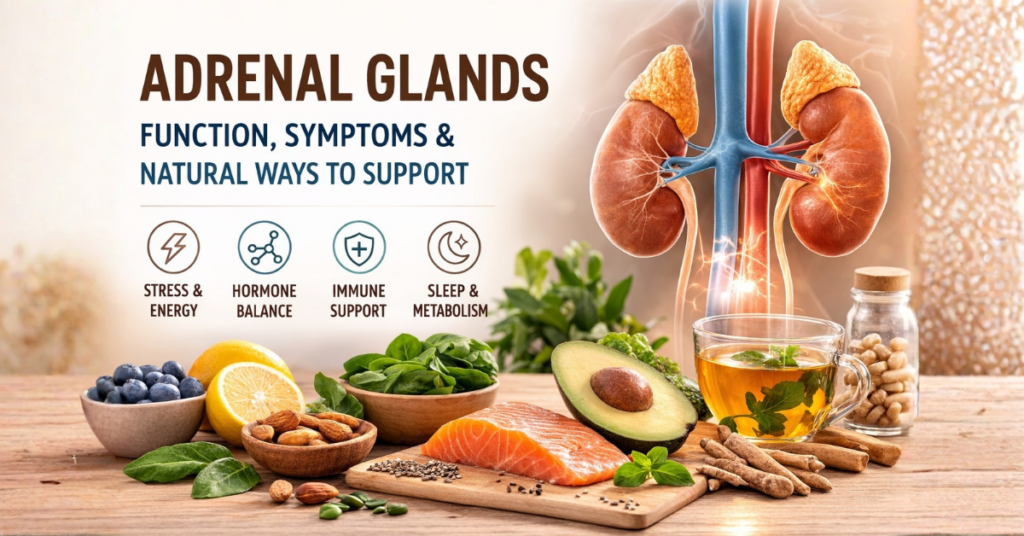
Managing cortisol is foundational to progesterone recovery. Read our guides on How to Lower High Cortisol Naturally and Adrenal Glands: Function, Symptoms & Natural Ways to Support Adrenal Glands.
2. Anovulation — Cycles Without Ovulation
Progesterone is produced by the corpus luteum — which only forms after ovulation. No ovulation means no corpus luteum and therefore essentially no progesterone for that cycle. Many women have regular monthly bleeding without actually ovulating — meaning they never produce meaningful progesterone that month.
Common causes of anovulation:
- Chronic stress
- Undereating or very low body fat
- Excessive high-intensity exercise
- Thyroid dysfunction
- PCOS
- Perimenopause
PCOS is one of the most common causes of anovulation and the low progesterone that results from it — read our complete guide on PCOS natural treatment to understand whether polycystic ovary syndrome may be driving your progesterone deficiency.
3. Age and Perimenopause
Progesterone is the first hormone to decline significantly with age — typically beginning in the mid-30s, accelerating through the 40s. Research confirms that progesterone can drop by up to 75% between ages 35 and 50, while estrogen only declines by approximately 35%. This dramatic and disproportionate decline creates years of relative estrogen dominance driven by low progesterone.
4. HPA Axis Dysfunction
Prolonged stress dysregulates the entire hypothalamic-pituitary-adrenal axis — the command center for hormone production. HPA axis dysfunction disrupts the LH (luteinizing hormone) surge that triggers ovulation and progesterone production, creating systemic hormonal imbalance beyond just elevated cortisol.
Read our guide on Vagus Nerve Explained: Symptoms, Function & How to Reset It Naturally and How to Reset Nervous System Naturally to understand how nervous system health supports hormonal balance.
5. Nutritional Deficiencies
Several key nutrients are essential for progesterone synthesis and the ovulation that triggers it:
- Magnesium — required for multiple steps in hormone synthesis and stress regulation
- Zinc — essential for follicle development and the LH surge that triggers ovulation
- Vitamin B6 — cofactor in progesterone production and estrogen metabolism
- Vitamin C — supports corpus luteum function and progesterone production
- Vitamin D — vitamin D receptors are found on ovarian cells and support ovulation
6. Xenoestrogen Exposure
Environmental chemicals that mimic estrogen — found in plastics, pesticides, personal care products, and conventional meat — suppress progesterone production by disrupting the hormonal signaling cascade that governs ovulation and the luteal phase.
Read our Clean Living Lifestyle: Reducing Everyday Toxins & Restoring Natural Health guide for practical xenoestrogen reduction strategies.
7. Gut Dysbiosis
An imbalanced gut microbiome affects low progesterone through multiple pathways — impairing nutrient absorption (reducing availability of zinc, magnesium, and B vitamins needed for progesterone production), increasing inflammation that disrupts ovarian function, and recirculating estrogen that then suppresses progesterone signaling.
Read our How to Heal Your Gut Naturally (Step-by-Step Guide) for foundational microbiome support.
How to Increase Progesterone Naturally: 10 Proven Strategies
Understanding how to increase progesterone naturally requires addressing both the drivers of low production AND the nutritional building blocks the body needs to make more. Here is the most comprehensive natural protocol available:
Strategy 1: Manage Stress and Support the HPA Axis
Since cortisol steal is the primary driver of low progesterone for most women, stress management is not optional — it is the foundation of everything else.
- Practice daily nervous system regulation — even 10 minutes of breathwork, meditation, or gentle stretching
- Prioritize consistent sleep — 7-9 hours in genuine darkness
- Reduce high-intensity exercise if overtrained — swap some sessions for walking, stretching, or swimming
- Set clear work-life boundaries — chronic low-grade stress is as damaging as acute stress spikes
- Consider adaptogenic herbs — ashwagandha, rhodiola, and holy basil all protect the HPA axis and support pregnenolone allocation toward progesterone
Read our guide on Adaptogenic Mushrooms Explained: Benefits, How They Work, and Everyday Use and Natural Remedies for Anxiety Disorder: Lifestyle, Diet, and Herbal Support.
Strategy 2: Support Ovulation Naturally
Since progesterone requires ovulation to be produced, supporting regular healthy ovulation is foundational:
- Eat enough — undereating suppresses ovulation. Adequate healthy fats and protein are essential for hormone production
- Maintain a healthy body weight — both underweight and overweight women experience disrupted ovulation
- Track your cycle — use basal body temperature or LH strips to confirm ovulation is occurring each month
- Reduce excessive cardio — chronic high-intensity exercise raises cortisol and suppresses LH, disrupting ovulation
- Support thyroid function — thyroid dysfunction is one of the most common causes of anovulation
Strategy 3: Vitex (Chaste Tree Berry) — The Progesterone Herb
Vitex agnus-castus is the most researched and clinically supported herb for low progesterone and the symptoms that accompany it. It works at the level of the pituitary gland — stimulating LH production, which in turn triggers stronger ovulation and higher corpus luteum progesterone output.
Multiple randomized controlled trials have confirmed Vitex’s effectiveness for:
- Reducing PMS symptoms
- Extending short luteal phases
- Improving progesterone levels
- Reducing premenstrual anxiety and mood changes
- Supporting fertility in women with luteal phase defect
Dosage: 400-500mg standardized extract daily, taken in the morning
Timeline: Allow 3-6 months for full effect — Vitex works gradually
Important note: Vitex is not appropriate during pregnancy or while taking hormonal birth control
Note: Vitex is particularly effective for low progesterone driven by anovulation — but requires careful consideration in PCOS where LH may already be elevated. Read our PCOS natural treatment guide before adding Vitex if PCOS is suspected.”
Strategy 4: Optimize Key Nutrients
Magnesium:
The most important mineral for natural progesterone support — it regulates cortisol, supports HPA axis function, and is required for multiple steps in hormone synthesis. Most women with low progesterone are also magnesium deficient.
- Supplement: Magnesium glycinate 300-400mg daily
- Foods: Pumpkin seeds, dark leafy greens, almonds, dark chocolate
Read our complete guide on Magnesium Benefits: The Master Mineral for Sleep, Anxiety, Hormones & More.
Zinc:
Essential for follicle development, the LH surge that triggers ovulation, and corpus luteum function.
- Supplement: 15-30mg zinc picolinate or bisglycinate daily
- Foods: Pumpkin seeds, oysters, beef, chickpeas, hemp seeds
Vitamin B6:
Directly supports progesterone production and reduces the estrogen dominance symptoms that accompany low progesterone.
- Supplement: 50-100mg B6 as part of a B-complex with methylfolate
- Foods: Tuna, salmon, chickpeas, banana, turkey
Vitamin C:
Supports corpus luteum function and has been shown in small studies to increase luteal phase progesterone levels.
- Supplement: 500-1,000mg vitamin c daily throughout the luteal phase
- Foods: Bell peppers, citrus, kiwi, strawberries, broccoli
Vitamin D3:
Vitamin D receptors are found on ovarian cells and support follicle development and ovulation. Low vitamin D is strongly associated with ovulatory dysfunction and low progesterone.
- Supplement: 2,000-5,000 IU D3 with K2
- Get tested — aim for blood levels of 50-70 ng/mL
Strategy 5: Eat to Support Progesterone Production
Foods that support progesterone:
- Healthy fats — progesterone is made from cholesterol. Avocado, olive oil, coconut oil, eggs, and grass-fed butter provide the building blocks
- Zinc-rich foods — pumpkin seeds, oysters, beef, chickpeas
- Magnesium-rich foods — dark leafy greens, pumpkin seeds, almonds
- B6-rich foods — wild-caught salmon, tuna, turkey, chickpeas, banana
- Fiber — supports estrogen clearance, reducing the relative estrogen dominance that suppresses progesterone signaling
- Cruciferous vegetables — support estrogen metabolism creating a better estrogen-progesterone ratio
Foods that suppress progesterone:
- Excessive soy — particularly processed soy — phytoestrogens may interfere with hormonal signaling
- Alcohol — significantly impairs hormone metabolism and liver function
- Refined sugar and processed foods — promote inflammation and insulin resistance that disrupts ovarian function
- Excessive caffeine — elevates cortisol which suppresses progesterone
Strategy 6: Reduce Xenoestrogen Exposure
Environmental estrogen-mimicking chemicals suppress progesterone by disrupting hormonal signaling pathways. Reducing exposure is therefore a direct progesterone-supporting strategy:
- Switch to glass or stainless steel containers
- Choose organic produce especially Dirty Dozen items
- Replace conventional personal care products with clean alternatives
- Filter drinking water with reverse osmosis or Clearly Filtered
- Choose organic pasture-raised meat and dairy
Strategy 7: Support Liver Health
The liver metabolizes and clears excess estrogen — which, when not cleared efficiently, suppresses progesterone signaling. Supporting liver detoxification is therefore foundational to progesterone balance:
- Cruciferous vegetables daily — DIM and indole-3-carbinol support estrogen clearance
- Milk thistle — protects liver cells and enhances detoxification capacity
- Reduce alcohol — even moderate intake impairs liver estrogen processing
- Dandelion root tea — liver-supporting and supports estrogen elimination
- Calcium D-Glucarate — prevents estrogen reabsorption in the gut
Supporting estrogen clearance through the liver is one of the most powerful ways to create a better estrogen-progesterone ratio — read our complete guide on how to reduce estrogen dominance naturally for the full liver detox protocol.”
Strategy 8: Optimize Sleep
Progesterone supports sleep — but poor sleep also suppresses progesterone in a bidirectional relationship. Prioritizing sleep quality creates a positive feedback loop:
- Sleep in complete darkness — even small amounts of light disrupt melatonin and cortisol rhythms that affect progesterone
- Maintain a consistent sleep schedule — even on weekends
- Avoid screens 90 minutes before bed — blue light suppresses melatonin
- Consider magnesium glycinate before bed — directly supports progesterone’s sedative effects
- Keep bedroom temperature cool — 65-68°F/18-20°C
Read our guides on Best Natural Sleep Aids: 9 Proven Ways to Sleep Better Naturally and How to Sleep Better Naturally: 12 Proven Natural Remedies for Insomnia.
Strategy 9: Support Gut Health
Gut health affects progesterone through nutrient absorption, inflammation, and estrogen metabolism. A healthy microbiome is foundational to natural progesterone support:
- Take a high-quality probiotic daily
- Eat prebiotic-rich foods — garlic, onion, leeks, asparagus
- Add fermented foods — kefir, sauerkraut, kimchi
- Heal any underlying gut conditions — leaky gut, dysbiosis, or SIBO
Read our Probiotics for Gut Health: The Ultimate Guide to Gut Microbiome Balance and Prebiotics for Gut Health: The Ultimate Guide to Feeding Your Gut Microbiome.
Strategy 10: Consider Bioidentical Progesterone
For women with significant progesterone deficiency — particularly those with a history of miscarriage, severe luteal phase symptoms, or confirmed low progesterone on testing — bioidentical progesterone cream or oral micronized progesterone (Prometrium) under the guidance of a knowledgeable practitioner may be appropriate.
Unlike synthetic progestins found in hormonal birth control, bioidentical progesterone is molecularly identical to the hormone your body produces and does not carry the same risk profile as synthetic versions.
This is a conversation to have with an integrative medicine doctor, naturopath, or functional medicine practitioner who understands the distinction between bioidentical and synthetic hormones.
Testing for Low Progesterone
| Test | What It Measures | Best Timing |
|---|---|---|
| Day 21 Serum Progesterone | Confirms whether ovulation occurred | Day 21 of a 28-day cycle (7 days after expected ovulation) |
| DUTCH Complete Hormone Test | Full hormone panel including metabolites | Luteal phase — days 19-22 |
| Saliva Progesterone Testing | Free bioavailable progesterone | Luteal phase multiple timepoints |
| BBT Charting | Confirms ovulation and luteal phase length | Throughout full cycle |
Important: A day 21 serum progesterone below 10 ng/mL suggests inadequate ovulation and low progesterone. Below 3 ng/mL indicates ovulation has not occurred. Many practitioners consider levels below 15-20 ng/mL suboptimal for full symptom resolution.
Explore our Home Health Test page for accessible hormone testing options.
Supplement Summary for Low Progesterone Support
| Supplement | Dose | Primary Benefit |
|---|---|---|
| Vitex (Chaste Tree Berry) | 400-500mg daily | Stimulates LH and progesterone production |
| Magnesium Glycinate | 300-400mg daily | Cortisol regulation and hormone synthesis |
| Zinc Picolinate | 15-30mg daily | Ovulation and corpus luteum support |
| Vitamin B6 (in B-complex) | 50-100mg B6 daily | Progesterone cofactor and estrogen metabolism |
| Vitamin C | 500-1,000mg daily | Corpus luteum and luteal phase support |
| Vitamin D3 + K2 | 2,000-5,000 IU D3 | Ovarian function and hormone receptor sensitivity |
| Ashwagandha | 300-600mg daily | HPA axis and cortisol steal protection |
| Milk Thistle | 200-400mg daily | Liver estrogen clearance and progesterone balance |
| Probiotics | 10-50 billion CFU | Gut health and estrogen metabolism |
Conclusion: Progesterone Is Your Calm, Your Sleep, Your Balance — You Deserve to Have It
Low progesterone may be one of the most quietly devastating hormonal imbalances a woman can experience — affecting her mood, her sleep, her fertility, her metabolism, her thyroid, and her sense of self — while being routinely dismissed or overlooked by conventional medicine.
But it is not inevitable. It is not something you simply have to live with. And it is not your fault.
Low progesterone is a physiological signal — often driven by correctable root causes like chronic stress, nutritional deficiencies, xenoestrogen exposure, and gut dysbiosis — that your body is asking for support.
The natural strategies in this guide address those root causes directly. They work with your body’s own hormone-producing systems rather than suppressing them. And for most women with mild to moderate progesterone deficiency, they produce meaningful, lasting results within 3-6 months of consistent application.
Start here:
- Get a day 21 progesterone test to confirm where your levels actually are. If your progesterone is low alongside irregular cycles, acne, or excess hair growth, PCOS may be the underlying driver — our complete PCOS holistic treatment guide will help you identify and address the root cause.
- Start magnesium glycinate tonight — it supports sleep, cortisol, and progesterone simultaneously
- Add Vitex in the morning — give it three full cycles to work
- Reduce your top three stress sources this week — even small shifts protect pregnenolone from cortisol steal
- Eat healthy fats at every meal — your hormones are literally made from them
Your calm is possible. Your sleep is possible. Your hormonal balance is possible.
Frequently Asked Questions About Low Progesterone
What are the most common low progesterone symptoms?
The most common low progesterone symptoms include anxiety and irritability — particularly in the premenstrual week, sleep disruption especially waking between 2-4am, mood swings and depression before menstruation, spotting or light bleeding before your period arrives, heavy or painful periods, difficulty conceiving, bloating and breast tenderness, brain fog, and fatigue. These symptoms follow a cyclical pattern — worsening in the second half of the cycle (luteal phase) and improving once menstruation begins. This cyclical pattern is one of the clearest distinguishing features of low progesterone as opposed to general anxiety or depression. Women with PCOS frequently experience low progesterone as a secondary consequence of anovulation — if these symptoms sound familiar alongside irregular cycles or androgen symptoms, read our guide on natural remedies for PCOS for the complete picture.
How can I increase progesterone naturally and quickly?
The fastest natural interventions for low progesterone focus on reducing cortisol steal — since chronic stress is the most common driver. Start with magnesium glycinate (300-400mg before bed), which reduces cortisol and directly supports hormone synthesis. Add Vitex (chaste tree berry) in the morning — clinical trials show meaningful improvements in luteal phase progesterone within 3 cycles. Prioritize sleep, reduce high-intensity exercise temporarily, and eliminate alcohol — which impairs progesterone metabolism. Most women notice initial symptom improvements within 4-6 weeks of consistently applying these strategies, with fuller hormonal rebalancing at 3-6 months.
Can low progesterone cause anxiety and depression?
Yes — and this is one of the most important connections in women’s mental health. Progesterone converts to allopregnanolone, which activates GABA receptors — the brain’s primary calming pathway. When progesterone is low, GABA activity drops and the nervous system becomes hyperreactive, producing anxiety, panic, irritability, and low mood. This is why premenstrual anxiety and depression — which resolve when menstruation begins — are so often driven by low progesterone rather than a standalone psychiatric condition. Addressing low progesterone naturally can have dramatic effects on mental health without the need for antidepressants or anti-anxiety medication in many cases.
What is the difference between low progesterone and estrogen dominance?
Low progesterone and estrogen dominance are deeply connected — often two descriptions of the same underlying imbalance. Estrogen dominance occurs when estrogen is high relative to progesterone — which can happen either because estrogen is genuinely elevated, OR because progesterone has dropped too low. Most women with low progesterone automatically develop relative estrogen dominance as a result. The symptoms overlap significantly — heavy periods, PMS, bloating, mood swings, weight gain, and sleep disruption appear in both. Testing the full hormone panel — ideally with the DUTCH test — reveals which pattern is dominant and guides the most targeted natural intervention. For a complete understanding of estrogen dominance and how it differs from — and overlaps with — low progesterone, read our dedicated guide on estrogen dominance symptoms, causes, and natural treatment.
Does low progesterone cause weight gain?
Yes — through several mechanisms. Progesterone supports healthy metabolism and promotes the use of fat for energy. When progesterone is low, metabolism slows and fat storage increases — particularly around the abdomen. Low progesterone also impairs thyroid hormone receptor sensitivity, producing functional hypothyroidism with its associated weight gain even when thyroid labs appear normal. Additionally the relative estrogen dominance that accompanies low progesterone promotes fat storage in the hips, thighs, and belly. Addressing progesterone deficiency is therefore an important and often overlooked component of hormonal weight management.
Can low progesterone affect fertility and cause miscarriage?
Yes — significantly. Progesterone is essential for preparing the uterine lining for implantation and sustaining early pregnancy. Low progesterone is one of the most common and most treatable causes of early miscarriage — particularly recurrent first trimester pregnancy loss. Many reproductive medicine specialists routinely test progesterone on day 21 of the cycle and may prescribe progesterone supplementation during the luteal phase and early pregnancy for women with a history of loss. Natural support strategies that improve ovulation quality and luteal phase progesterone production can meaningfully support fertility outcomes, though women with recurrent pregnancy loss should always work with a qualified reproductive specialist.
How long does it take for natural progesterone support to work?
Most women notice initial improvements in low progesterone symptoms within 4-8 weeks of consistently applying natural strategies — particularly sleep improvements, reduced premenstrual anxiety, and lighter periods. Vitex (chaste tree berry) typically requires 3-6 menstrual cycles to produce its full luteal phase and progesterone-supporting effects. Full hormonal rebalancing — with measurable improvements in day 21 progesterone levels — generally takes 3-6 months of sustained natural support. Patience is essential: hormonal systems respond gradually to nutritional and lifestyle interventions. Tracking symptoms cycle by cycle helps confirm progress even before lab values shift significantly.
Resources & Further Reading
- Prior JC. (2018). Progesterone for symptomatic perimenopause treatment — Progesterone politics, physiology and potential for perimenopause. Facts, Views & Vision in ObGyn.
- Schindler AE. (2014). Progestogen deficiency and endometrial cancer risk. Maturitas.
- Wuttke W et al. (2003). Chaste tree (Vitex agnus-castus) — pharmacology and clinical indications. Phytomedicine.
- Stute P et al. (2018). The impact of micronized progesterone on the endometrium. Climacteric.
- Westphal LM et al. (2006). Double-blind, placebo-controlled study of Fertilityblend: a nutritional supplement for improving fertility in women. Clinical and Experimental Obstetrics & Gynecology.
- Bromberger JT, Kravitz HM. (2011). Mood and menopause: findings from the Study of Women’s Health Across the Nation (SWAN). Obstetrics and Gynecology Clinics of North America.
- National Institutes of Health — Progesterone and Women’s Health
- Greenblatt RB et al. — The role of progesterone in female health and fertility.