Introduction: When Your Body Is Fighting Itself — And Nobody Is Telling You Why
You’re exhausted but can’t sleep. You’re eating well but gaining weight — especially around your belly, hips, and thighs. Your periods are heavier than they used to be, your moods swing without warning, and your brain feels like it’s wrapped in fog. You’ve mentioned it to your doctor and been told everything looks “normal.”
But nothing feels normal.
Here’s what nobody may have told you: estrogen dominance could be the root cause behind every single one of those symptoms. And it affects an estimated 50% of women over 35 — most of whom have no idea it’s happening.
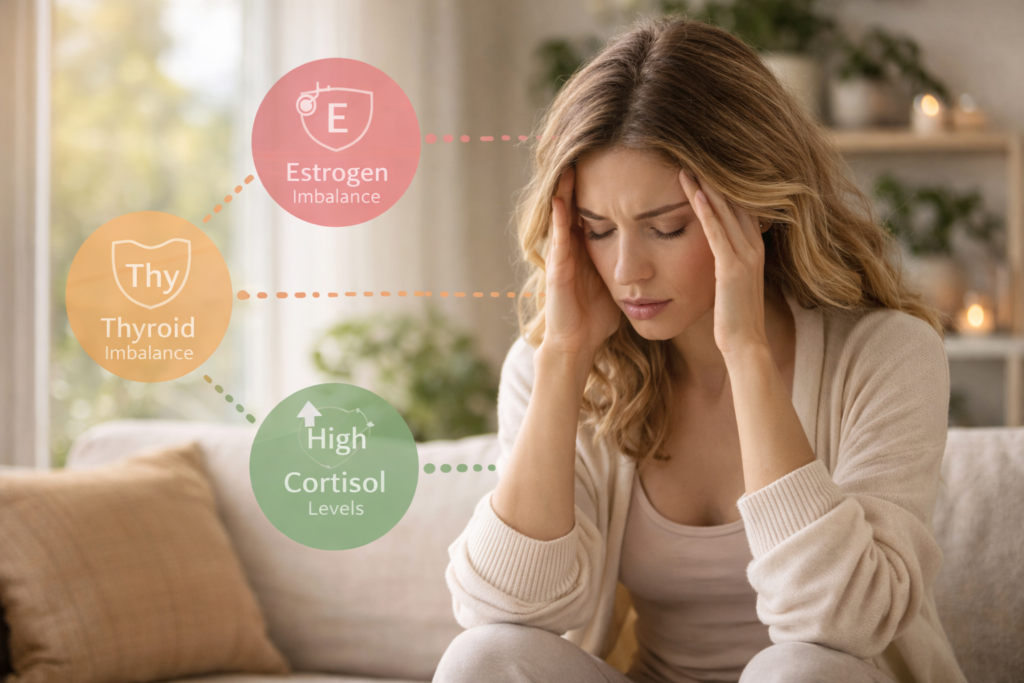
Estrogen dominance is not about having too much estrogen in absolute terms. It’s about having too much estrogen relative to progesterone — the hormone designed to balance and buffer it. When this ratio tips out of balance, the effects ripple through virtually every system in your body — your reproductive health, your metabolism, your brain, your thyroid, your gut, and your immune system.
If you suspect progesterone may be the missing piece in your hormonal picture, our dedicated guide on low progesterone symptoms and natural remedies covers everything you need to know about restoring this critical hormone naturally.
The frustrating part? Conventional medicine rarely addresses it directly. Most women are handed a birth control prescription to “regulate hormones” — which masks the symptoms without ever touching the root cause. Others are told their labs are fine and sent home to keep suffering.
The empowering part? Estrogen dominance responds remarkably well to natural interventions — diet, lifestyle, targeted supplements, and reducing the environmental toxin exposure that drives it in the first place.
In this guide we’re going to cover everything: what estrogen dominance actually is, why it happens, the 12 most common symptoms to watch for, the root causes driving it, and the most effective natural solutions to restore balance from the inside out.
In This Article
Medical Disclaimer: This article is for informational purposes only and should not be considered medical advice. Always consult a licensed healthcare provider before trying new health practices or products.
Affiliate Disclosure: This article may contain affiliate links. As an Amazon Associate, I may earn from qualifying purchases at no additional cost to you.
What Is Estrogen Dominance? Understanding the Imbalance
Estrogen and progesterone are designed to work like a seesaw — rising and falling in precise coordination throughout your menstrual cycle, communicating with your brain, ovaries, and adrenal glands to orchestrate everything from ovulation to mood to sleep.
Estrogen dominance occurs when this seesaw tips — either because:
- Estrogen is too high — absolute excess from internal production or external exposure
- Progesterone is too low — even with normal estrogen levels, insufficient progesterone creates relative dominance
- Both — the most common scenario, where estrogen rises and progesterone simultaneously falls
There are three main types of estrogen in the female body:
- Estradiol (E2) — the most potent form, produced primarily by the ovaries during reproductive years
- Estrone (E1) — produced largely by fat tissue; the dominant form after menopause
- Estriol (E3) — the weakest form, produced primarily during pregnancy
When any of these become excessive relative to progesterone — the result is estrogen dominance and the cascade of symptoms that follow.
Why Is It So Common Now?
Estrogen dominance has become increasingly prevalent in modern women for a very specific reason: we live in an estrogen-dominant world. Between environmental chemicals that mimic estrogen, chronic stress that depletes progesterone, diets that impair liver detoxification, and gut dysbiosis that recirculates estrogen — the modern female body is fighting an uphill hormonal battle every single day.
To understand the broader picture of hormonal health, read our guide on Hormone Imbalance in Women: Symptoms, Causes and Support and our Natural Hormone Balance & Thyroid Health: A Holistic Guide.
12 Estrogen Dominance Symptoms to Watch For
Estrogen dominance symptoms are often dismissed as “just part of being a woman” or blamed on stress, aging, or anxiety. Recognizing the pattern is the first step toward addressing the root cause.
Reproductive and Menstrual Symptoms
1. Heavy or Prolonged Periods
One of the most classic estrogen dominance symptoms — estrogen builds the uterine lining, and without adequate progesterone to regulate it, the lining becomes abnormally thick, leading to heavier and longer bleeding.
This happens because estrogen dominance is almost always accompanied by low progesterone — and understanding that deficiency is key to addressing heavy bleeding at its root cause.
2. Severe PMS
Breast tenderness, bloating, cramping, irritability, and mood changes in the days before your period are hallmark signs that estrogen is high relative to progesterone during the luteal phase.
3. Irregular Cycles
Cycles that are consistently shorter than 21 days or longer than 35 days, or that vary significantly from month to month, often reflect underlying hormonal imbalance including estrogen dominance.
4. Fibroids and Cysts
Uterine fibroids and ovarian cysts are strongly associated with estrogen dominance — estrogen is a growth promoter, and without progesterone’s balancing effect, it can stimulate abnormal tissue growth.
5. Endometriosis
Estrogen dominance is considered a primary driver of endometriosis — a condition where uterine tissue grows outside the uterus, causing significant pain and fertility challenges.
Metabolic and Physical Symptoms
6. Weight Gain — Especially Hips, Thighs, and Belly
Estrogen promotes fat storage in specific areas — and excess estrogen makes this worse. Additionally, fat cells themselves produce estrogen through a process called aromatization, creating a self-perpetuating cycle.
7. Bloating and Water Retention
Estrogen promotes water retention, particularly in the week before menstruation. Chronic bloating that doesn’t resolve with dietary changes may signal ongoing estrogen dominance.
8. Breast Tenderness or Fibrocystic Breasts
Hyperstimulation of breast tissue by excess estrogen causes swelling, tenderness, and the development of fibrocystic lumps — benign but painful changes in breast tissue.
9. Fatigue and Low Energy
Progesterone is a natural energizer and mood stabilizer. When it’s low relative to estrogen, fatigue — particularly in the second half of your cycle — becomes persistent and unexplained.
Neurological and Emotional Symptoms
10. Anxiety, Mood Swings, and Irritability
Progesterone converts to allopregnanolone — a neurosteroid that calms the GABA system in the brain. Low progesterone relative to estrogen means less of this calming compound, resulting in increased anxiety, mood instability, and irritability.
11. Brain Fog and Poor Concentration
Hormonal imbalance — particularly estrogen dominance — impairs cognitive function, memory consolidation, and the ability to focus. Many women describe this as feeling like their brain is “wrapped in cotton.”
12. Insomnia and Poor Sleep Quality
Progesterone has natural sedative properties — it supports the GABA system and promotes deeper sleep. Estrogen dominance — with its relative progesterone deficiency — frequently manifests as difficulty falling asleep, staying asleep, or achieving restorative deep sleep.
Additional symptoms that may indicate estrogen dominance:
- Hair loss or thinning
- Decreased libido
- Thyroid dysfunction (estrogen interferes with thyroid hormone receptors)
- Headaches or migraines — particularly around menstruation
- Skin issues including acne along the jawline
- Cold hands and feet
- Sluggish metabolism
Many of these symptoms overlap with thyroid dysfunction. Read our post on Low Thyroid Hormones: Understanding and Supporting Thyroid Health to understand how estrogen dominance and thyroid health are deeply interconnected.
If you’re unsure whether your symptoms point to hormone imbalance, thyroid dysfunction, or adrenal fatigue, our free Natural Symptom Checker can help you identify possible root causes and natural remedies in minutes.
Root Causes of Estrogen Dominance
Understanding what causes estrogen dominance is essential — because treating symptoms without addressing root causes always leads to temporary results at best.
1. Xenoestrogens — Environmental Estrogen Mimics
This is one of the most significant and least discussed drivers of estrogen dominance in modern women. Xenoestrogens are synthetic chemicals that mimic estrogen in the body — binding to estrogen receptors and producing estrogenic effects even in tiny amounts.
This aromatase-driven estrogen excess is one of the key mechanisms connecting estrogen dominance to PCOS — a condition where elevated androgens, insulin resistance, and estrogen imbalance all reinforce each other. Read our complete guide on PCOS natural treatment to understand this connection fully.
Where xenoestrogens hide:
- Plastics — BPA and phthalates in plastic containers, water bottles, food packaging
- Pesticides — particularly on non-organic produce
- Personal care products — parabens and synthetic fragrances in cosmetics, shampoo, lotions
- Household cleaners — synthetic chemical compounds
- Conventional meat and dairy — from animals given synthetic hormones
- Canned foods — BPA lining in most cans
Reducing xenoestrogen exposure is a core part of clean living. Read our guides on Clean Living Lifestyle: Reducing Everyday Toxins & Restoring Natural Health and Why Makeup Can Make You Sick for practical strategies.
2. Chronic Stress and Cortisol Steal
This connection is critical — and it’s one most women never hear about. When the body is under chronic stress, the adrenal glands prioritize cortisol production. Both cortisol and progesterone are made from the same precursor — pregnenolone. Under chronic stress, pregnenolone is “stolen” to make cortisol, leaving insufficient substrate for progesterone synthesis.
This cortisol steal mechanism is one of the most common drivers of progesterone deficiency in modern women — and is explained in full detail in our dedicated guide on low progesterone.
The result: chronically low progesterone — and relative estrogen dominance — even when estrogen levels themselves are normal.
This is why managing cortisol is inseparable from managing estrogen dominance. Read our complete guide on How to Lower High Cortisol Naturally and Cortisol and Weight Gain in Women: Why Stress Causes Belly Fat.
3. Impaired Liver Detoxification
The liver is your body’s primary estrogen processing organ. It breaks down used estrogen through a two-phase detoxification process and packages it for elimination through the bowel. When the liver is overburdened — by alcohol, processed foods, medication, environmental toxins, or nutritional deficiencies — estrogen gets recirculated back into the bloodstream instead of eliminated.
This “estrogen recycling” is one of the most common drivers of chronic estrogen dominance — and one of the most overlooked.
Nutrients critical for liver estrogen metabolism:
- B vitamins — particularly B6, B12, and methylfolate
- Magnesium — required for Phase 2 liver detoxification
- Zinc
- Calcium D-Glucarate — binds estrogen in the intestines, preventing reabsorption
- Milk thistle (silymarin) — protects liver cells and enhances detoxification capacity
- NAC (N-Acetyl Cysteine) — supports glutathione production
Supporting liver function is foundational to estrogen balance. Read our Natural Detox Guide: How to Remove Heavy Metals, Fluoride, Parasites Naturally for a comprehensive detoxification approach.
4. Gut Dysbiosis and the Estrobolome
This is one of the most cutting-edge areas of hormone research — and it’s transforming how we understand estrogen dominance. The estrobolome is the collection of gut bacteria responsible for metabolizing and regulating estrogen in the digestive tract.
When gut bacteria are imbalanced — with too many harmful bacteria relative to beneficial ones — an enzyme called beta-glucuronidase becomes overactive. This enzyme “unlocks” estrogen that the liver has already packaged for elimination, allowing it to be reabsorbed through the intestinal wall back into circulation.
The result: chronically elevated estrogen despite the liver doing its job correctly.
This is why gut health is inseparable from hormone health — and why addressing estrogen dominance must include microbiome support.
For comprehensive gut healing support read our guides on How to Heal Your Gut Naturally (Step-by-Step Guide), Probiotics for Gut Health: The Ultimate Guide to Gut Microbiome Balance, and Leaky Gut Syndrome: Natural Treatment Options.
5. Anovulation — Cycles Without Ovulation
Ovulation is the primary trigger for progesterone production. When ovulation doesn’t occur — due to stress, undereating, excessive exercise, thyroid dysfunction, or PCOS — progesterone production for that cycle is significantly reduced or absent, leaving estrogen unopposed.
Many women have regular periods but are not actually ovulating — meaning they experience monthly bleeding without the progesterone surge that should accompany a healthy cycle.
6. Excess Body Fat
Fat tissue — particularly visceral fat — contains an enzyme called aromatase that converts testosterone and other androgens into estrogen. The more adipose tissue present, the higher the rate of this conversion — creating a self-perpetuating cycle where estrogen dominance promotes fat storage, which in turn produces more estrogen.
7. Perimenopause
During the perimenopausal transition — typically beginning in the late 30s to early 40s — progesterone levels begin declining significantly faster than estrogen levels. Research shows progesterone can drop up to 75% between ages 35 and 50, while estrogen only declines around 35%. This creates a natural but significant window of estrogen dominance for many women.
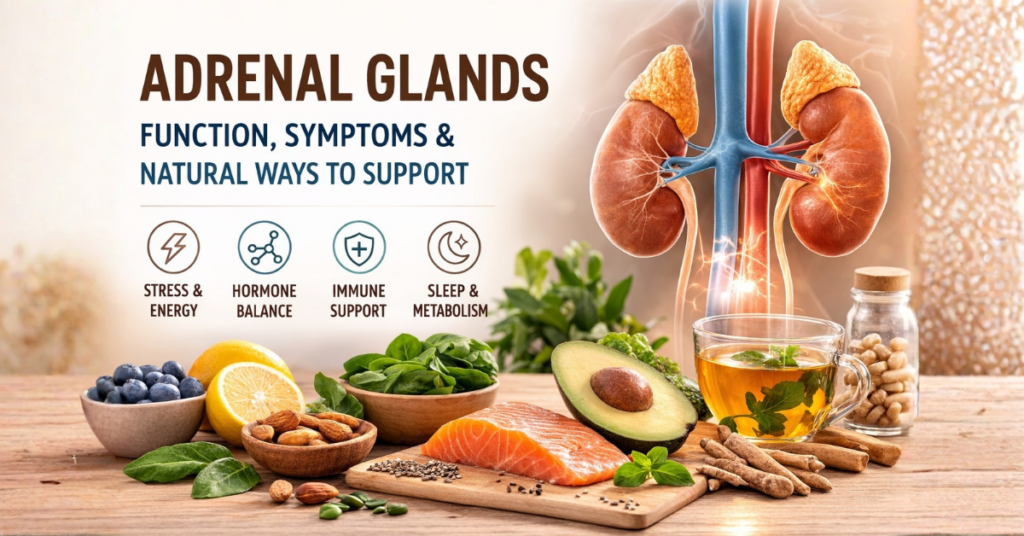
Read our guide on Adrenal Glands: Function, Symptoms & Natural Ways to Support Adrenal Glands to understand how adrenal health supports hormone production during perimenopause.
How to Reduce Estrogen Dominance Naturally: 10 Proven Strategies
Learning how to reduce estrogen dominance naturally requires a multi-pronged approach — addressing exposure, metabolism, gut health, stress, and nutritional deficiencies simultaneously. Here’s the most evidence-informed natural protocol available:
Strategy 1: Eliminate Xenoestrogen Sources
This is your most impactful first step — reducing the external estrogen load your body must process:
- Switch to glass, stainless steel, or ceramic food and beverage containers
- Choose organic produce — especially the Environmental Working Group’s Dirty Dozen
- Replace conventional personal care products with clean, fragrance-free alternatives
- Filter your drinking water — reverse osmosis or Clearly Filtered removes estrogenic chemicals
- Choose organic, pasture-raised meat and dairy
- Replace plastic food wrap with beeswax wrap or parchment
- Avoid heating food in plastic containers
Strategy 2: Support Liver Detoxification
- Eat cruciferous vegetables daily — broccoli, cauliflower, kale, Brussels sprouts, and cabbage contain DIM (diindolylmethane) and indole-3-carbinol, which support healthy estrogen metabolism through the protective 2-hydroxylation pathway
- Eat high fiber foods — fiber binds to estrogen in the intestines and supports its elimination
- Reduce alcohol — alcohol significantly impairs liver estrogen processing
- Support glutathione — through cruciferous vegetables, NAC supplementation, and adequate protein
- Consider milk thistle — 200-400mg standardized to 80% silymarin supports liver cell function and detoxification capacity
- Add Calcium D-Glucarate — 1,500-3,000mg daily prevents estrogen reabsorption in the gut
Strategy 3: Heal Your Gut and Support the Estrobolome
- Take a high-quality probiotic — particularly strains that support beta-glucuronidase regulation
- Eat prebiotic-rich foods — garlic, onion, leeks, asparagus, Jerusalem artichoke
- Add fermented foods — kefir, sauerkraut, kimchi, kombucha to diversify gut flora
- Reduce processed foods and sugar that feed harmful bacteria
- Consider targeted gut healing if leaky gut or dysbiosis are present
Strategy 4: Lower Cortisol and Manage Stress
Since cortisol steals progesterone’s precursors, managing chronic stress is non-negotiable for estrogen balance:
- Practice daily nervous system regulation — breathwork, stretching, or gentle walking
- Support the vagus nerve — cold water exposure, humming, deep diaphragmatic breathing
- Prioritize 7-9 hours of quality sleep
- Consider adaptogenic herbs — ashwagandha, rhodiola, and holy basil all help modulate the HPA axis and protect progesterone production
Read our complete guide on Vagus Nerve Stimulation: How to Calm Stress and Support Nervous System Balance and Adaptogenic Mushrooms Explained: Benefits, How They Work, and Everyday Use.
Strategy 5: Optimize Magnesium
Magnesium is critical for estrogen dominance for multiple reasons — it’s required for Phase 2 liver detoxification, it supports COMT enzyme activity (which metabolizes estrogen), it lowers cortisol, and it supports progesterone receptor sensitivity.
Most women with estrogen dominance are also magnesium deficient — which compounds every aspect of the imbalance.
- Supplement with magnesium glycinate or magnesium malate — 300-400mg daily
- Increase magnesium-rich foods — dark leafy greens, pumpkin seeds, dark chocolate, almonds
For our complete magnesium guide read Magnesium Benefits: The Master Mineral for Sleep, Anxiety, Hormones & More.
Strategy 6: Add DIM Supplementation
DIM (diindolylmethane) is a compound derived from cruciferous vegetables that promotes healthy estrogen metabolism — specifically pushing estrogen toward the beneficial 2-hydroxy pathway and away from the more harmful 16-hydroxy and 4-hydroxy pathways.
DIM works best when combined with strategies that simultaneously support progesterone production — read our guide on how to increase progesterone naturally for the complete complementary protocol.”
- Therapeutic dose: 100-200mg daily
- Best taken with food
- Give it 4-8 weeks to notice meaningful results
- Works synergistically with calcium D-glucarate
Strategy 7: Support Progesterone Naturally
Rather than just trying to lower estrogen, supporting progesterone production creates natural balance:
- Vitex (Chaste Tree Berry) — one of the most studied herbs for progesterone support, it stimulates LH production which triggers progesterone synthesis after ovulation
- Vitamin B6 — supports progesterone production and reduces estrogen dominance symptoms
- Zinc — essential for progesterone synthesis and ovulation
- Vitamin C — supports the corpus luteum, which produces progesterone after ovulation
- Ensure regular ovulation through stress management, adequate nutrition, and thyroid support
Strategy 8: Eat to Support Hormone Balance
Foods that help reduce estrogen dominance:
- Cruciferous vegetables — daily servings of broccoli, kale, cauliflower
- High fiber foods — legumes, flaxseeds, whole grains
- Green tea — EGCG inhibits aromatase and supports healthy estrogen metabolism
- Flaxseeds — lignans help modulate estrogen receptor activity
- Pomegranate — research shows it inhibits aromatase
- Organic berries — rich in antioxidants that support liver detoxification
Women with both estrogen dominance and PCOS will find that these dietary principles overlap significantly — the anti-inflammatory, low-glycemic approach that reduces estrogen dominance also directly addresses the PCOS and insulin resistance connection at the root.
Foods that worsen estrogen dominance:
- Conventional non-organic soy in large quantities — particularly processed soy
- Alcohol — even moderate amounts impair estrogen metabolism
- Processed foods and refined sugar — promote inflammation and gut dysbiosis
- Conventional meat and dairy from hormonally treated animals
- Refined vegetable oils — promote inflammation that impairs hormone signaling
Strategy 9: Exercise Strategically
Exercise helps reduce estrogen dominance by:
- Lowering body fat — reducing aromatase activity
- Improving insulin sensitivity — high insulin promotes aromatase
- Supporting liver function and lymphatic flow
- Reducing cortisol when kept at moderate intensity
Best types for estrogen balance:
- Strength training 3x per week
- Daily walking — reduces cortisol without overtaxing adrenals
- Stretching and Pilates — support nervous system regulation
- Avoid excessive cardio — chronic high-intensity exercise raises cortisol and can worsen hormonal imbalance
Strategy 10: Support Thyroid Function
Estrogen dominance and thyroid dysfunction have a bidirectional relationship — each makes the other worse. Excess estrogen increases thyroid-binding globulin (TBG), which traps thyroid hormone and makes less of it available to cells — producing hypothyroid symptoms even when thyroid labs appear normal.
Addressing estrogen dominance is therefore a thyroid intervention as well.
:Read our guides on Natural Hormone Balance & Thyroid Health: A Holistic Guide and How Ashwagandha Benefits Hypothyroidism (Supportive Wellness Guide) for comprehensive thyroid support strategies.
Key Supplements for Estrogen Dominance Support
| Supplement | Dose | Benefit |
|---|---|---|
| DIM | 100-200mg daily | Supports healthy estrogen metabolism |
| Calcium D-Glucarate | 1,500-3,000mg daily | Prevents estrogen reabsorption in gut |
| Magnesium Glycinate | 300-400mg daily | Supports liver detox & COMT enzyme |
| Vitex (Chaste Tree Berry) | 400-500mg daily | Supports progesterone production |
| Milk Thistle | 200-400mg daily | Liver protection and detox support |
| B Complex with Methylfolate | Per label | Estrogen Phase 2 liver metabolism |
| Zinc | 15-30mg daily | Progesterone synthesis and ovulation |
| Vitamin D3 + K2 | 2,000-5,000 IU D3 | Hormone receptor sensitivity |
| Probiotics | 10-50 billion CFU | Estrobolome support |
| NAC | 600-1,200mg daily | Glutathione and liver support |
Testing for Estrogen Dominance
Standard blood tests ordered by most doctors measure total estrogen — which often appears “normal” even when estrogen dominance is present. More comprehensive testing options include:
- DUTCH Complete Hormone Test — urine-based test that measures estrogen metabolites, progesterone, cortisol, and androgens — the most comprehensive available
- Saliva hormone testing — measures free (bioavailable) hormone levels throughout the day
- Day 21 serum progesterone — testing progesterone at the midpoint of the luteal phase confirms whether adequate ovulation and progesterone production occurred
- Estradiol and FSH — useful baseline markers particularly in perimenopause
For convenient at-home testing options explore our Home Health Test page.
Conclusion: You Don’t Have to Accept Hormonal Chaos as Normal
Estrogen dominance is not a life sentence. It is a correctable hormonal imbalance — driven by identifiable, addressable root causes — that responds extraordinarily well to natural intervention when approached comprehensively.
The symptoms you’ve been told to manage or accept may have a root cause that nobody has properly investigated. Heavy periods, relentless PMS, unexplained weight gain, mood swings, brain fog, and exhaustion are your body’s intelligent signals that something is out of balance — not character flaws, not inevitable aging, and not something you simply have to live with.
If you also experience irregular periods, acne, unwanted hair growth, or difficulty conceiving alongside these symptoms, PCOS may be an additional factor worth investigating — read our holistic PCOS treatment guide for the complete pictu
Your next steps:
- Start eliminating xenoestrogen sources from your home and personal care routine today
- Add cruciferous vegetables to at least two meals daily this week
- Consider getting a DUTCH hormone test for a complete picture of your estrogen metabolism
- Explore magnesium glycinate supplementation — most women with estrogen dominance are deficient
- Work with a functional medicine practitioner or naturopath who understands the full hormonal picture
Healing estrogen dominance takes time — most women see meaningful improvement within 6-12 weeks of consistent natural intervention. But the results — balanced moods, lighter periods, clearer thinking, better sleep, and stable energy — are absolutely worth the patience and commitment.
Your hormones are not working against you. They’re asking for support.
Frequently Asked Questions About Estrogen Dominance
What are the most common estrogen dominance symptoms?
The most common estrogen dominance symptoms include heavy or prolonged periods, severe PMS, breast tenderness, bloating and water retention, unexplained weight gain particularly around the hips and belly, mood swings and anxiety, brain fog, poor sleep, fatigue, and hair thinning. Because estrogen affects virtually every system in the body, estrogen dominance symptoms are wide-ranging and often mistakenly attributed to stress, aging, or other conditions. A pattern of multiple symptoms appearing together — particularly in the second half of the menstrual cycle — is a strong indicator of estrogen dominance.
How is estrogen dominance diagnosed?
Standard blood tests often miss estrogen dominance because they measure total estrogen rather than the ratio between estrogen and progesterone, or the specific metabolites that indicate how estrogen is being processed. The most comprehensive diagnostic tool is the DUTCH Complete Hormone Test — a urine-based test that measures estrogen, progesterone, cortisol, androgens, and critically the estrogen metabolites that reveal whether estrogen is being metabolized through healthy or harmful pathways. A day 21 serum progesterone test is also useful for confirming whether adequate ovulation and progesterone production occurred in a given cycle.
How long does it take to reverse estrogen dominance naturally?
Most women notice initial improvements in estrogen dominance symptoms within 4-8 weeks of consistently applying natural interventions — particularly when xenoestrogen reduction, liver support, and gut healing are addressed simultaneously. More significant hormonal rebalancing typically takes 3-6 months of sustained effort. Factors that influence timeline include the severity of the imbalance, underlying gut health, stress levels, sleep quality, and whether thyroid function is also being supported. Patience and consistency are essential — hormonal rebalancing is a gradual process, not an overnight fix.
Can estrogen dominance cause weight gain?
Yes — and this is one of the most frustrating aspects of estrogen dominance. Excess estrogen relative to progesterone promotes fat storage — particularly in estrogen-sensitive areas like the hips, thighs, and lower belly. Additionally, fat tissue contains aromatase, an enzyme that converts androgens to estrogen — creating a self-perpetuating cycle where estrogen dominance promotes fat storage, which produces more estrogen. Estrogen dominance also contributes to insulin resistance and thyroid dysfunction — both of which further impair metabolism and weight management. Addressing the hormonal root cause is essential for breaking this cycle.
Is estrogen dominance the same as high estrogen?
Not necessarily — and this distinction is important. Estrogen dominance refers to an imbalance between estrogen and progesterone, not simply high estrogen in absolute terms. A woman can have estrogen levels within the “normal” reference range and still experience estrogen dominance if her progesterone is too low to balance it. Conversely, some women have genuinely elevated estrogen from xenoestrogen exposure, gut dysbiosis recirculating estrogen, or impaired liver metabolism. The DUTCH hormone test is the best way to clarify which pattern is driving your specific symptoms. Women with PCOS frequently have estrogen dominance as a secondary consequence of their condition — read our complete guide on PCOS natural treatment to understand how these two conditions interact and overlap.
Does estrogen dominance affect thyroid health?
Yes — significantly. Estrogen dominance increases the production of thyroid-binding globulin (TBG) — a protein that binds thyroid hormones and makes them unavailable to cells. This means a woman with estrogen dominance can have thyroid labs that appear “normal” while her cells are functionally starved of thyroid hormone — producing classic hypothyroid symptoms like fatigue, weight gain, hair loss, brain fog, and cold intolerance. This is why estrogen dominance and thyroid dysfunction so often appear together and why treating one without the other produces incomplete results.
Can younger women get estrogen dominance?
Absolutely — estrogen dominance is not limited to perimenopause or menopause. It can affect women of any reproductive age, including teenagers. Common triggers in younger women include chronic stress and the cortisol steal effect on progesterone, exposure to xenoestrogens in personal care products and plastics, gut dysbiosis from antibiotic use or poor diet, anovulatory cycles from undereating or over-exercising, and PCOS. Many young women with severe PMS, acne, irregular periods, and mood disorders are experiencing unrecognized estrogen dominance rather than the inevitable hormonal chaos they’ve been told is “normal.”
Resources & Further Reading
- Prior JC. (2018). Progesterone for symptomatic perimenopause treatment. Facts, Views & Vision in ObGyn.
- Osborne MP. (2004). Estrogen and the risk of breast cancer. New England Journal of Medicine.
- Plottel CS, Blaser MJ. (2011). Microbiome and the pathogenesis of estrogen receptor-positive female breast cancer. Trends in Endocrinology & Metabolism.
- Bradlow HL et al. (1991). Effects of dietary indole-3-carbinol on estrogen metabolism. Journal of Nutritional Science and Vitaminology.
- Calcium D-Glucarate: A Detoxification Agent. Alternative Medicine Review.
- Westp-al LM et al. (2006). Double-blind, placebo-controlled study of Fertilityblend: a nutritional supplement for improving fertility in women. Clinical and Experimental Obstetrics & Gynecology.
- Wuttke W et al. (2003). Chaste tree (Vitex agnus-castus) — pharmacology and clinical indications. Phytomedicine.
- PubMed — Estrogen and Women’s Health